

A Living Heritage Company
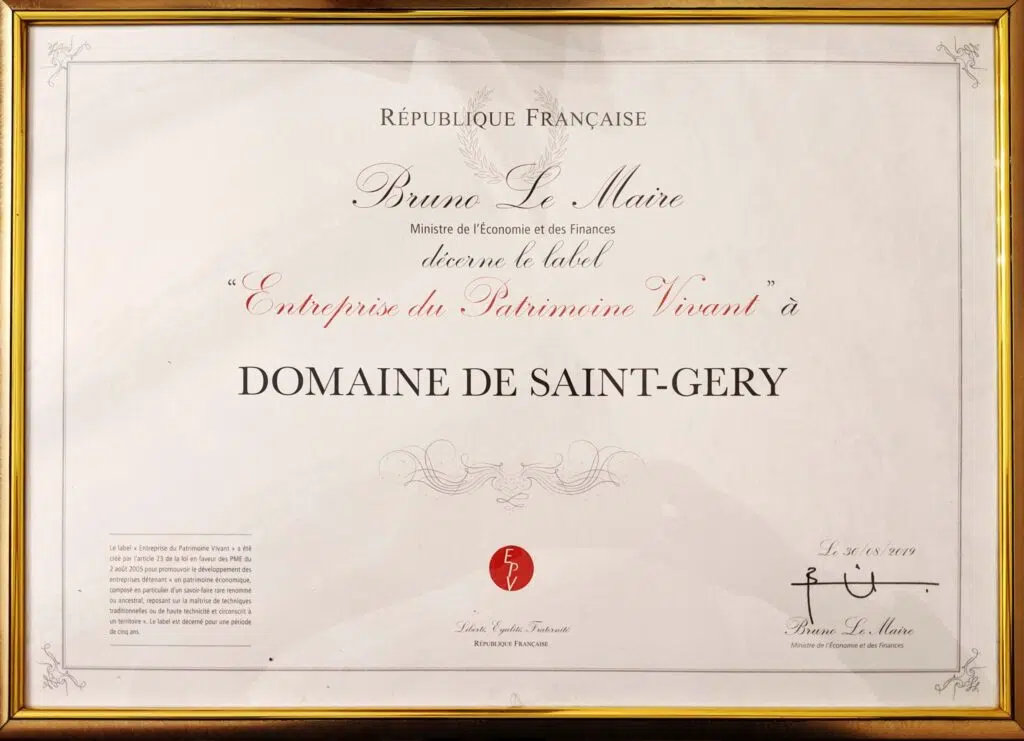
An Entreprise du Patrimoine Vivant (EPV) is a label that recognises the excellence of French know-how. It is awarded under the authority of the state, specifically the Ministry of the Economy and Finance: «It is the only state label awarded to a company for its entire activity, and guaranteeing the excellence of its know-how.»
The distinction is awarded to companies with rare, renowned, or ancestral know-how, which no standard training can teach you.
Among them: major luxury houses like Hermès, Dior, Chanel, Louis Vuitton, or prestigious palaces such as Le Bristol or Le Meurice
Some have existed for over 500 years, like Prat Dumas, founded in 1460.
We have held this label since 2019, it was awarded to us for our unique expertise in ham and our approach to gastronomy.

The art of manufacturing
To do it well, to have critical judgment, to adjust a recipe as you go, you need to taste. That's the advantage we have at Maison Duler.
We eat what we produce, every day, morning, noon, and night.
And we move forward, we correct... and we delight in it.
This is why we exercise the greatest care in selecting each ingredient and in the process of each of our productions, down to the smallest detail.
And it is always pleasing to see that the quality of our daily work is recognised and that the constant commitment applied to all our manufacturing processes is appreciated.
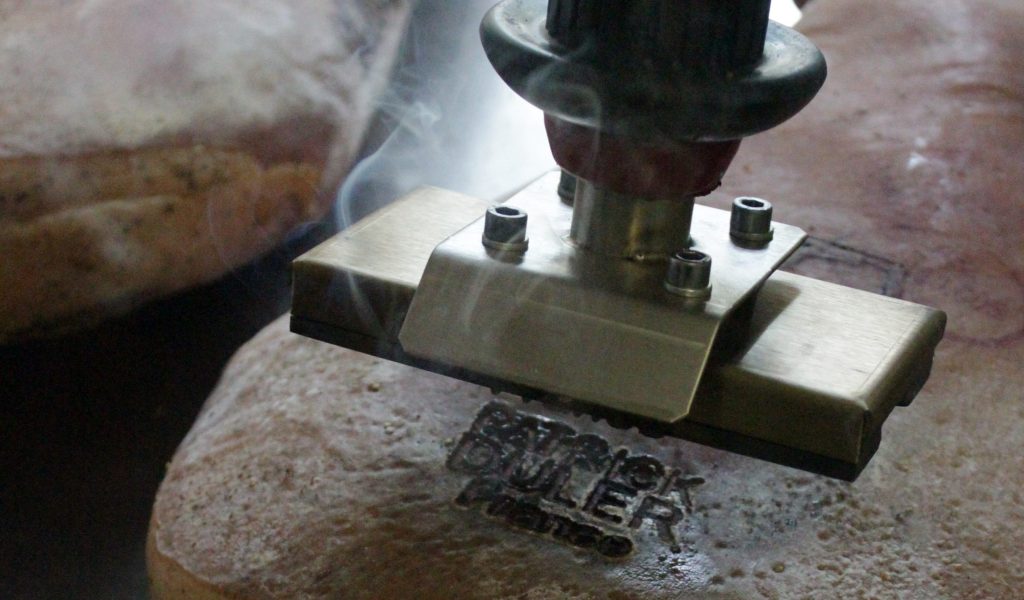
Almost all of our production and manufacturing comes from the estate, water included. This allows us to control manufacturing from start to finish.
We’ve been applying this “dominivore” approach (coming from the domain) for over 40 years. Don't look for the definition in the dictionary, it’s a word we invented, because our approach in its entirety is unique and unprecedented nowadays!.
When domain hosts visit our cellars, one small detail invariably piques their curiosity. Once the door to our Aladdin's cave is opened, an aromatic bouquet fills their nostrils, caressing the olfactory receptors with the scents of cured meat and fermentation.
The aromas draw visitors into the heart of the room. Dozens of cured hams from Gascon pigs hang there, maturing for many months: 20, 30, 50, and even 80 for some of them.
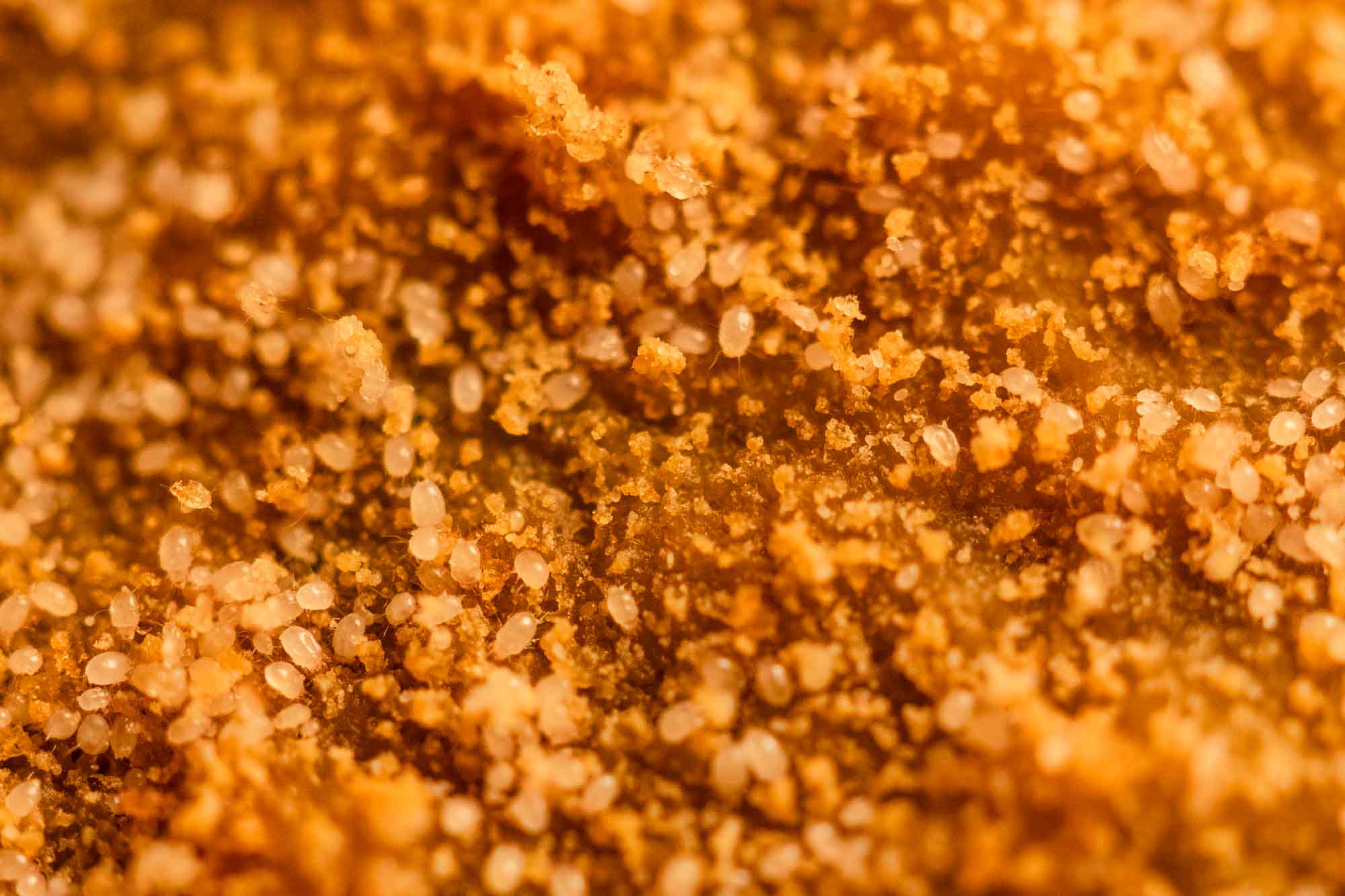
The most observant will immediately notice a kind of dust settling on the hams. Believing it to be sawdust, they are surprised when it begins to move.
These are mites, also called wool mites.
Yeasts develop on the rinds of hams. It is fermentation that allows for the maturing process. And because our hams are matured for a long time, after a certain period, the yeasts attract mites, which come to gnaw at the rind.
“Why is there movement on the ham?” “Because there’s life!”
These are tiny mites that have been known for a long time. They are among the smallest living organisms visible to the naked eye. Not only is this a completely natural process, but it is a real boon for the organoleptic development of ham.
And then, at the end of the curing process, vigorous brushing is enough to rid the leg of all stray hairs.
The crust dries out, allowing air to circulate and the ham to mature right through to its core. The result lives up to the originality of the process.
It's difficult to put feelings into words. That said, the one that most often comes up when those who have tasted Duler ham speak – after “ohhh”, “wow”, “ah” and a few other onomatopoeias
It’s “unique”!
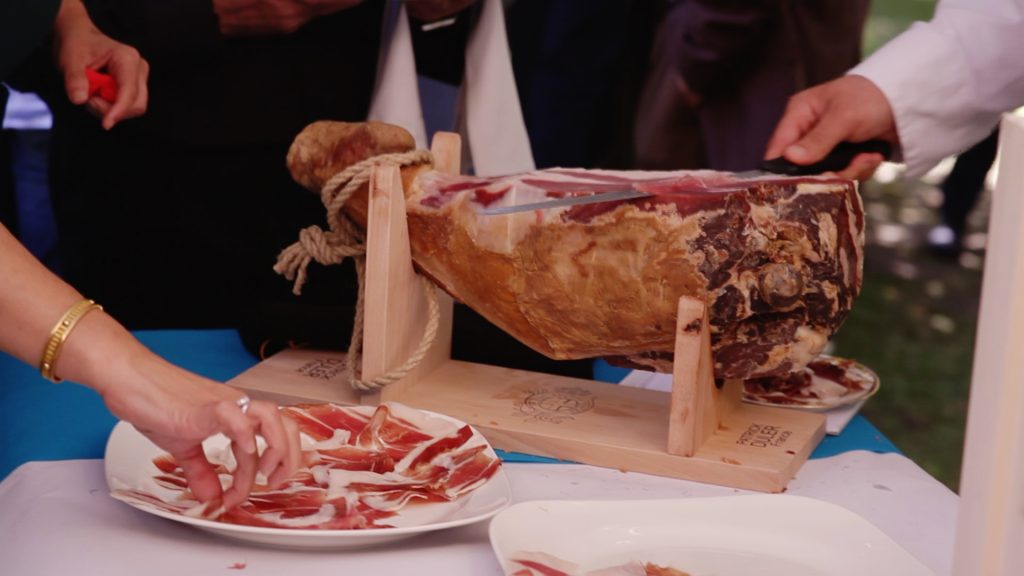
The flavours are so intense, so persistent, that to perceive all their subtleties, one must chew it slowly 27 times, letting it melt in the mouth.
It is at this stage that you discover a savouriness of rare depth, of unprecedented complexity. Like fine wines, the flavours do not remain on the front of the palate; they captivate it entirely, they line it. They are in turn shimmering, fragrant, tender, woody, full-bodied, fleshy, raw, blooming, spicy, mellow, velvety and vibrant.
This is the full art of our craftsmanship, for everyone's enjoyment.
Patrick Duler
Maturing cellars
Contrary to popular belief, ham is not cured meat, or rather… not just cured meat. Like cheese, which is dried and matured milk (to make cheese, 50 to 80 % of the water contained in the milk is removed), the meat of ham or salami is dried, but it also undergoes work by yeasts and bacteria that allow its preservation and the development of extraordinary aromas.
That is the full importance of maturation.. The ageing process takes place mainly in cellars with relatively high humidity, which allows yeasts to develop.
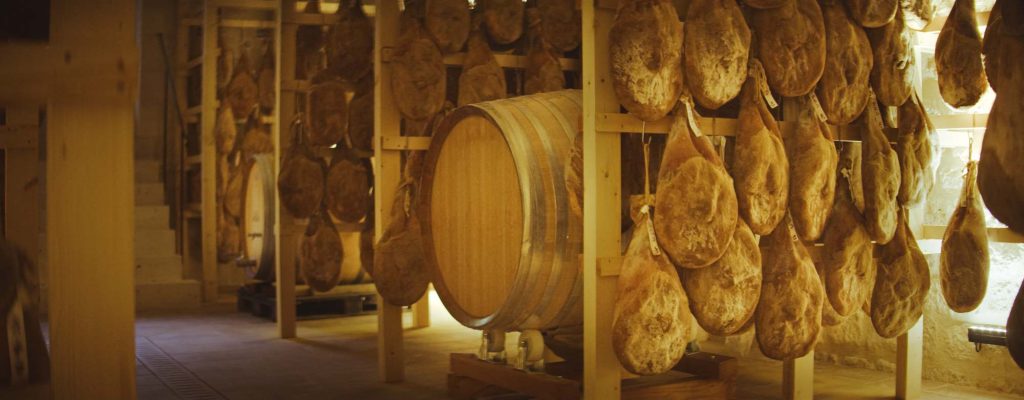
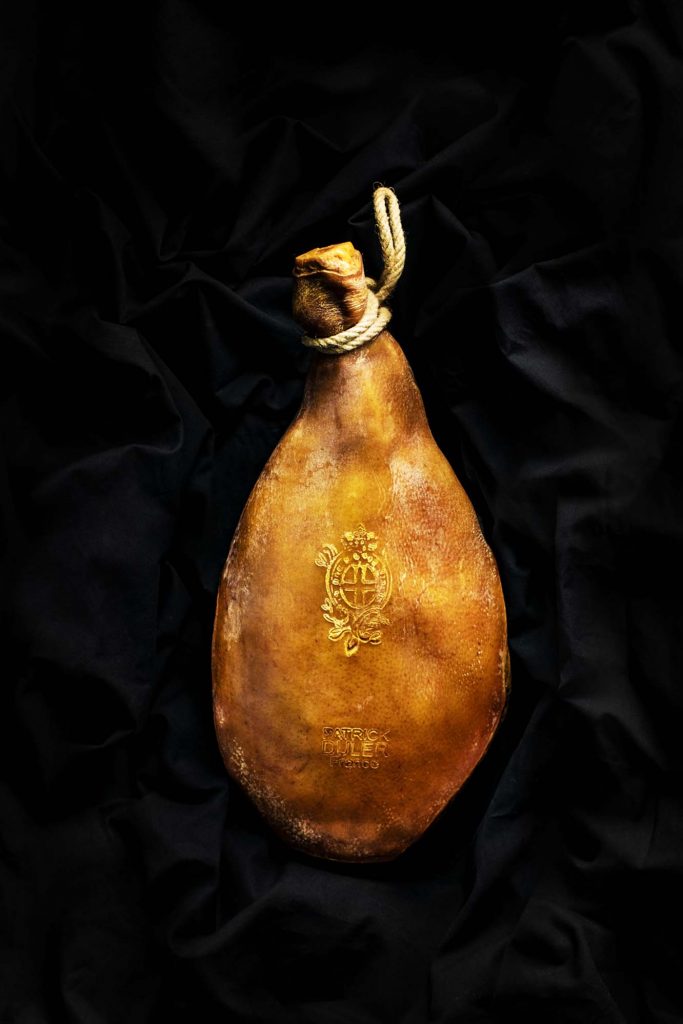
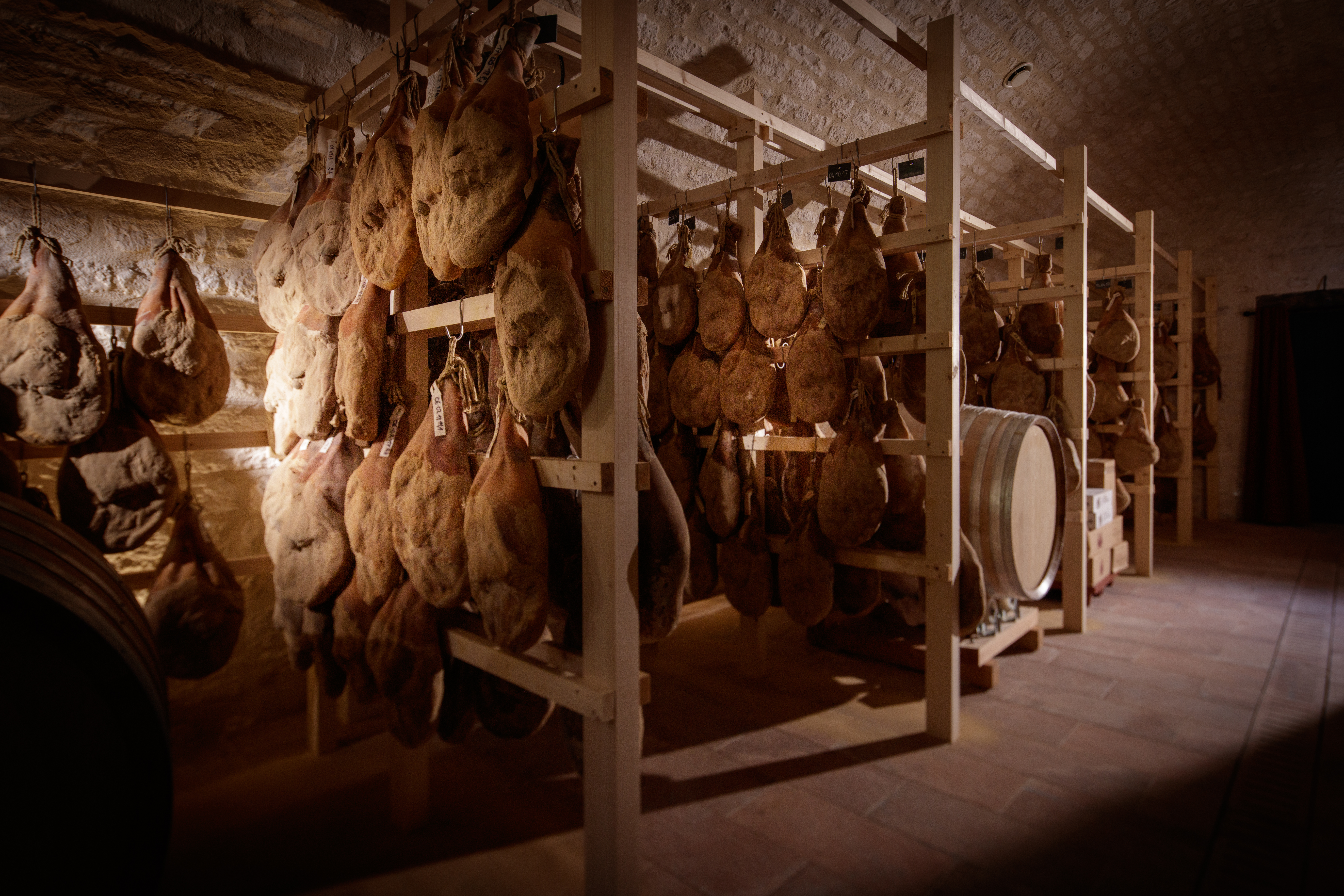

Our hams are matured on the estate. We visit the maturation cellars every day.
Each week, we rub dozens of hams with Armagnac.
Each month, we are sorting hams to move them to a different cellar.
Each quarter, the hams in the maturing process are coated with a thin layer of lard for protection.
Each term, Each ham is weighed and individually inspected to monitor its development.
To further our knowledge, we conducted experiments from 2012 to 2017, refining hams in winegrowers' cellars throughout France, from the South-west to Provence and from Bordeaux to Champagne, including the Loire Valley.
Thanks to the winegrowers who opened their cellars to us, all over France:
- Elian Da Ros in Cocumont,
- Anselme Selosse in Champagne,
- Thierry Germain in Saumur,
- Fabien Jouves in Cahors,
- Eloi Dürbach in Provence,
- Stéphane Derenoncourt in Bordeaux,
- Dominique and Laurent Vacheron in Sancerre,
- Bernard Plageoles in Gaillac,
- Philippe Cohen in Saint-Émilion.
They were kind enough to try these ham-curing experiments in their cellars.
And guess what?
A ham cured in Champagne was different from a ham cured in Bordeaux.
From this unique experience, we have deduced the ideal characteristics for maturing ham perfectly (humidity, ventilation, height, spacing). We have then adapted and built our own cellars to master the process from beginning to end.
Draconian standards
Throughout the year, we work on all our products and preparations here, fresh foie gras of the day, Barbary duck magret, truffles and Gascon pork hams and cured meats, in strict compliance with the most rigorous hygiene standards according to the principles of Hazard Analysis Critical Control Point, but by banning any chemical additives.
The HACCP method was created in the 1960s for NASA, with the aim of ensuring the safety of astronauts' food. It involves hazard analysis at each stage of production with a view to their control. The objective is to ensure the hygienic safety of foodstuffs.

HACCP is a principle that all restaurateurs have had to apply since 2011 to ensure food hygiene in their establishment.
This is a method for risk prevention for clients and consumers.
The purpose of this system is to be able to control, eliminate or reduce the dangers associated with consumption, but also to be able to ensure the cleanliness and quality of food products.
This method was designed so that restaurateurs have perfect control over all critical points concerning their businesses. It has now become a standard. HACCP has notably been institutionalised in the European Union, according to Directive 93/43/EC on the hygiene of foodstuffs.
In addition to our own produce, we require the same level of rigour from our suppliers of poultry, such as chickens and ducks, as well as of Gascon pork.
For example, things quickly clicked with Nicolas and his agroforestry poultry.
Their guinea fowl, chickens, capons and chuckers are raised under trees with a mobile coop system, in the same spirit as ours for our hens (but much larger). Nicolas has increased the rearing periods for us, to 150 days instead of the usual 100 days, to obtain plumper, fatter poultry with even more flavourful meat.
And we started serving his exceptional poultry at the restaurant.
These poultry are now, just like our Gascon Pork, also raised under the trees by organic farmers, a staple of our restaurant's dishes.