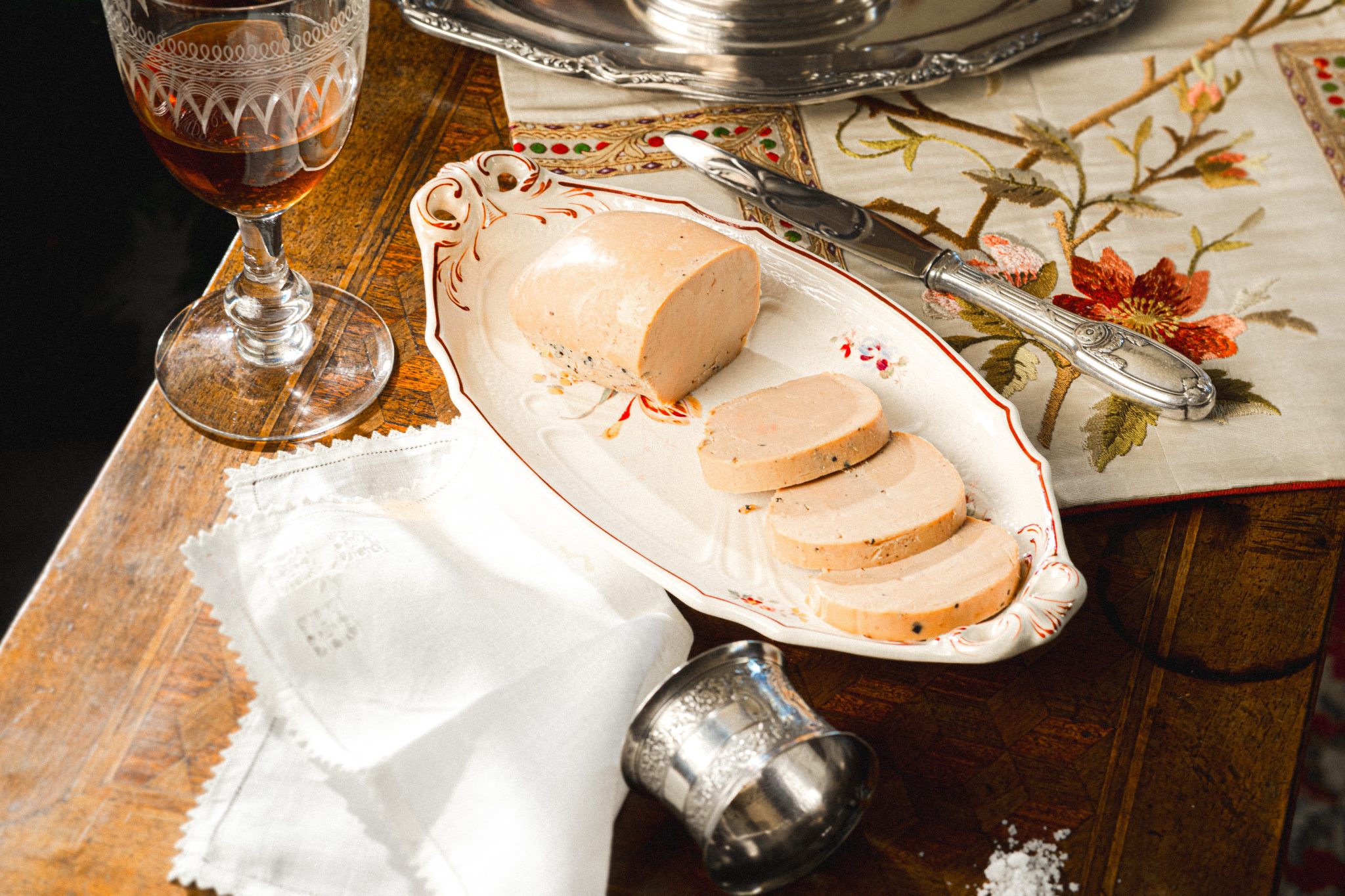


Foie gras d’origine Sud-Ouest France
Rien ne ressemble plus à un foie gras qu’un autre foie gras, pensez-vous !
Eh bien non !
La différence est flagrante et le choix du foie gras est déterminant.
Tout d’abord, le canard de gavage est un athlète de haut niveau. C’est un authentique marathonien capable de tenir le rythme et la distance. Tous les canards que nous sélectionnons rigoureusement sont élevés et gavés au maïs dans le Lot.
Malgré tout, les canards ne sont pas tous égaux devant la performance, c’est pourquoi seuls quelques-uns sont en mesure de donner un très bon foie gras.
Et ceci d’autant plus qu’il faut aussi prendre en compte la patience et le savoir-faire du gaveur lui-même qui doit établir une véritable connivence avec le canard.
Ce n’est qu’à ce prix qu’on peut espérer obtenir un excellent foie gras au goût équilibré entre l’amertume du foie et la douceur du gras, avec une texture souple, sans hématome ni rougeur.
C’est pourquoi nous travaillons sur le planning avec nos éleveurs et réservons les foies gras plusieurs mois à l’avance.
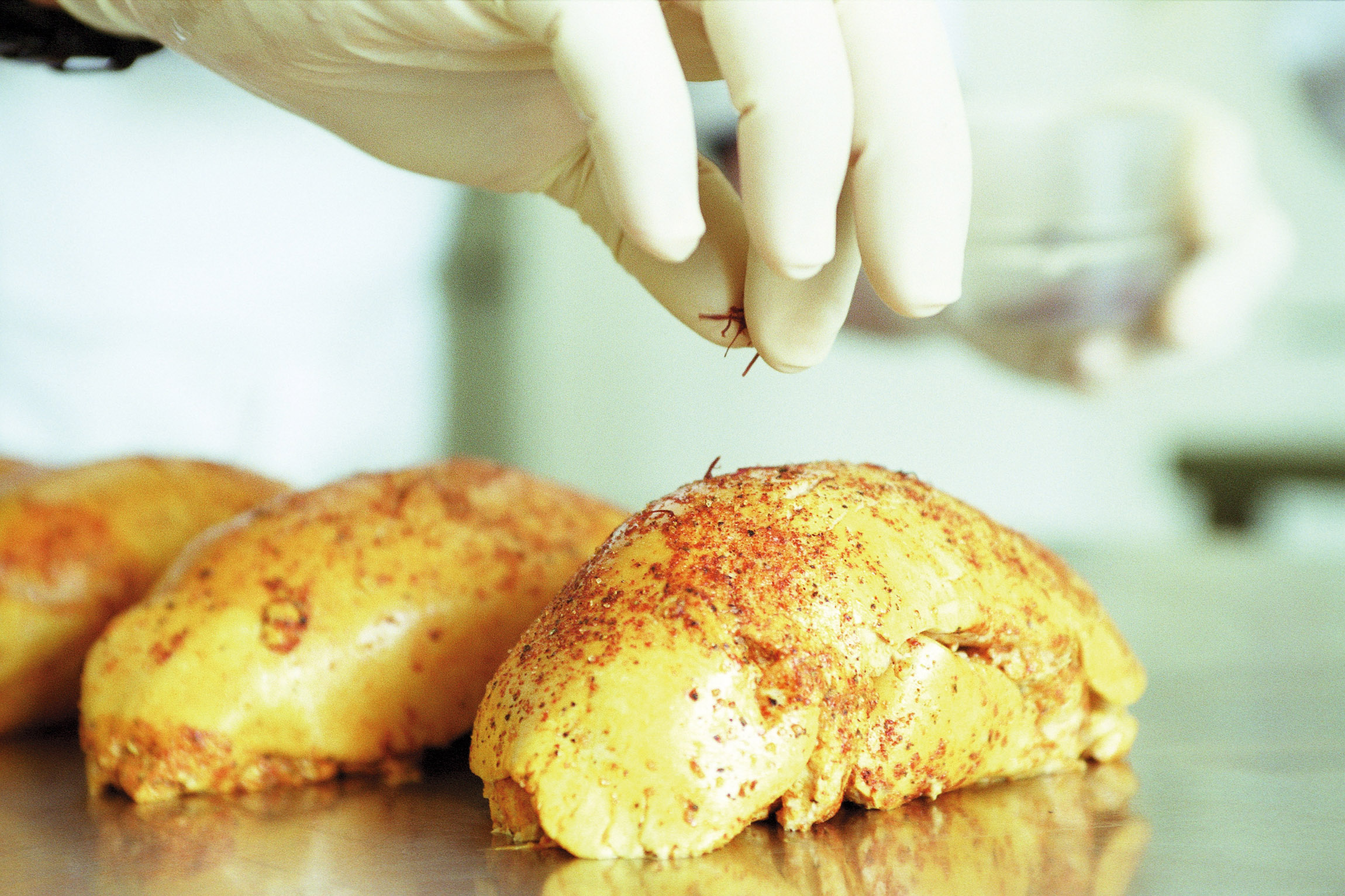

Une deuxième sélection à double objectif
Après abattage des canards, les foies gras sont amenés par camion réfrigéré au domaine. Trois à quatre heures après, nous les réceptionnons dans notre laboratoire aux normes CEE. La salle de préparation est prête à recevoir les foies gras, elle a été soigneusement désinfectée au préalable.
L’heure d’arrivée des foies gras dépend de la qualité du lot de canards et du tri nécessaire à l’abattage pour satisfaire à nos critères de qualité. En fonction, les foies gras arrivent entre 11 h et 14 heures. Dès leur arrivée, nous commençons la préparation. Et cette journée spécifique se termine uniquement quand tous les foies gras sont préparés, parfois tard le soir.
Il n’est pas question ici de préparer un foie gras qui n’est pas « du jour ».
En effet, le foie est un viscère qui évolue très rapidement avant le déveinage et ses qualités organoleptiques se détériorent rapidement dans le temps.
En plus de la sélection des foies au moment de l’abattage, nous effectuons nous-même une deuxième sélection à leur réception.
Cette sélection a pour but d’éliminer les foies gras non satisfaisants et d’adapter spécifiquement chaque foie gras à la préparation qui lui convient : Patrick ausculte chaque foie gras et retire ceux qui ne lui conviennent pas.
Ceux-là sont repris par le livreur.
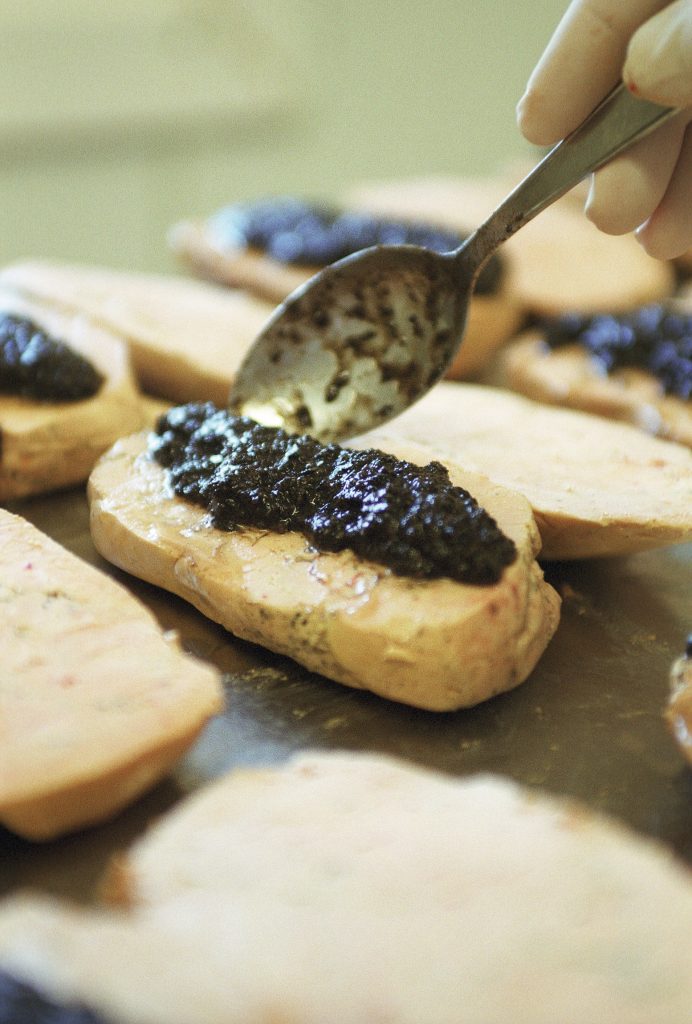
Un travail manuel et soigneux
Les foies gras validés sont triés un à un et répartis, suivant l’aspect général (texture, poids, couleur,…) et sont destinés aux différentes préparations qui leur conviennent le mieux. C’est la nature du foie gras qui détermine quelle fabrication nous allons faire et pas l’inverse.
Après ces opérations de tri, le travail sur le foie gras lui-même commence : Pascale déveine les foies gras un à un.
Cette opération longue et méticuleuse qui consiste à enlever tous les vaisseaux sanguins qui traversent le foie, dure plusieurs heures.
Le « salage » s’effectue au sel naturel de mer non raffiné et avec un poivre bio moulu au moment pour préserver tous ses arômes.
Sans additif ni conservateur.
Tous nos produits sont fabriqués sans conservateur, ni additif, ni émulsifiant, ni aucun arôme (artificiel ou naturel).
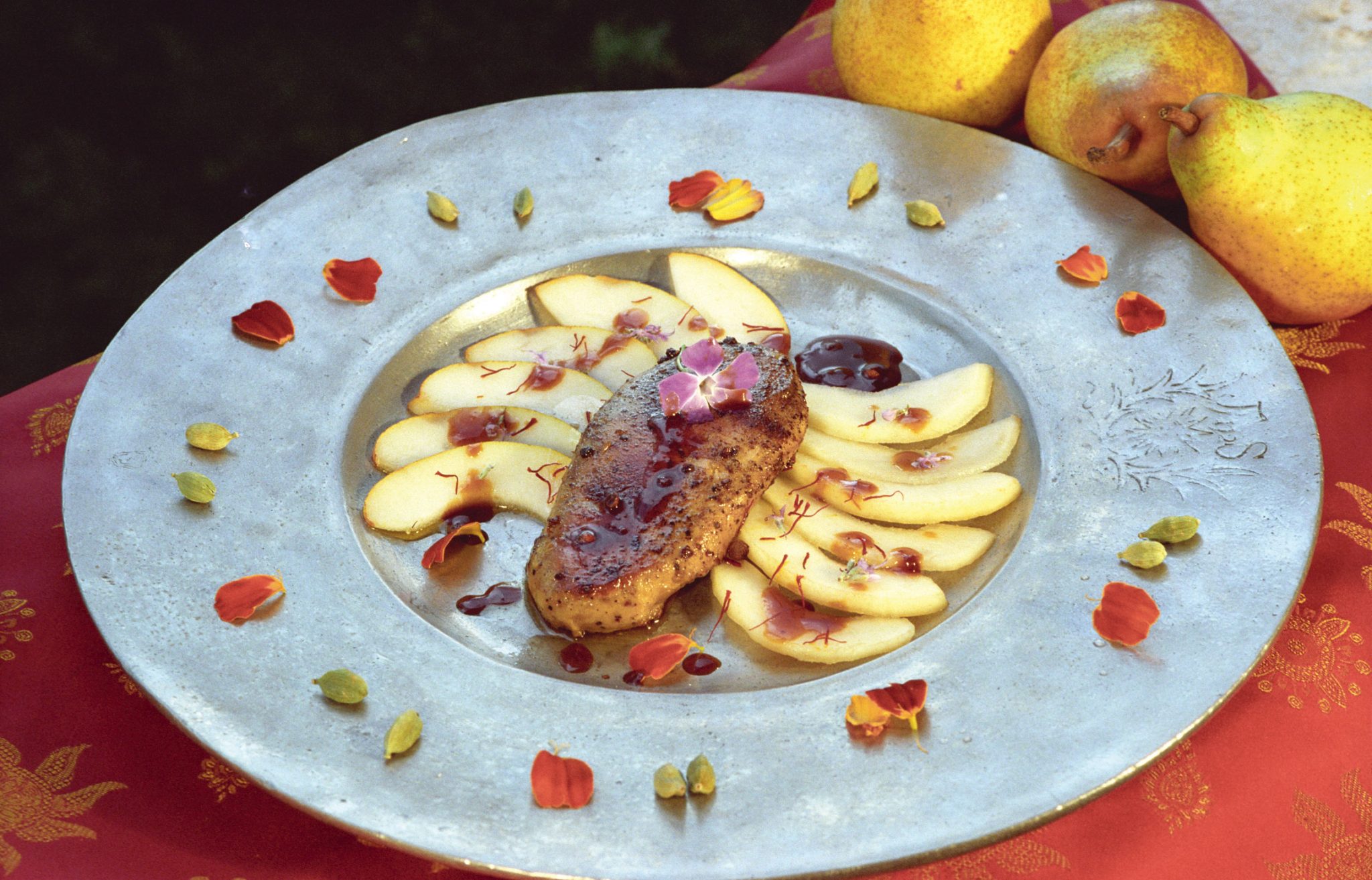
Le foie gras est un produit extrêmement fragile qui évolue très vite. Il ne peut être au summum de sa qualité que le jour même de l’abattage. C’est pourquoi, en plus d’une sélection draconienne, nous ne travaillons que des foies gras du jour. Et nous vivons comme une mission quotidienne de réunir tous ces paramètres, en partenariat avec notre producteur, pour vous offrir année après année l’extrême qualité de ce met exceptionnel.
D’où vient la tradition du foie gras ?
Les pharaons avaient déjà remarqué que la viande des oies sauvages était bien meilleure à l’approche des migrations. Ils s’étaient rendu compte que la chair de ces migrateurs était plus savoureuse juste avant les grandes migrations car les oies « s’autogavent » pour emmagasiner l’énergie nécessaire à la traversée de la Méditerranée.
Et comme à notre époque pour les tomates, ils ont voulu pouvoir déguster cette chair toute l’année, ils ont donc commencé le gavage des oies avec des figues.
Cela remonte à plus de 3 000 ans, à l’Égypte antique !
Cette pratique a évolué et voyagé par l’intermédiaire des Romains qui l’ont répandu dans plusieurs régions européennes. C’est certainement dans le Sud-Ouest de la France que cette tradition s’est le mieux ancrée, mais là encore le foie gras n’est arrivé qu’assez tardivement.
En effet, on a d’abord engraissé les oies en début d’hiver dans le but principal d’avoir du gras pour résister au froid, préparer la soupe et conserver les viandes, à la place ou en complément du cochon.
Le foie gras n’était en quelque sorte qu’un « sous-produit » que l’on s’est mis à cuire, ficelé dans un torchon, dans le bouillon d’os. C’est certainement en se rendant compte que c’était très bon que les paysans du Sud-Ouest ont gardé ce morceau de choix pour agrémenter leur repas de Noël.
Et c’est ainsi qu’est née la recette classique du « Foie gras au torchon », un foie gras juste déveiné puis poché dans un véritable bouillon de canard réduit.
Le bon gavage
Lors du gavage, le foie grossit, c’est-à-dire que chaque cellule de foie engraisse.
La capacité de celle-ci à emmagasiner du gras a ses limites que le bon gaveur maîtrise.
Si ces limites sont dépassées, le foie gras sera très gras, les cellules éclateront à la cuisson et le foie gras perdra sa graisse pour devenir pâteux et sans intérêt.
Quid de la cirrhose et de la torture ?
Certains esprits chagrins et ignorants vous diront que le foie gras est un foie malade, atteint d’une cirrhose comme celui d’un alcoolique. C’est faire preuve de mauvaise information que de penser ça.
Justement, un foie malade serait rouge avec des vaisseaux éclatés voire verts avec le fiel infiltré dans le foie et donc impropre à la consommation.
Quant à ceux qui prétendent qu’il s’agit de torture, c’est du même acabit.
En effet, l’oie et le canard, comme beaucoup d’oiseaux sont pourvus d’un jabot qui leur permet de stocker de la nourriture avant qu’elle ne passe dans l’appareil digestif.
L’art du gavage consiste à remplir ce jabot avec délicatesse, sans stresser l’animal, avec la quantité qu’il est capable de digérer.
Si un canard subit le moindre stress ou la moindre blessure durant le gavage, son foie sera au mieux déclassé en foie de volaille, car il n’engraissera pas, et le plus souvent jeté à cause des vaisseaux éclatés et du fiel infiltré.