

Beyond biodynamics: agroecology
Our commitment to agroecology begins with the development of biodiversity, followed by the most ecological cultivation methods, renewable energy production, and even wastewater treatment.
In every decision we make, the environmental dimension is considered. But always with a constant concern for its economic and social corollary—pragmatism requires it. Our activity must allow us to compensate our collaborators fairly and to live with dignity from our work, to raise our children in good conditions, and to make them want to continue the adventure.
Cultivation without external inputs
The forest is a remarkable production system, ultimately far more productive than a field of GMO corn, capable of converting solar energy into biomass while creating soil. The forest has no external inputs or chemical aids and manages to protect itself from climatic and sanitary hazards. By observing it, one learns more about agroecology than by diving into every dedicated manual. It is a wonderful blend of life.
We apply the same principle in all our fields.
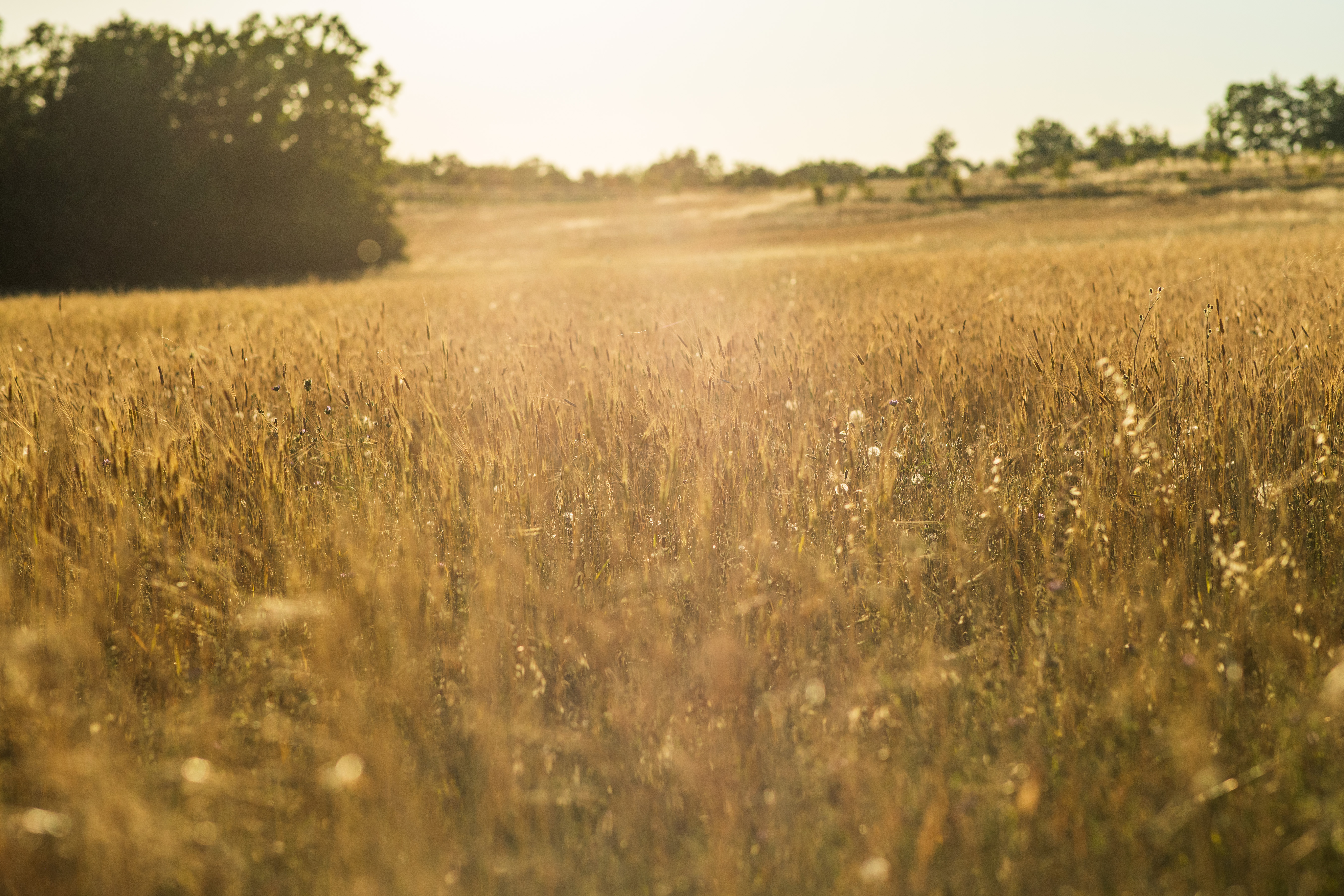
By diversifying crops, rotating and densifying them, we create a rich, varied, self-fertile environment—the opposite of monoculture, which inexorably exhausts the land of our grandparents. Here, instead of feeding the plant with chemical fertilizers, we feed the surrounding soil with green manure and BRF (Ramial Chipped Wood).
Thus, the plant has the opportunity to draw the mineral elements it needs. We do not claim to reinvent agriculture, but we strive to evolve it.
Thanks to this and a long-standing commitment, we practice agroecology, far from the divides between traditionalism and modernism.

Production without additives
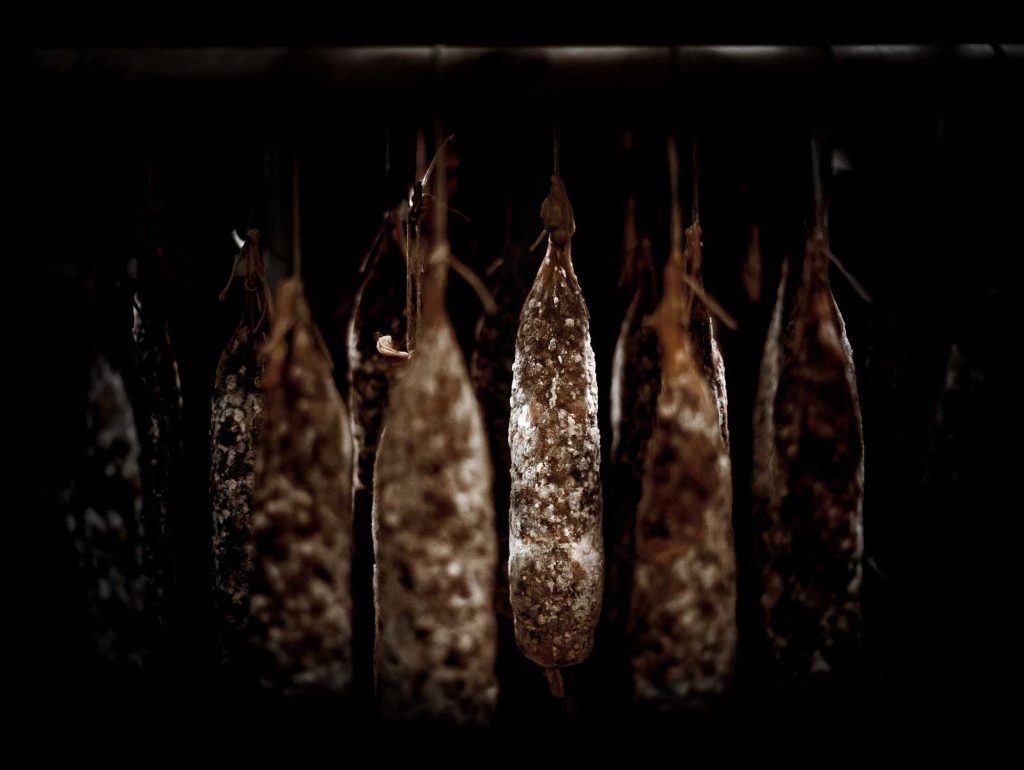
Our artisanal production is intrinsically linked to man's relationship with time.
Our savoir-faire and our productions, particularly that of our ham, follow an original salting and maturation process using natural Atlantic salt. We are proud to have invented it. This process lasts two months and excludes all potentially carcinogenic preservatives, such as nitrite salt (sodium nitrite E250) or saltpetre (potassium nitrate E252). Each ham is subsequently washed individually with spring water.
Far from all pollution, our organic property enjoys a climate ideal for curing our hams.
Patrick Duler ham is handled nearly forty times during its curing cycle. This lasts from 20 to 80 months, depending on the size of the leg, in successive cellars, and we use only the indigenous yeasts present on-site, even though this technique requires daily attention. Each ham receives at least one intervention per month (washing with spring water, pomading, coating with lard, rubbing with Armagnac, probing, or moving to a different curing cellar).
The extreme care we give to our hams is applied to all our cured meats as well as all our productions, which contain no preservatives.
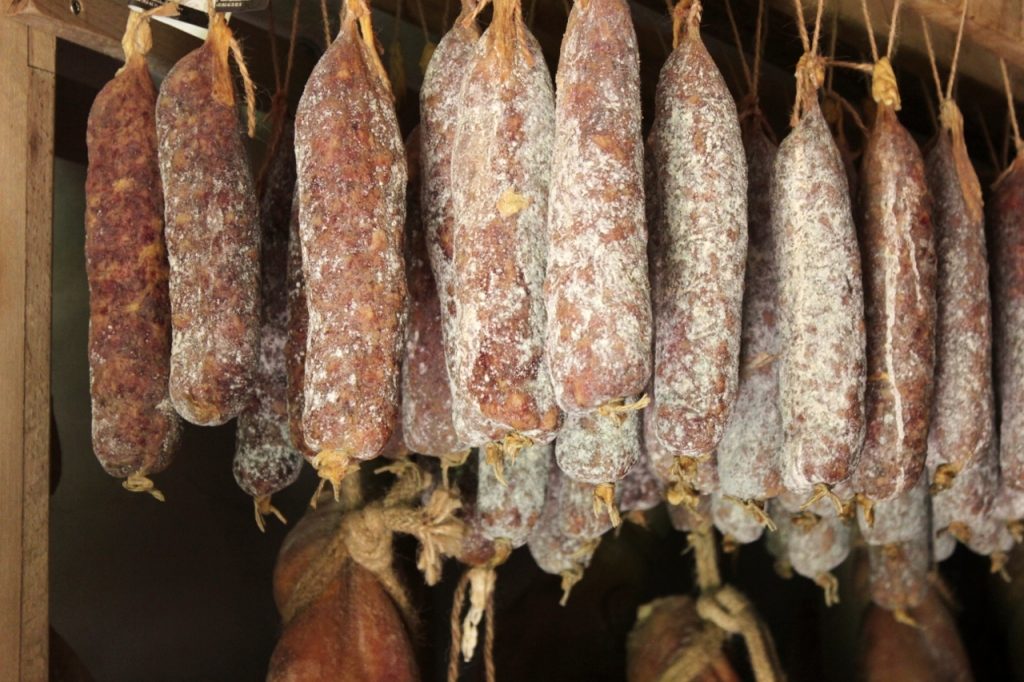

A self-sufficient operation
The lands of Saint-Géry, free from pollution, have always been farmed organically:
- Wood gathered from the 20 hectares of forest heats all the buildings.
- No tilling.
- No monoculture, but intercropping, biodiversity everywhere, even in the wild kitchen garden-orchard.
These sustainable development goals allow for the creation of an exemplary self-sustaining ecosystem.
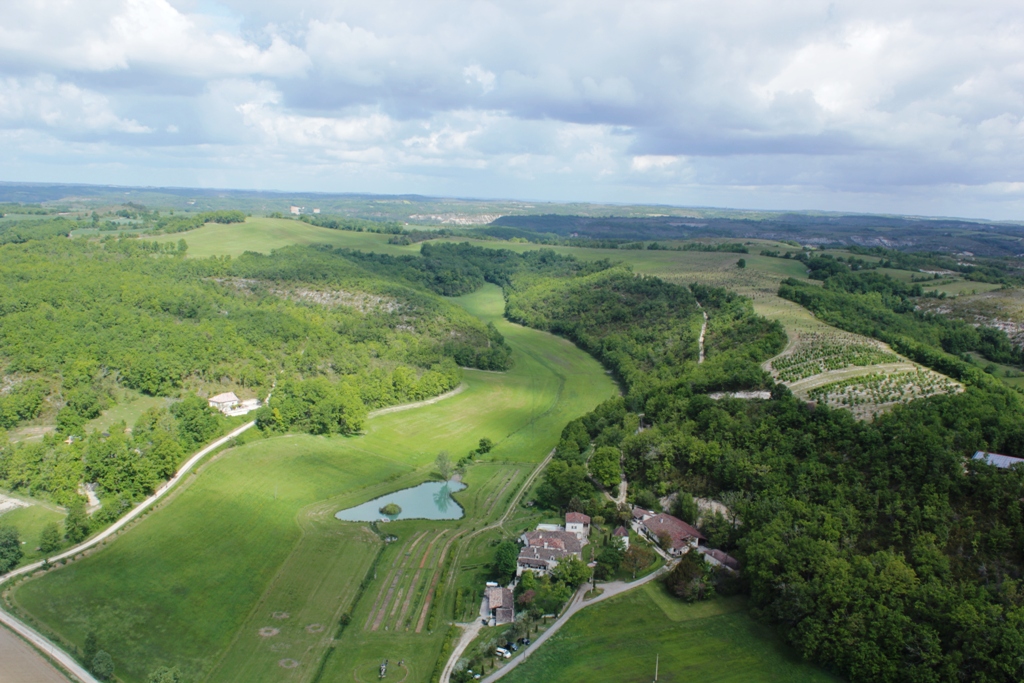
Respect and circularity
The soil is not an inert substrate on life support; the soil is an extremely complex living organism that we understand very little and that we must protect at all costs. The biomass living below the soil surface is greater than the total biomass living above, and the whole is intimately linked.
Our kitchen garden thrives without being continuously turned: we enrich its soil progressively. As we do every November, we have cut and dried wood from the property. The logs will fuel the estate's boiler all winter, while small branches and shredded twigs will be composted directly in the kitchen garden alongside green manure to feed the life of the soil… Furthermore, they will block the light for the seeds of those undesirable weeds that so bother gardeners.
The soil works for us for free. There is no need for polluting chemical artifices.
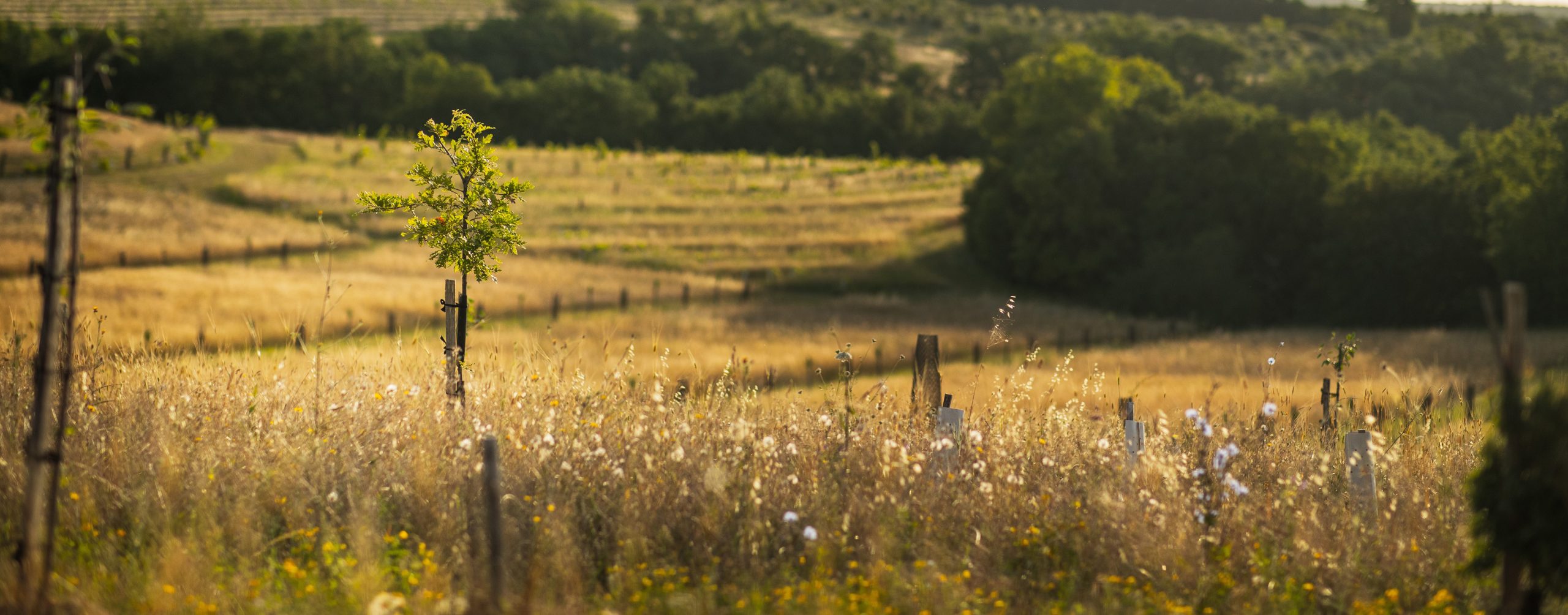
A profound knowledge of the living world
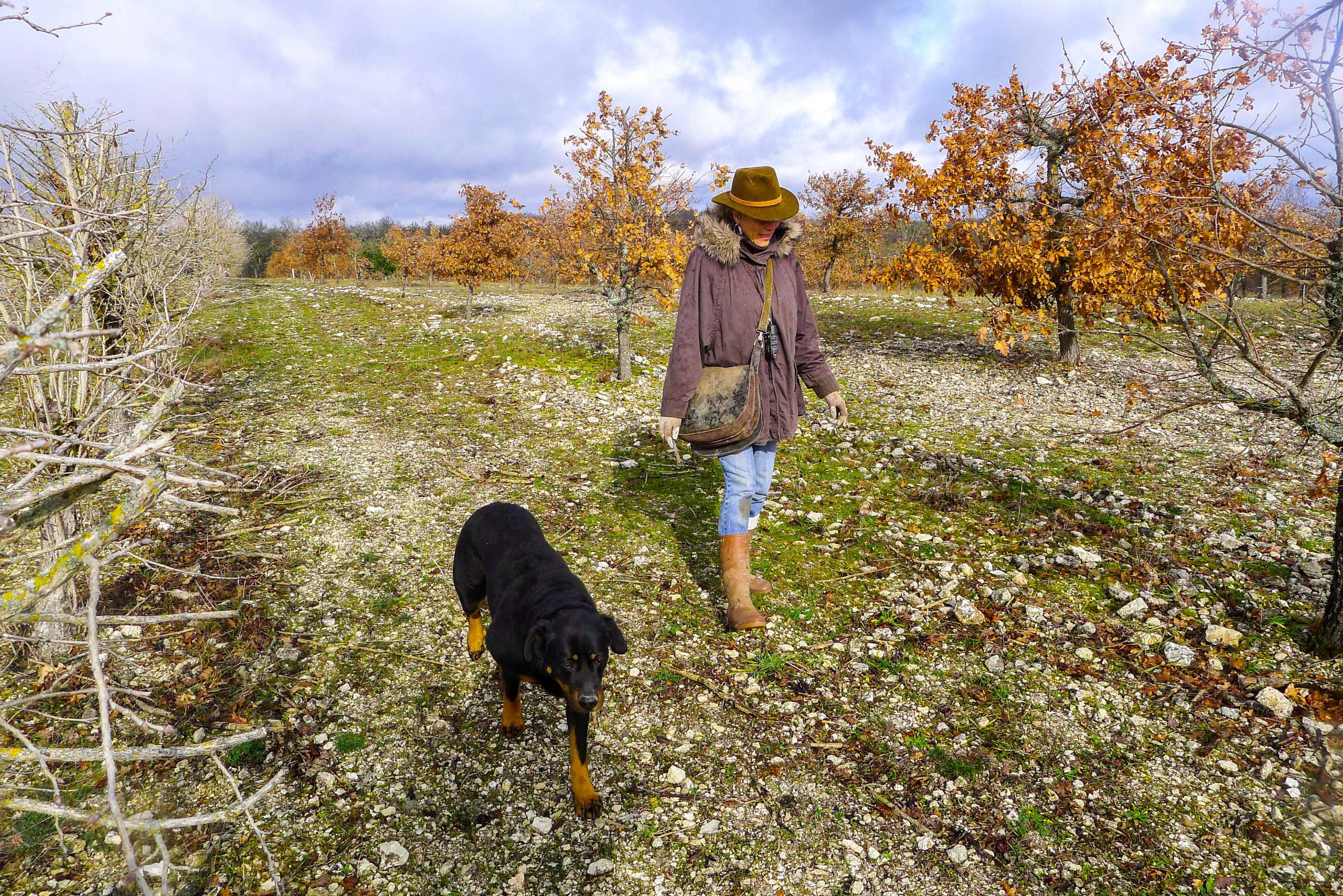
The truffle orchards are located on arid, poor lands—the plateaus of the Quercy Blanc formed from lacustrine limestone dating back 30 million years, where truffle oaks grow naturally.
Thus, since 1989, we have planted various species on this Quercy Blanc causse every year. Oaks, of course—evergreen oaks, downy oaks, kermes oaks, Turkey oaks—as well as common or Turkish hazel. All these trees are mycorrhized with the Tuber melanosporum truffle.
Over the years, we have conducted (and continue to conduct) multiple trials on associations with other crops (lavender, vines, truffle-field wheat, etc.), pruning, tree spacing, green manures (planting bird's-foot trefoil, sainfoin, etc.), soil cultivation, grazing… This makes this truffle orchard a unique, full-scale experimental site in France.
This is not a Cartesian approach; nature dictates the rules, not man.
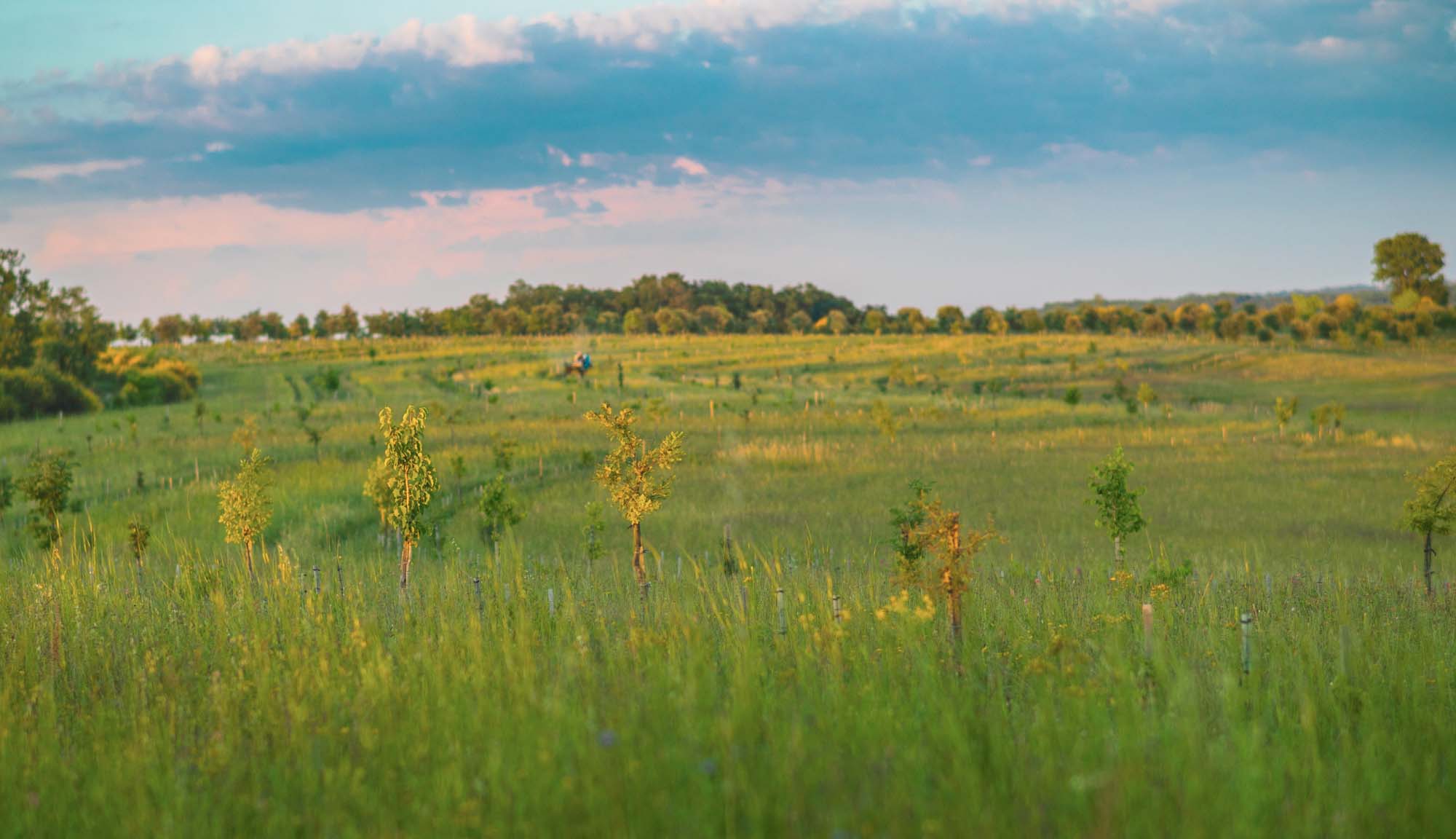
It is by observing it closely, day by day, that we enrich our knowledge.
A commitment to transmission
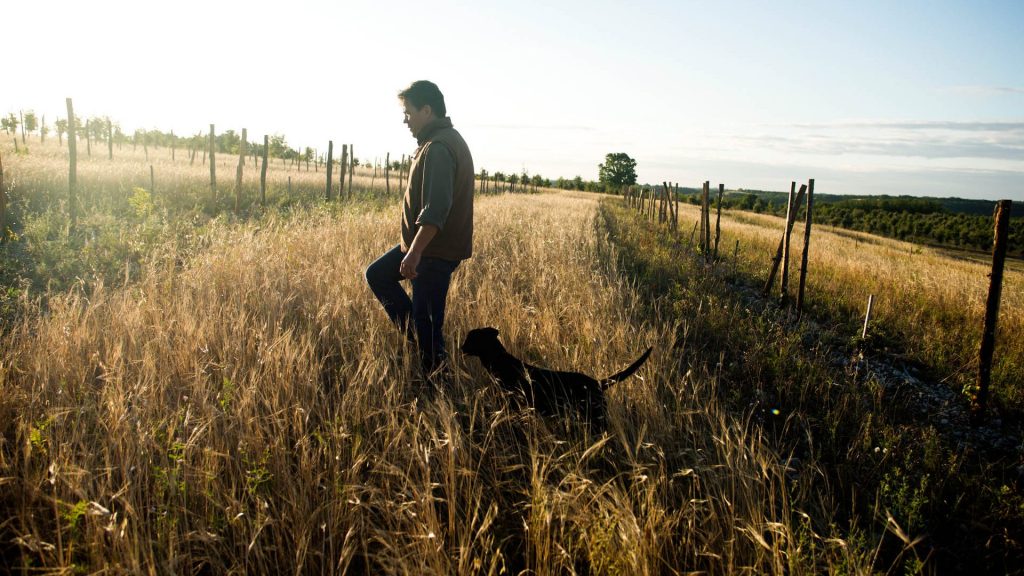
We have always desired to understand and explain the ecosystems surrounding us and to share our commitments with pride and benevolence with all "bons-vivants" and discerning connoisseurs.
A family passion
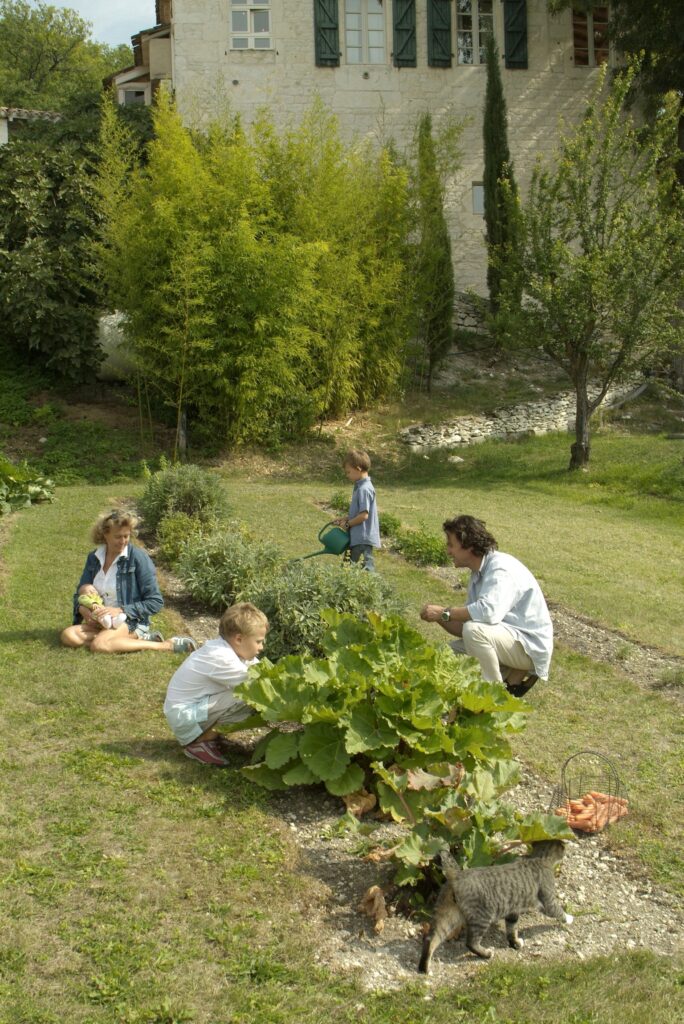
Our children grew up at Domaine de Saint-Géry. They have explored every corner of the estate since childhood, tasted all the products grown on-site, discovered all the secrets of production, and appreciated, in every season, the beauty of the landscapes and nature surrounding them. They have worked at every post on the estate, acquiring an extensive knowledge of the crops and understanding all the stages of our artisanal production. Above all, they have embraced our essential principle of what is good and healthy.
We are proud to have passed on to them the deep values that gave birth to this wild project. Today, they are ready to ensure the continuity, to write the new chapters of our history, and to pass it on in turn to our future visitors.
Sharing a vision
With the same passion and commitment, we share moments of life and transmission with our guests around a fine table or during an exceptional stay. We always have the same desire to explain how we grow our products, to tell their origins, their particularities, and their benefits.
We could talk endlessly about a production method or the cultivation of a vegetable, its cooking, or the best possible pairing.
Certain stays are orchestrated around Maison Duler products—truffles, bread, or pig dietetics—while others offer a sensory discovery of the living world during which gastronomy enthusiasts live in symbiosis with Domaine de Saint-Géry.
And for those who do not have enough time to visit us regularly, the "Au Bon Goût" letters are sent regularly by email, allowing them to follow and stay informed about the subjects that are particularly close to our hearts.
It is thanks to this continuity that our house evolves while remaining as faithful as on the first day to its agroecological vision, promoting an agriculture that respects the environment and the well-being of all, and championing a cuisine of taste and ingredients.