


Le solaire photovoltaïque
Le solaire photovoltaïque est une technologie qui convertit directement l'énergie solaire en électricité sans utiliser de pièces mécaniques ni produire de polluants.
Les cellules photovoltaïques, basées sur l'effet photovoltaïque découvert en 1839, utilisent des matériaux semi-conducteurs pour convertir la lumière du soleil en courant électrique. Notre région du Quercy Blanc a un taux d’ensoleillement supérieur à la moyenne qui dépasse régulièrement les 2 000 heures par an.
Le développement massif du photovoltaïque est considéré comme essentiel pour atteindre la neutralité carbone d'ici 2050. Il est également devenu compétitif par rapport aux énergies conventionnelles et devrait connaître une croissance soutenue.
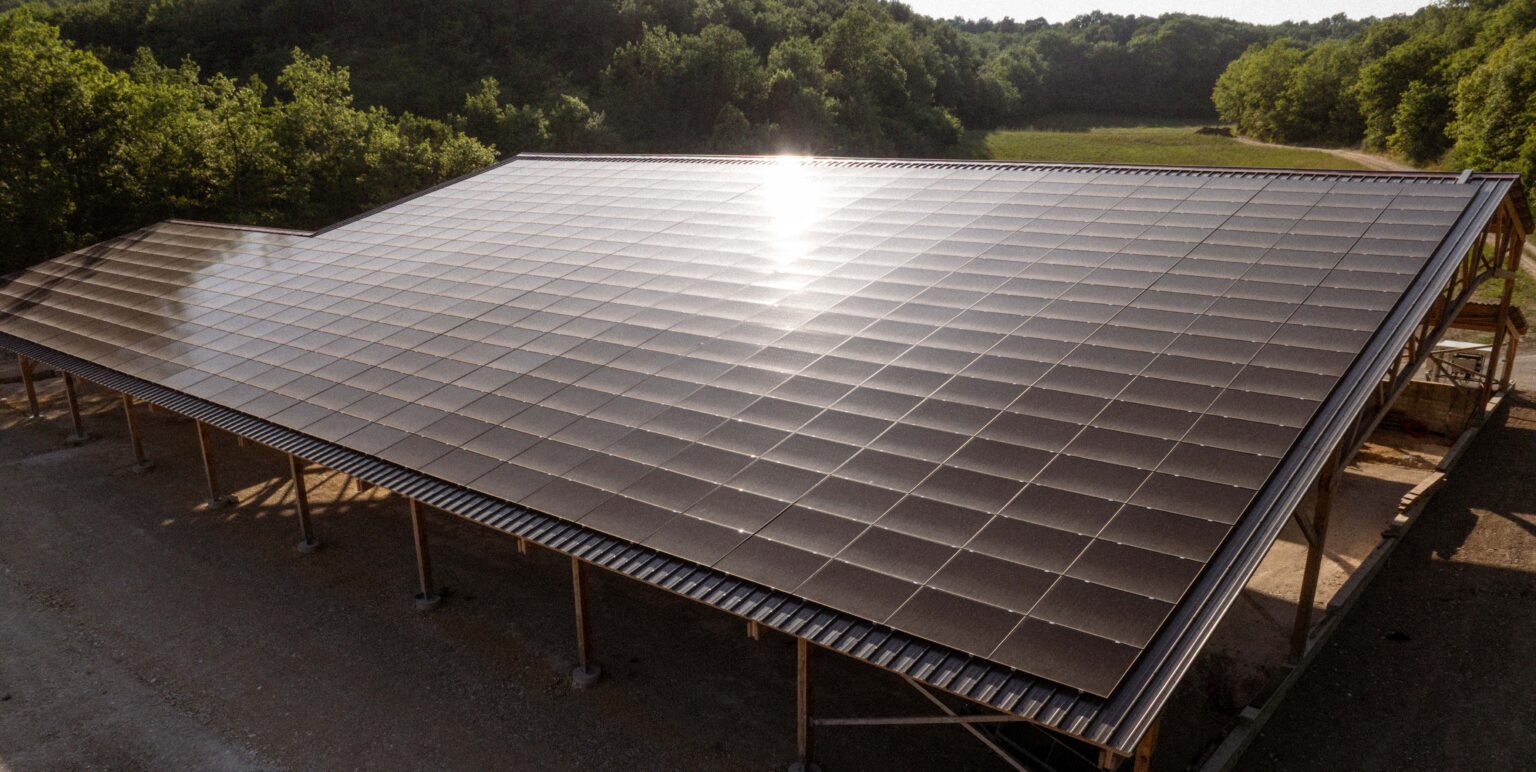
Notre projet photovoltaïque est conçu dans une perspective de qualité écologique globale, en favorisant la proximité et les circuits courts. Il permet un développement de notre autonomie énergétique sur le domaine. Si dans un premier temps nous avons installé des panneaux sur notre grange de stockage des machines-outils, un nouveau projet plus ambitieux verra le jour très prochainement sur les bâtiments équestres.
Nous avons une forte croyance en cette énergie durable qui nous permettra d’être totalement autonome et indépendant sur le plan énergétique pour le domaine.

Le solaire thermique
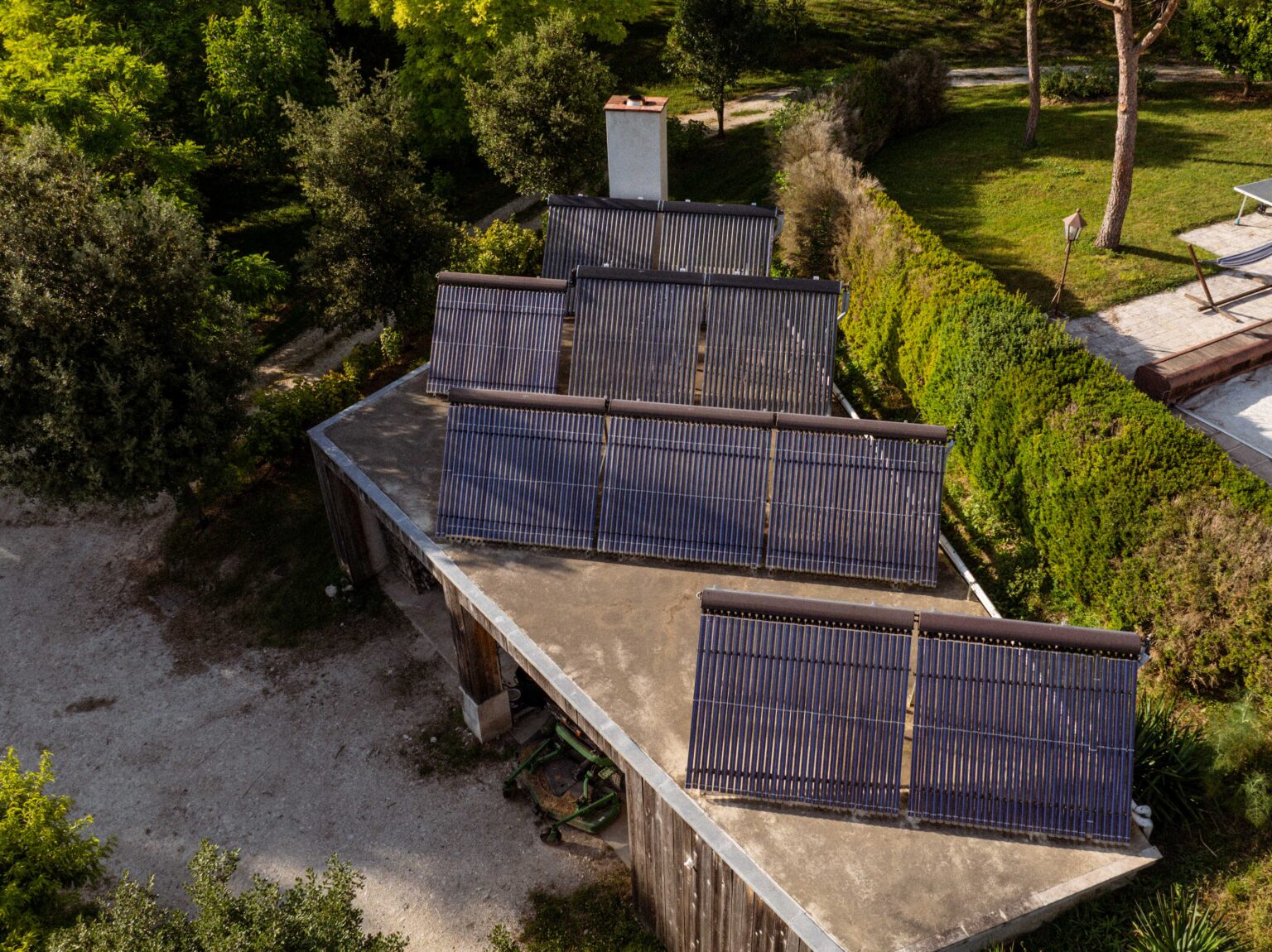
Depuis 2010, pendant les beaux jours, l’eau chaude sanitaire est chauffée intégralement grâce aux panneaux solaires thermiques sous vide, technologie la plus performante en la matière. 1000 litres d’eau chauffés en continu à 60 °C .
Cette eau alimente toutes les bâtisses (piscine, chambres, restaurant), sans gaz, ni bois, ni électricité mais juste avec un peu de soleil, ce qui ne manque pas dans le Quercy Blanc.
Le Domaine de Saint-Géry fait ainsi un pas de plus vers l’écologie et le respect de l’environnement et permettent d’économiser pas mal de CO².
Bien sûr, le bois prend le relais automatiquement quand il n’y a pas assez de soleil.
Le chauffage au bois
Les 20 ha de bois du domaine fournissent le combustible pour alimenter la chaudière à bois qui produit environ 70 % de l’eau chaude sanitaire et du chauffage des bâtiments.
Nous opérons des coupes sélectives dans nos forêts pendant l’hiver, le bois est débardé au cheval, puis séché pendant un an à deux ans selon son humidité et enfin recoupé en buches de un mètre pour alimenter la chaudière qui chauffe la maison tout l’hiver..
Les jeunes branches vertes sont broyées pour faire des Le BRF ou Bois Rameaux fragmentés. C’est une technique agronomique révolutionnaire qui permet de créer un sol proche du sol naturel de la forêt en broyant les extrémités des branches d’arbre encore vertes.

En effet, les branches d’arbres d’un diamètre inférieur à 7 centimètres stockent 80% des nutriments de l’arbre. En les broyant et en les posant au sol, les vers de terre vont se nourrir de la cellulose pendant que les champignons dégraderont la lignine créant ainsi une grande quantité d’humus et un sol forestier de manière accélérée.
Les Bois Raméaux Fragmentés (BRF) servent à fabriquer un amendement naturel et apportent de l’azote pour le potager, les espaces verts et les truffières.
Le puits provençal
Le principe est de faire circuler de l’air sous terre, dans des canalisations en grès émaillé. Pendant ce passage sous terre, il va se produire un échange de calories entre l’air et la terre par l’intermédiaire des tubes où circule l’air. La température du sous-sol étant peu influencée par les variations de l’air ambiant, il va en résulter un rafraîchissement de l’air véhiculé sous terre en été et à contrario un réchauffement pendant la période hivernale.
Les Romains utilisaient déjà des réseaux de circulation d’air sous terre dans les villas. Il existe aussi un système analogue dans les pays chauds.

En réalité, la température de la terre varie entre l’hiver et l’été avec une amplitude plus ou moins grande suivant la profondeur :
À 1 mètre de profondeur, la température de la terre variera de 5°à 25°
À 3 m, la variation sera de 19° à 9°
À 5 m, de profondeur, la variation sera de 19°en été à 12°en hiver.
Il faut atteindre une profondeur de 8 m pour que les variations de température soient nulles. Ces chiffres sont sujets à variation en fonction de la nature du sol.
Chez nous, les canalisations sont enterrées à 6 m sous terre.
Le Puits Provençal est aussi un excellent moyen d’assurer un renouvellement constant d’air neuf dans toutes les pièces de vie pour :
apporter de l’oxygène pour les êtres humains et les appareils à combustion
évacuer les odeurs et les polluants qui s’y accumulent ;
- éliminer les excès d’humidité qui provoquent une dégradation esthétique et mécanique du bâti et les moisissures qui produisent des allergènes favorisant les crises d’asthme et allergies respiratoires.
La phytoépuration des eaux usées
Pour épurer les eaux usées, la phytoépuration s'appuie sur l'action des plantes macrophytes, ou plus exactement des bactéries qui se développent sur leur système racinaire (racines ou rhizomes). Celles-ci dégradent toutes les molécules organiques issues des eaux usées en composants assimilables par les plantes.
La phytoépuration fait appel aux bactéries présentes dans les systèmes racinaires des plantes

Par rapport à l’épuration autonome classique (fosse septique), elle a d’indéniables avantages. Elle permet de traiter phosphates et nitrates. Elle ne produit pas de boues et permet un contrôle facile des rejets, à la différence des dispositifs enfouis.
Au domaine, les roseaux et les orties travaillent activement à la purification des eaux usées. Ces eaux s'infiltreront ensuite dans le sol qui jouera le rôle de filtre ultime pour une phytoépuration 100% écologique.