

Gascon Pig Loin with Piment d'Espelette
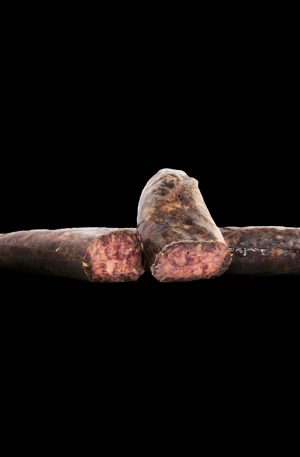
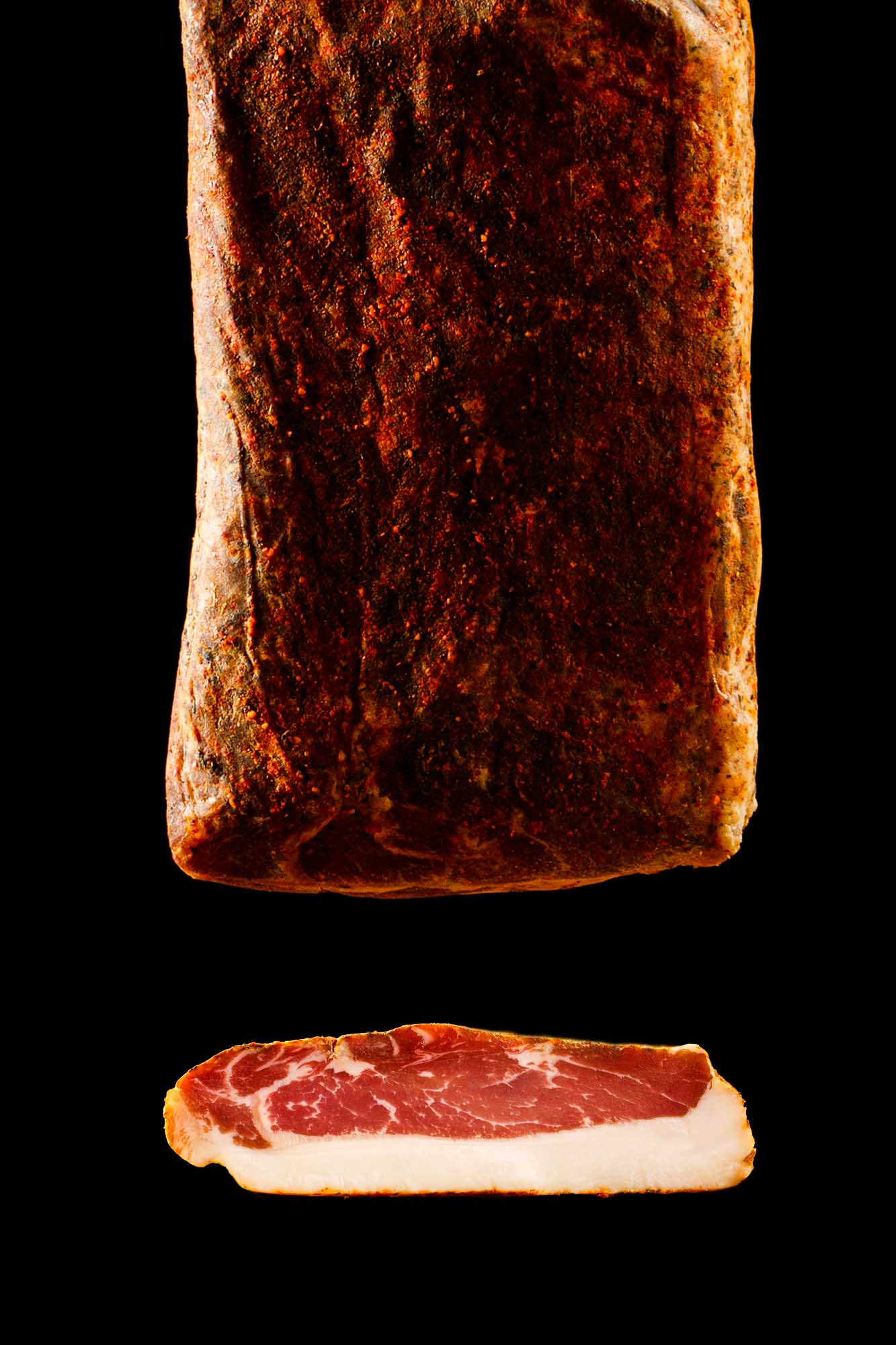
The cured loin (lomo in Spain, lonzo in Corsica) is a long cut from the back of the Gascon pig where lean meat predominates, with just enough intramuscular fat to remain tender and melting.
It first spends one to two months maturing in salt, then 60 to 90 days ageing, depending on the size, thickness, density, and marbling of each piece.
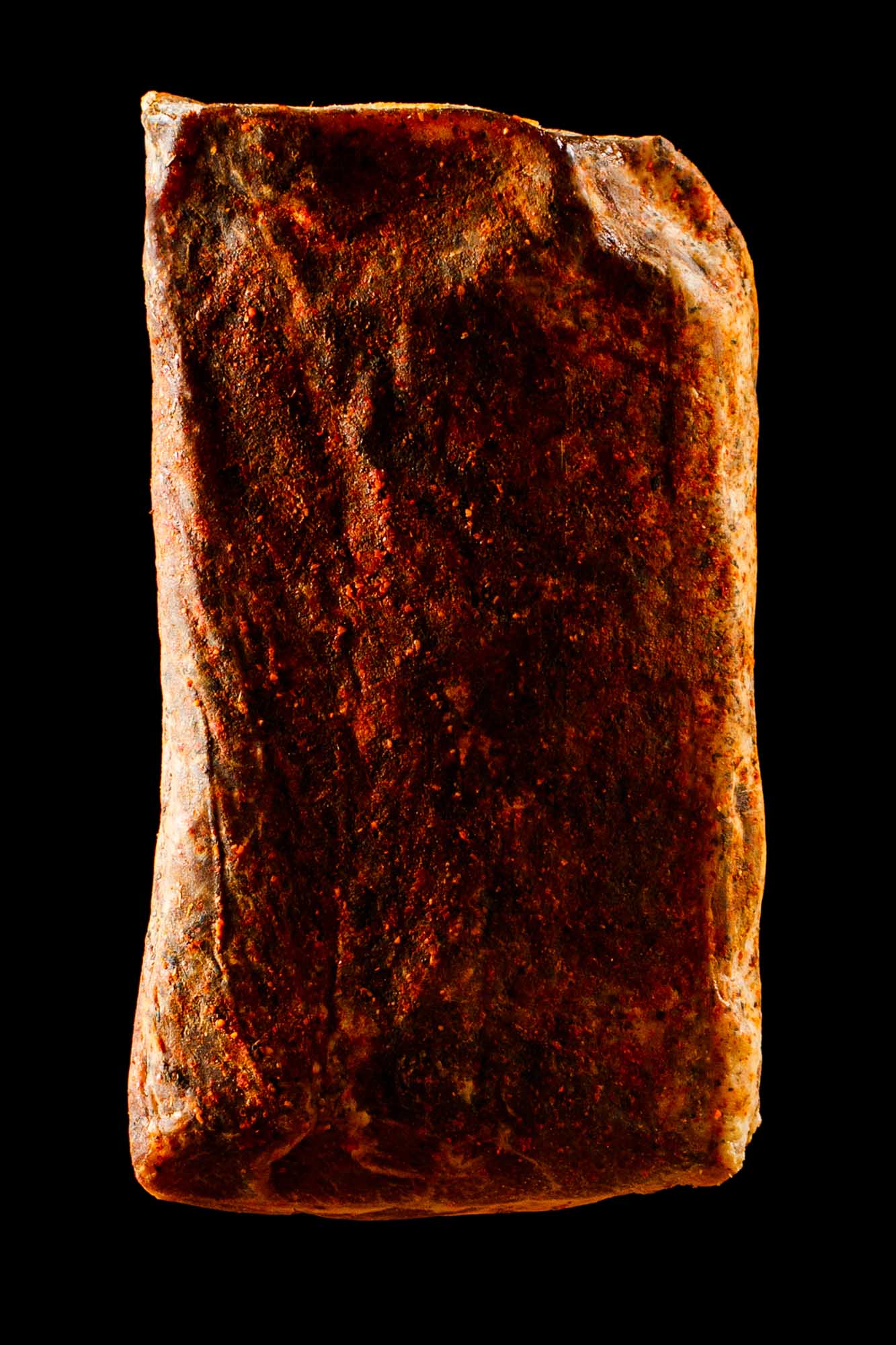
Our organic Espelette pepper comes directly from Vincent Hurpeau, a producer in Espelette. It enhances the meat with its aroma and gentle warmth, without masking the flavor of the Gascon pig.
Available as a whole piece or thinly sliced in 70 g packs.
Free from saltpetre, nitrite salt, or other additives
from: 27,00€
| Weight | N/A |
|---|---|
| Best before | 6 months in the refrigerator. |
| Packaging | Vacuum-packed |
| Serving suggestions | All our cured meats are natural. The vacuum packaging is used for transport and preservation. Remove the filet from its vacuum pouch 48 hours in advance (at least 24 hours) and leave it hanging in a cool, ventilated place. Wrap it in paper towels and store it in the refrigerator. If you have a vacuum sealer, the ideal is to re-seal the filet after each use. |
| Nutritional values | Fat g/100g: 9.78 |
| Quantity | whole piece +/- 1kg, thin slices 70 g |
Gascon Pig Loin with Piment d'Espelette
Lomo, lonzo… with us, it is simply filet
Sometimes, shifting languages is all it takes to give a cut of pork a touch of elsewhere.
In Spain, it is called lomo. In Corsica, lonzo.
At the Domaine, we remain faithful to the French term: le filet.
It is a lean cut running along the pig's back, where lean meat clearly dominates.
With the Gascon pig, we look for a loin that retains just enough fat, particularly intramuscular fat, to remain supple and tender throughout the ageing process.
After maturing in salt followed by 60 to 90 days of ageing, the meat remains tender and fleshy. The fat brings a melting texture without dominating.
It is this balance that makes the filet so exceptional: abundant lean meat, just enough fat to preserve suppleness, and the time required to develop depth of flavor.
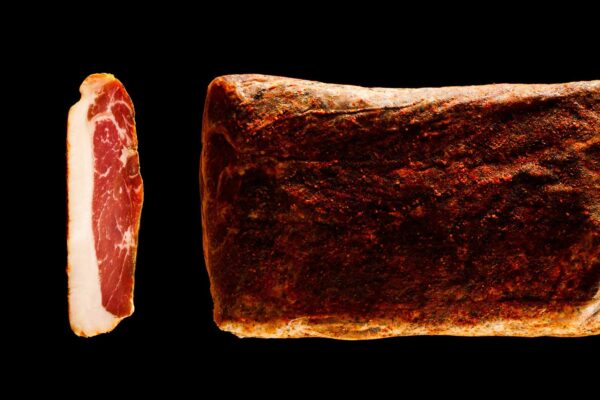
One to two months even before ageing begins
The loin does not go straight from salting to the curing room.
It rests for one to two months maturing in salt, following our proprietary Maison Duler process.
This extended time allows the salt to penetrate gently and evenly through the entire cut.
When tasted, the difference is clear: the salt integrates harmoniously into the meat, the texture remains supple and fleshy, and the flavor of the loin unfolds without being overpowered by salinity.
Only after this resting period does the actual ageing begin.
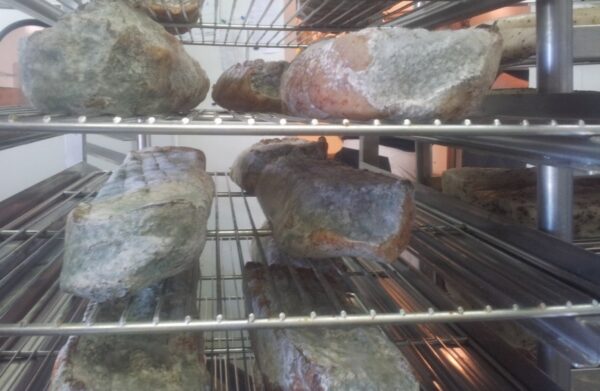
ham curing room
Why 60 to 90 days, and not 75?
Because no two Gascon pigs are ever completely alike.
Some are larger, others smaller. Some loins are thick, others leaner; the grain may be tighter or more relaxed, and the intramuscular marbling varies.
These natural differences do not vanish during preparation. On the contrary, they dictate how each loin will lose moisture, soften, firm up, and develop its flavor.
After maturing in salt, each loin enters the curing room with its own individuality.
We monitor each piece over 60 to 90 days, deciding individually when the ageing is complete.
A thicker or denser loin will not evolve in the same way as a leaner one. A cut with more marbling will offer a distinct texture and mouthfeel from a leaner piece.
This is also why every piece is slightly distinct: the texture, melt, bite, and even flavor profile vary subtly from one loin to the next.
Much like the work of a winemaker you admire.
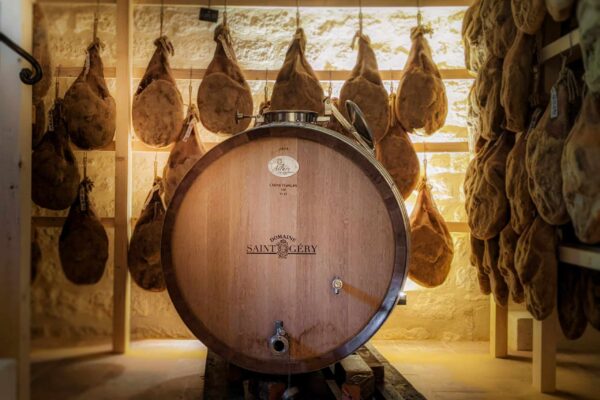
You recognize the winemaker’s signature, yet every cuvée and vintage possesses its own expression.
At its core, wine is fermented grape juice. Yet no one expects a fine wine to taste strictly identical from one year to the next.
The same is true for our loins.
We know our Gascon pigs, our transformation methods, and our curing rooms intimately. Yet each cut arrives with its own size, thickness, marbling, and meat density.
We do not seek to erase these natural variations. We age each loin until it reveals the very best of its inherent qualities.
You will readily recognize our Gascon Pork Loin with Espelette pepper. Yet from one piece to another, there is always a subtle note of discovery.
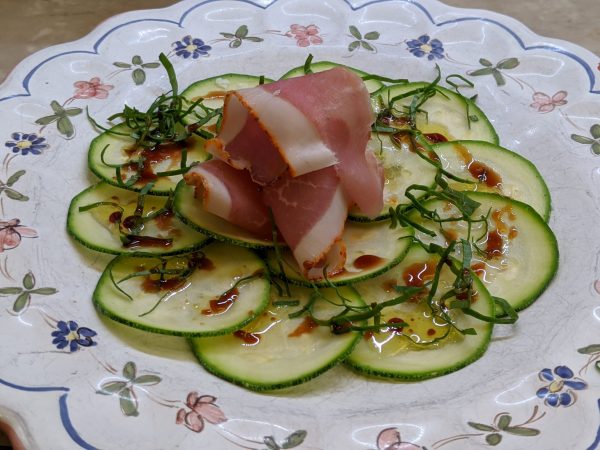
Aged vinegar reduction
Why Espelette pepper?
Espelette pepper did not arrive here entirely by chance.
The Duler family is of Basque heritage. Our ancestors included privateers; my grandfather, born in Soustons, was a master mariner. In Biarritz, there is even a rue Duler.
So when we sought the right way to season the Gascon pork loin, Espelette pepper presented itself quite naturally.
We source our organic Espelette pepper directly from Vincent Hurpeau, a producer in Espelette.
We select it as much for its fragrance as for its gentle warmth.
On the palate, the meat leads first. The pepper reveals itself gradually, adding nuance and depth without obscuring the true character of the Gascon pork.
The cut remains true Gascon pork. The pepper simply brings a subtle touch of the Basque Country.

Whole piece or thinly sliced?
It is the exact same Gascon Pork Loin, crafted through the same rigorous maturation and ageing process.
As a whole piece, you slice it as you go, cut to your preferred thickness.
Thinly sliced, Louis-Dominique handles the slicing at the Domaine.
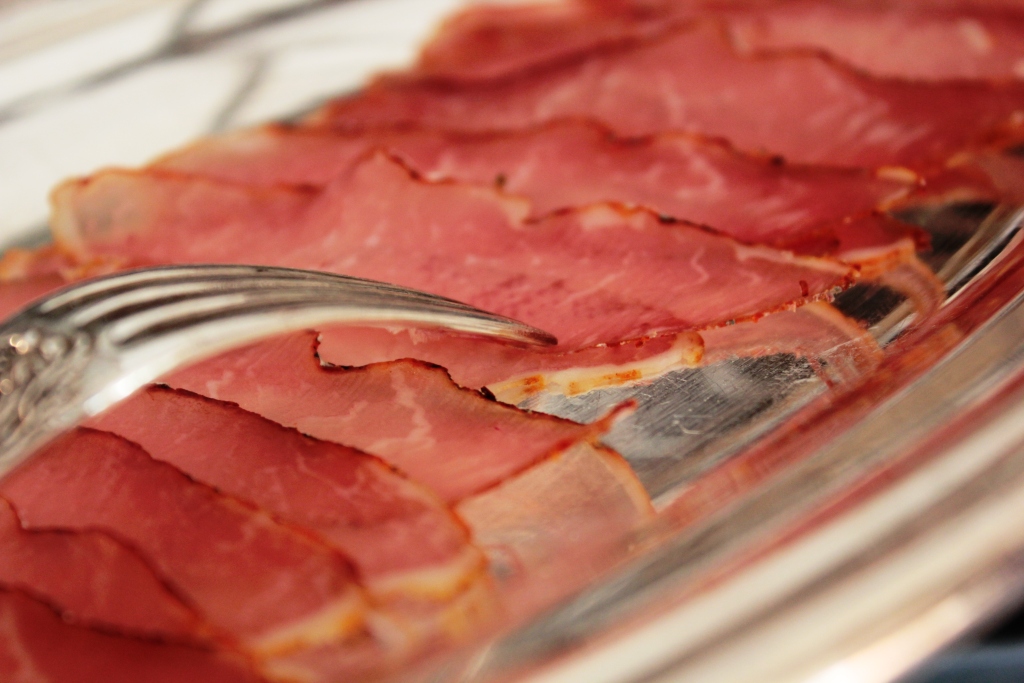
Following extensive testing with various thicknesses, we currently set the slicer to approximately 1 mm: the loin has enough structure for this very fine cut, which also allows the Espelette pepper to express itself fully.
The tray contains 70 g, ideal for two guests.
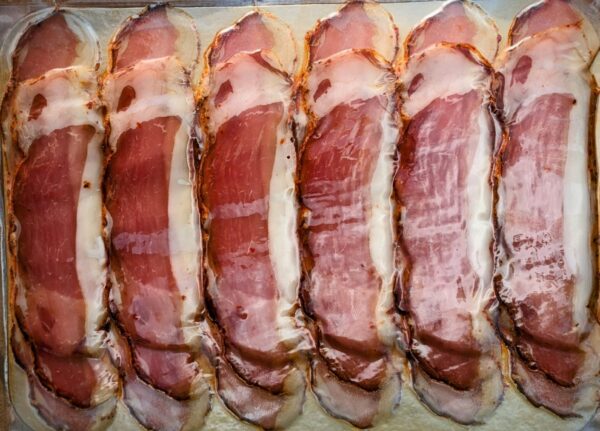
How to serve it
For thinly sliced packs, remove from the refrigerator and open approximately 15 minutes before serving.
For whole pieces, remove from the vacuum packaging 24 to 48 hours before the first tasting, then slice very finely, almost paper-thin. A meat slicer is ideal for achieving a clean, regular cut.
At room temperature, the intramuscular fat softens and the aromas open up fully.
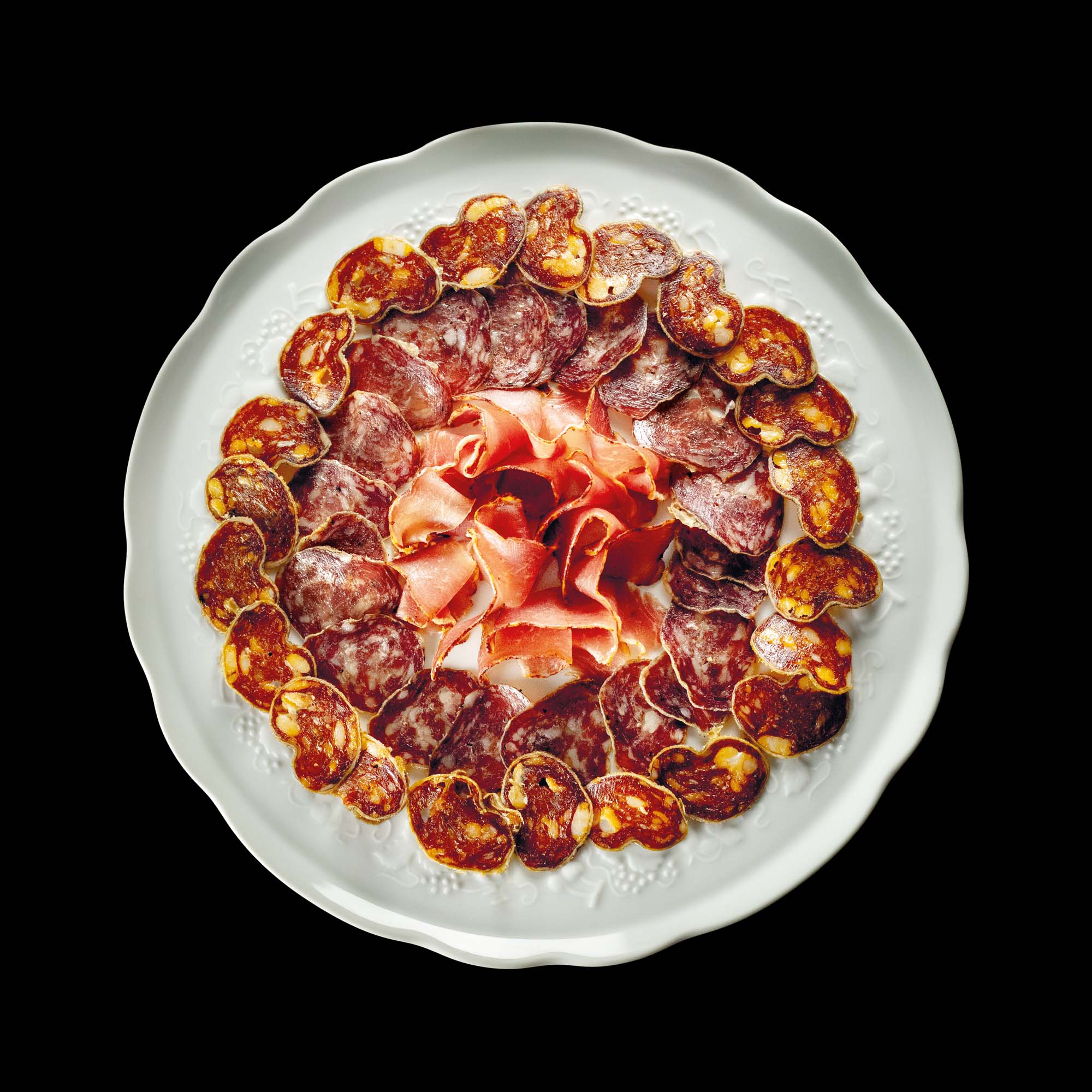
As an aperitif, the cured loin is exceptional on its own. Yet certain pairings bring out its qualities remarkably well.
With a glass of Champagne, the freshness and fine bubbles cut through the fat, cleansing the palate after each slice.
With oysters, the contrast is entirely different: their briny freshness answers the depth of the cured meat, while the Espelette pepper lends a gentle warmth on the finish.
With a few shavings of truffle butter, the experience becomes richer: the richness of the butter extends that of the Gascon pork, carrying the truffle aromas.
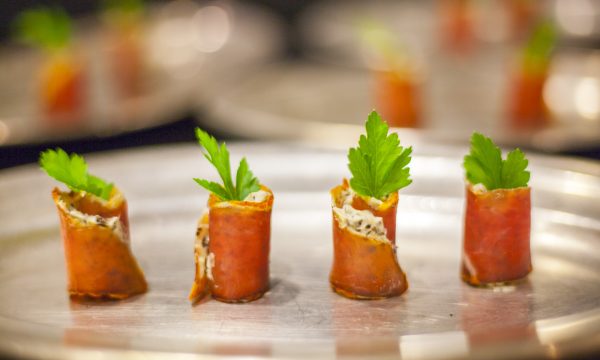
Without saltpeter, without nitrites
Why we use neither saltpeter, nitrite salt, nor any other additives
What if the first bite fails to convince you?
The difference should be striking from the very first bite.
If it is not, this Filet is covered by our First Bite Guarantee.
Questions & Answers
Questions & Answers
How are the Gascon pigs raised?
Our purebred Gascon pigs are raised outdoors by partner farmers under our strict specifications, grazing in wooded and agroforestry pastures across southwest France.
Is Espelette pepper very spicy?
No.
We select it primarily for its fragrance and gentle warmth. The meat remains the focal point; the pepper emerges delicately without masking the flavor of the Gascon pig.
Gascon Pig Loin with Piment d'Espelette
Access our "Cuisine, Agriculture, and Health" conference for free
Similar products
-

The farmer-chef's pantry
from: 1 070,00€Select options This product has several variations. Options may be chosen on the product pageA selection of 19 products from Maison Duler
-
Lamb Figatel from the truffle orchards, for grilling
65,00€ Portions of approx. 350 g. Price per kgThis liver sausage is the product of ourAdd to cartPorc Gascon Figatelle for grilling
65,00€ Portions of approx. 350 g. Price per kgGrilled on a plancha or in a pan, it will accompanyAdd to cartDuck Breast Tomme 110%
140,00€ Pieces of +/- 300g. Price per kilo100% duck breast, 10% organic wine lees, molded inAdd to cart