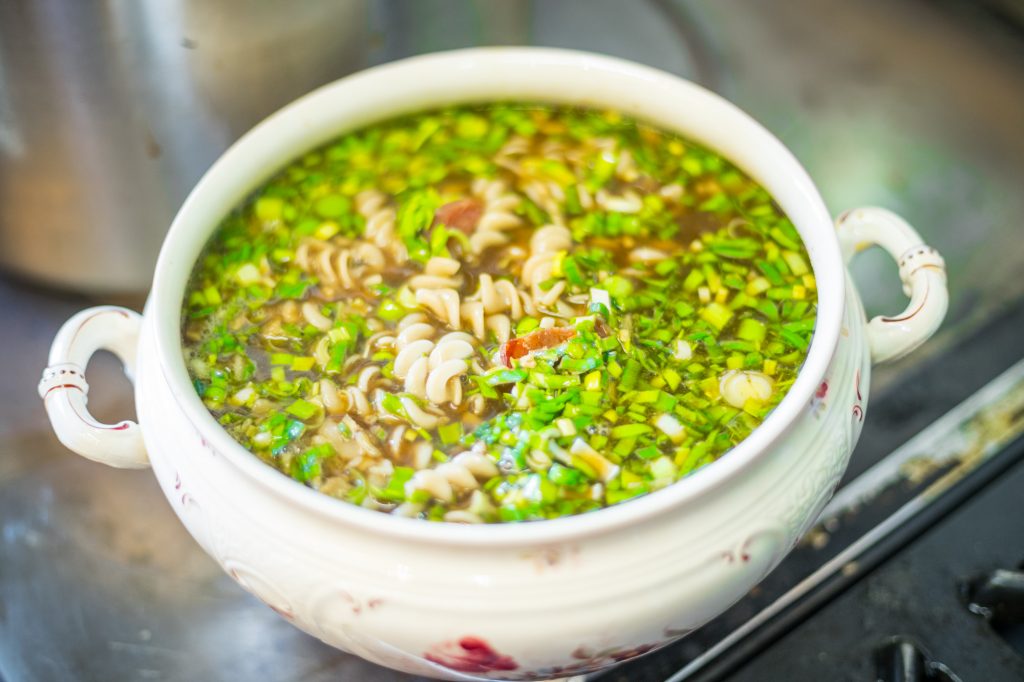


Tous nos cuisinés sont fabriqués sans conservateur, ni additif, ni émulsifiant, ni aucun arôme artificiel ou naturel.
Nous apportons un grand soin aux choix des ingrédients qui entrent dans leur composition. Les légumes, les herbes, les aromates et les condiments sont tous cultivés dans notre potager-verger sauvage, le porc est le même que celui utilisé pour notre jambon et autres salaisons.
Parmi tous nos plats cuisinés, en voici trois, emblématiques de notre savoir-faire artisanal, de l’esprit de notre cuisine et de l’extrême qualité des ingrédients utilisés.
- Les rillettes
- Le pâté croûte ou pâté en croûte
- Le bouillon concentré d’os et couennes de jambon
Beaucoup d’autres préparations très savoureuses sont à découvrir dans l’espace boutique.

Les rillettes
Les rillettes sont préparées « à l’ancienne ». Bien que nous essayions habituellement d’éviter cette expression galvaudée, elle s’applique parfaitement ici. La viande (principalement de la poitrine et un peu d’épaule) est d’abord cuite dans un chaudron fonte et inox jusqu’à coloration bien marquée (environ 2 heures en remuant régulièrement).
Après l’ajout de la garniture aromatique (oignons, ail), on laisse compoter à couvert pendant 6 à 8 heures à feu très doux, puis on éteint le feu.
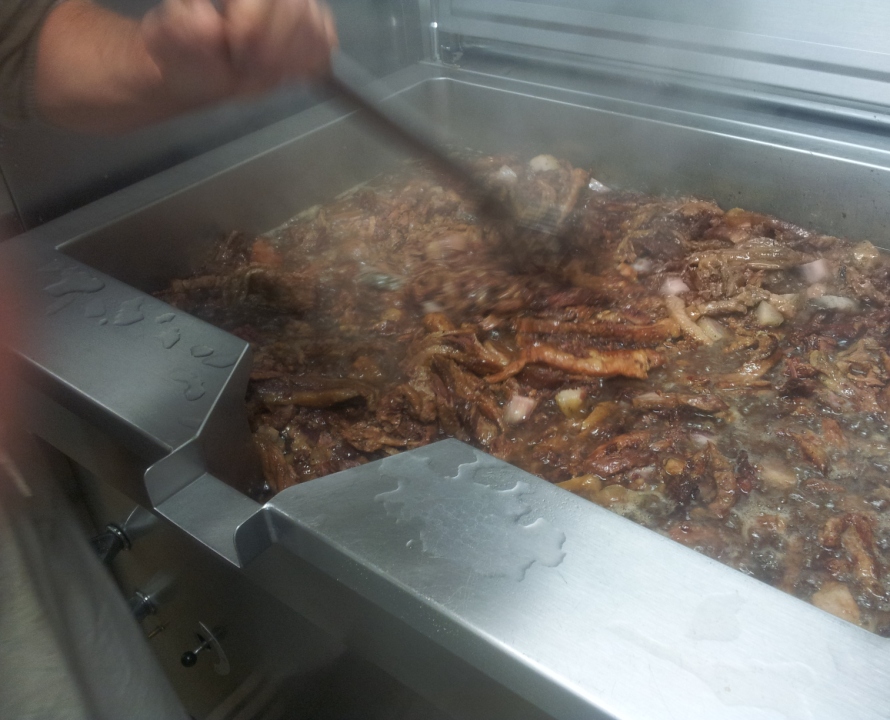
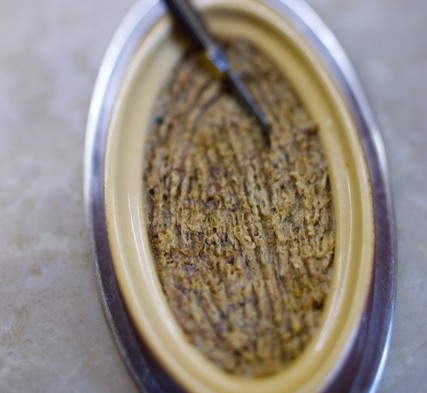

À ce moment-là, le gras remonte à la surface, on enlève la plus grosse partie du gras et on redémarre la cuisson en remuant sans arrêt. L’objectif est d’évacuer le maximum d’humidité tout en émiettant les morceaux de viande. Au bout d’environ deux heures de ce traitement, la viande est complètement défaite et commence à accrocher au fond du chaudron (et vous avez mal aux bras).
C’est à partir de là que l’on remet le gras petit à petit sans cesser de remuer, créant ainsi une émulsion (à l’instar d’une mayonnaise), jusqu’à saturation.
Et c’est fini, on peut mettre en pot, en terrine ou autre.
Cette technique longue et contraignante a fait le bonheur de nombreuses générations de Français avec un produit extrêmement savoureux (réaction de Maillard en cascade) et parfaitement stable (les rillettes ont été inventées avant la naissance de Monsieur Frigidaire). En effet, avec ce procédé, nous avons remplacé la plus grande partie de l’eau contenue dans la viande par de la graisse qui empêche les bactéries pathogènes de se développer tout en captant l’ensemble des arômes.
C’est un régal !
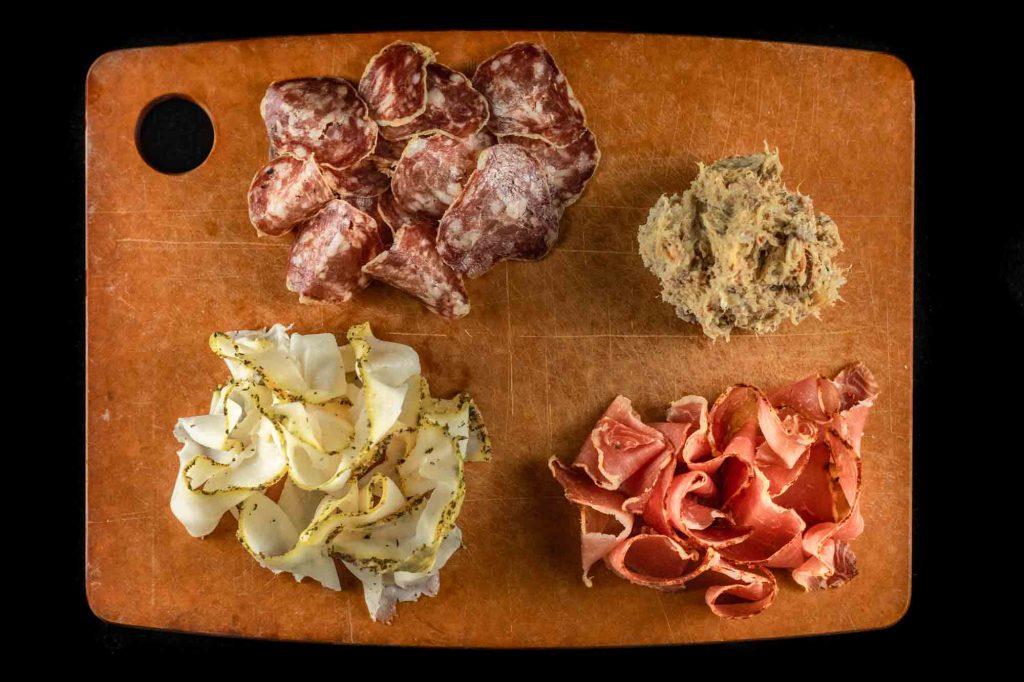
Nous fabriquons également d’autres pâtés et terrines que vous pourrez découvrir sur l’espace boutique.
Le pâté en croûte
Au restaurant, nous préparons régulièrement des pâtés en croûte pour le bonheur de nos convives (et de la famille). Ce qui nous intéresse, c’est le goût : la texture, la profondeur, l’équilibre, enfin tous ces petits détails qui, mis bout à bout, font la différence. Avec toujours la même logique.
C’est avec cette philosophie que nous préparons nos pâtés en croûte.
La base de notre savoir-faire : c’est la recherche incessante d’ingrédients sains et respectueux, du plus important jusqu’à celui qui semble le plus négligeable, du plus visible au plus caché. C’est ce qui apporte ce supplément d’âme indispensable à une recette et qui fait le style unique de la Maison Duler.
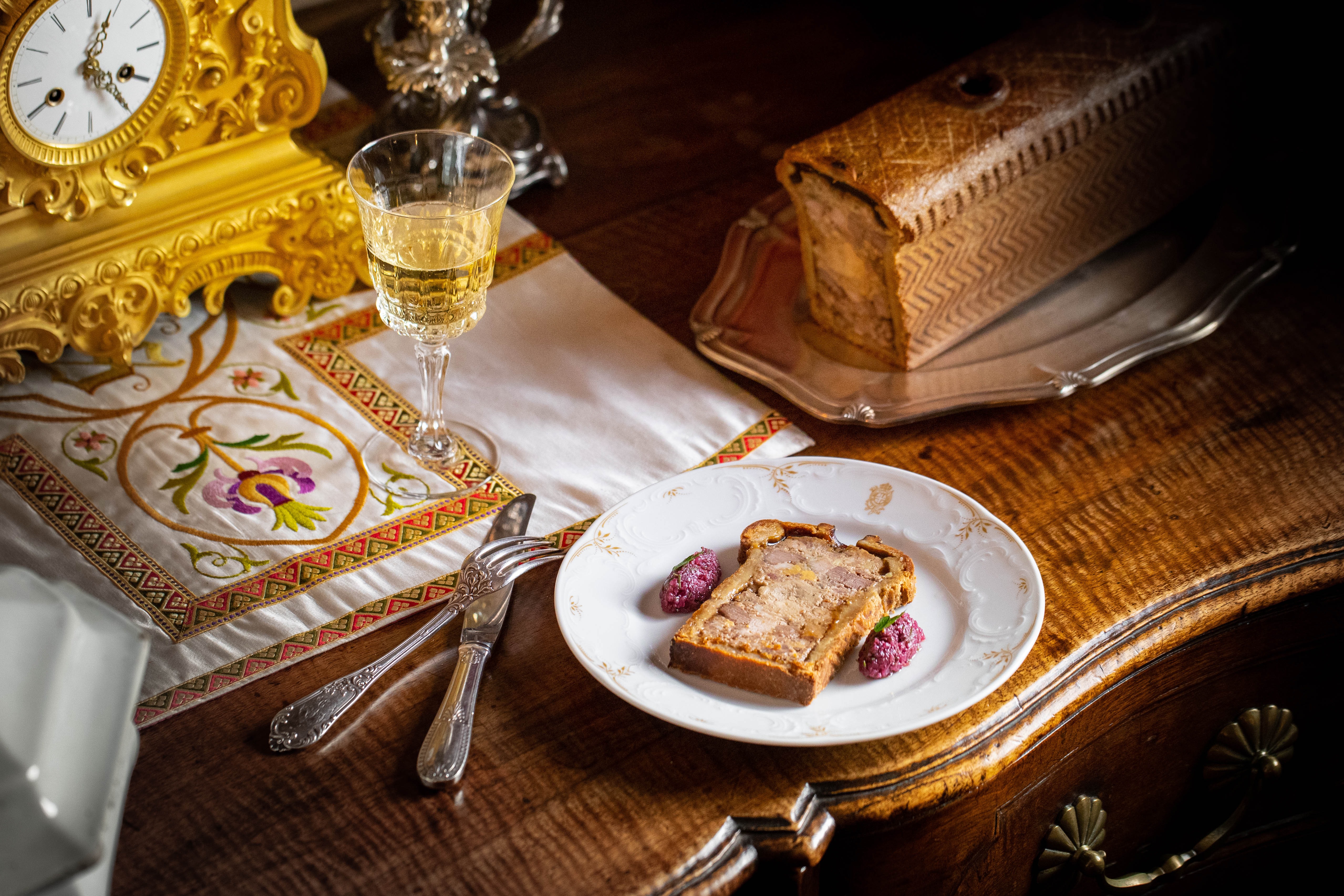
Pour la croûte, croustillante, savoureuse et digeste, nous utilisons :
notre farine de blé truffier, notre saindoux de porc gascon pour remplacer le beurre, du sel naturel de Salies de Béarn (qui vient d’une source d’eau salée …) et de l’eau de la Source au Loups située sur le domaine.
Pour la viande, moelleuse, au goût profond, nous privilégions :
le Porc Gascon pure race élevé sur parcours agroforestier, les volailles bio et agroforestières de Nicolas élevées longuement et spécialement pour nous, le veau Bio d’Henri, né et élevé dans le Quercy Blanc à 10 kilomètres de la Maison Duler et évidemment, le foie gras du Lot ultra-frais préparé le jour même de l’abattage
Pour les gelées, complexes et enivrantes, nous utilisons :
notre bouillon d’os et couennes de jambon, os et parures de veau bio, os et parures de volailles bio, la garniture aromatique avec les légumes et aromates bio de notre potager/verger sauvage et toujours l’eau de la Source aux Loups
Nous maîtrisons la synergie de tous ces éléments avec délicatesse et technicité.
C’est notre quête permanente.
Comment un pâté en croûte peut devenir un produit d’exception !

Bouillon concentré d’os et couennes de jambon
Presque chaque semaine, nous fabriquons plusieurs litres de bouillon que nous utilisons pour notre restaurant. Une autre partie est mise en pot de verre, que vous trouverez sur notre boutique en ligne.
Ces bouillons, longuement mijotés, en plus d’être merveilleusement délicieux, sont de véritables des élixirs de jouvence.
Ils constituent une véritable extraction des minéraux contenus notamment dans les os (calcium, magnésium, phosphore, sodium).
Grâce à sa teneur élevée en collagène, le bouillon assouplit les articulations et aide à évacuer les toxines. C’est pour toutes ces raisons que l’on donnait autrefois un « bon bouillon » pour requinquer les malades et convalescents.
Pour élaborer nos bouillons, nous couvrons largement les os et les couennes d’eau de source froide, nous ajoutons les légumes de saison du jardin. Puis sur le feu, on porte ce bouillon à ébullition et on le laisse mijoter minimum 24 heures.
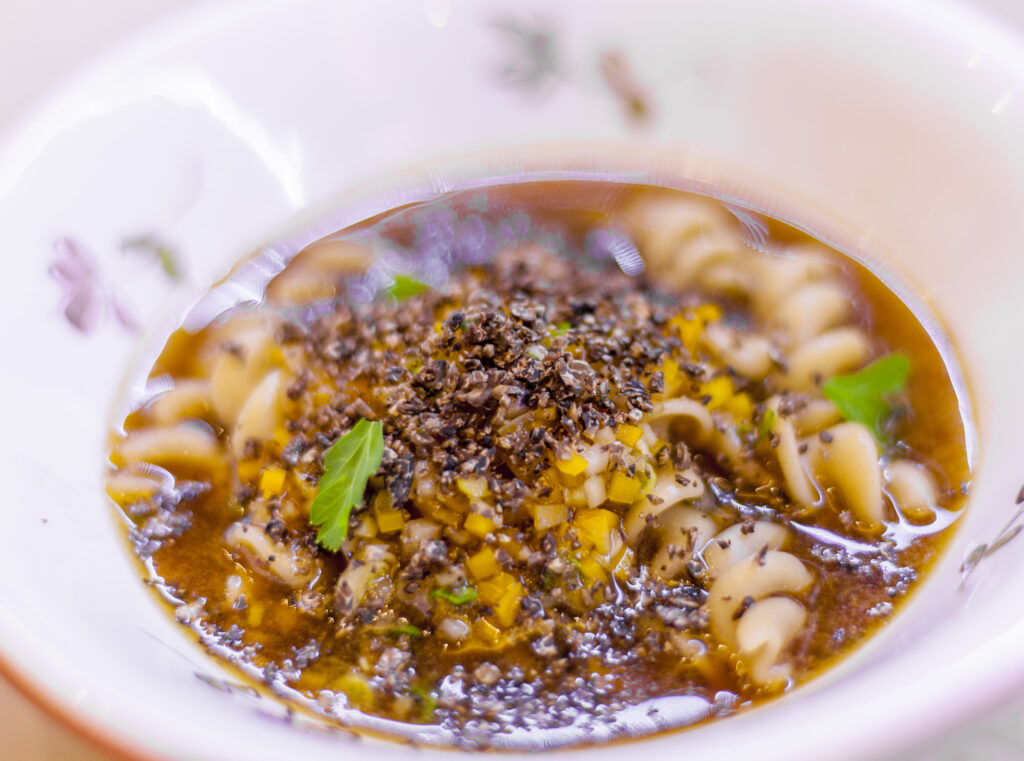
Après quoi, nous le filtrons au chinois tamis (passoire fine), le bouillon au réfrigérateur et la garniture au compost. Le lendemain, nous enlevons la graisse qui est remontée à la surface et qui s’est solidifiée et nous obtenons un bouillon parfaitement dégraissé.
Si la gastronomie hivernale fait le bonheur des bouillons longuement mijotés, ceux-ci se consomment en toute saison.
L’été, servez-le chaud ou froid, avec des herbes fraiches finement ciselées.
L’hiver utilisez-le pour faire une soupe à l’oignon