

We have created a range of ethical cosmetics at the estate.
It may seem an unexpected idea since we already do so much. Yet, everything is connected.
Since we arrived at Saint-Géry, we have planted numerous aromatic and medicinal herbs. First, we planted culinary aromatics: thyme, rosemary, savory, sage, parsley... Then medicinal aromatics: lavender, clary sage...
Always following the same philosophy: plants must find their balance and nourishment within their environment.
They grow in conditions almost identical to wild plants.
Yields may be modest, but the scent is extraordinary.
We regularly use these plants in our kitchen; their fragrance is incomparable to plants grown conventionally, even organic ones.
It was with Doctor Daniel Penoël, an aromatherapist and pioneer of natural medicine, that we discovered essential oils and the formidable power that the hundred or so active molecules in each of them have over the body and mind.
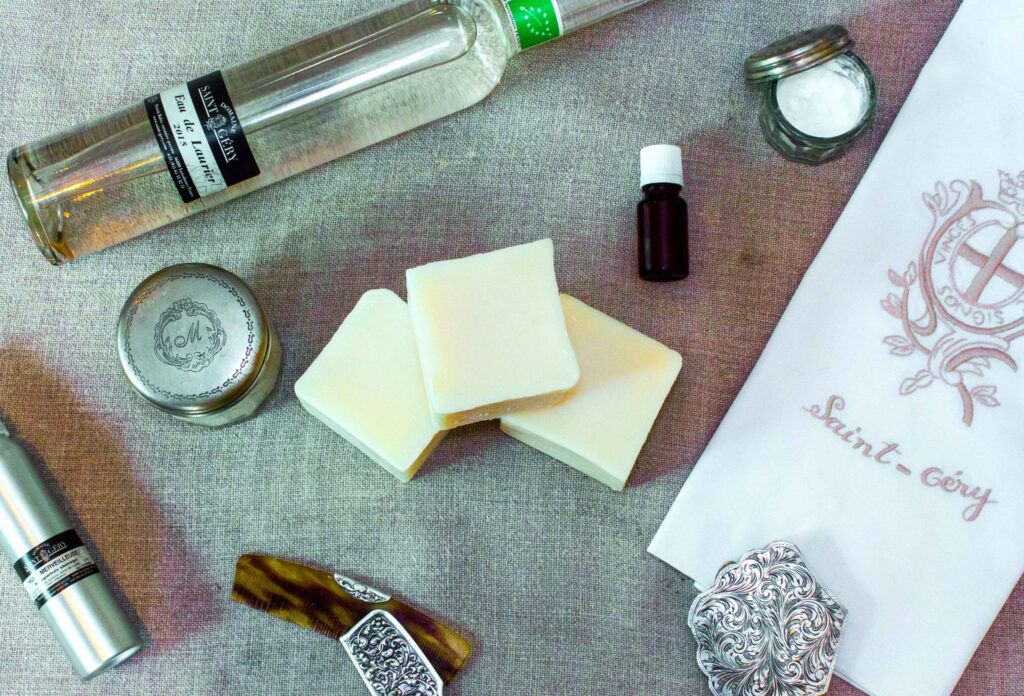
For the past 5 years, we have been distilling some of them (sage, lavender, rosemary, savory...) using a low-pressure steam distillation process—the method that allows us to extract the maximum active principles, scents, and flavors from the plant.
Here, aromatic plants are, of course, hand-picked and carefully sorted, removing all woody parts and keeping only the fragrant floral tips. Here again, the essential oils we produce (in very small quantities) are more fragrant than those found commercially (even organic ones).
We first used these floral waters in the kitchen. As for Pascale, she began making face and body creams. It is a source of great satisfaction for her to use plants she has harvested herself. Beyond that, she noticed a beneficial and immediate effect, providing such a natural sense of well-being that she decided to take her experiments further.
The fat used for these first balms was sunflower oil produced on the estate.

Then came the lard
It happened by "accident." One day, while Pascale was making a moisturizing cream, her eyes fell on a jar of lard in the kitchen for baking. Why not try using the fine fat of the Gascon pig since it is "wholesome and gentle"?
And then, it was a revelation!
Not only did the cream have an excellent consistency, but its absorption by the skin was remarkable. The resulting feeling of comfort was surprising. From there, after many trials, a variety of creams for the face and body followed.
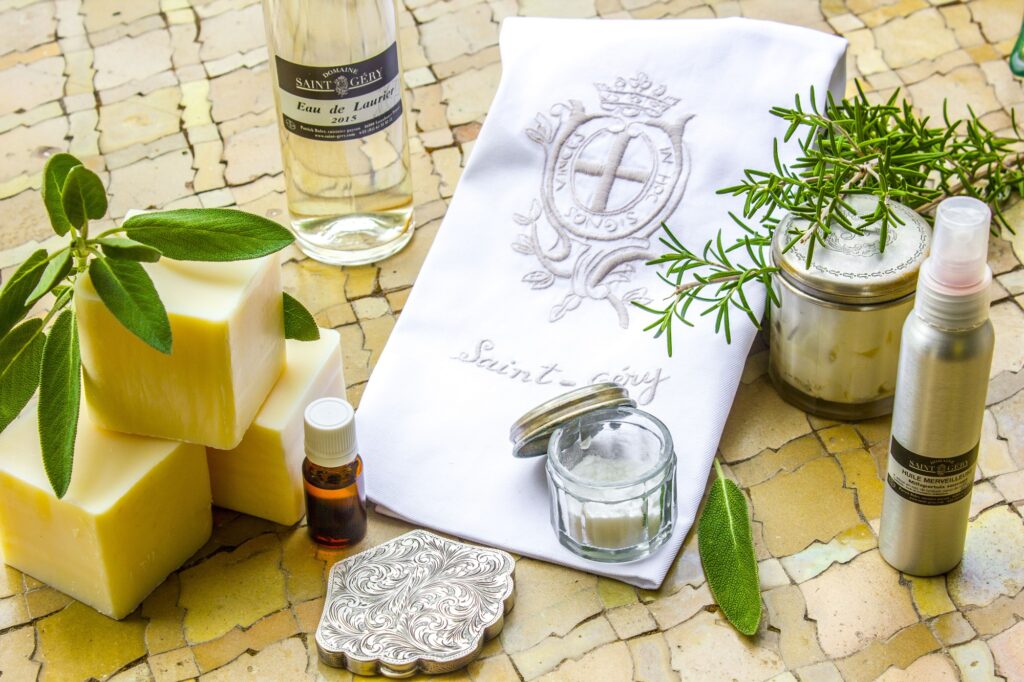
If lard works for creams, there is no reason why it shouldn't work for soaps! What could be more natural than wanting to explore all the possibilities offered by lard? So we tried, and it worked!
Through research, we realized that lard was already used in ancient times in balms and soaps.
With Pascale, we wanted to learn more, and in 2015, we travelled to the Drôme to meet Franck Dubus (a Doctor of Pharmacy specializing in aromatherapy and saponification) to understand and master the technique of making soap using cold-process saponification.
Cold-process saponification is a natural method, the only one that preserves all the glycerin in the soap.
It is the transformation of a fatty substance into soap plus glycerin.
Taking this approach further, we created superfatted soaps, meaning that part of the fat is not saponified, thereby leaving a protective film on the skin.
Our Sain et Doux soap, in addition to cleansing, deeply hydrates the skin.
We have created only two versions of this soap: one with lavender essential oil for optimal hydration of all skin types, and one with rosemary essential oil for oily skin.
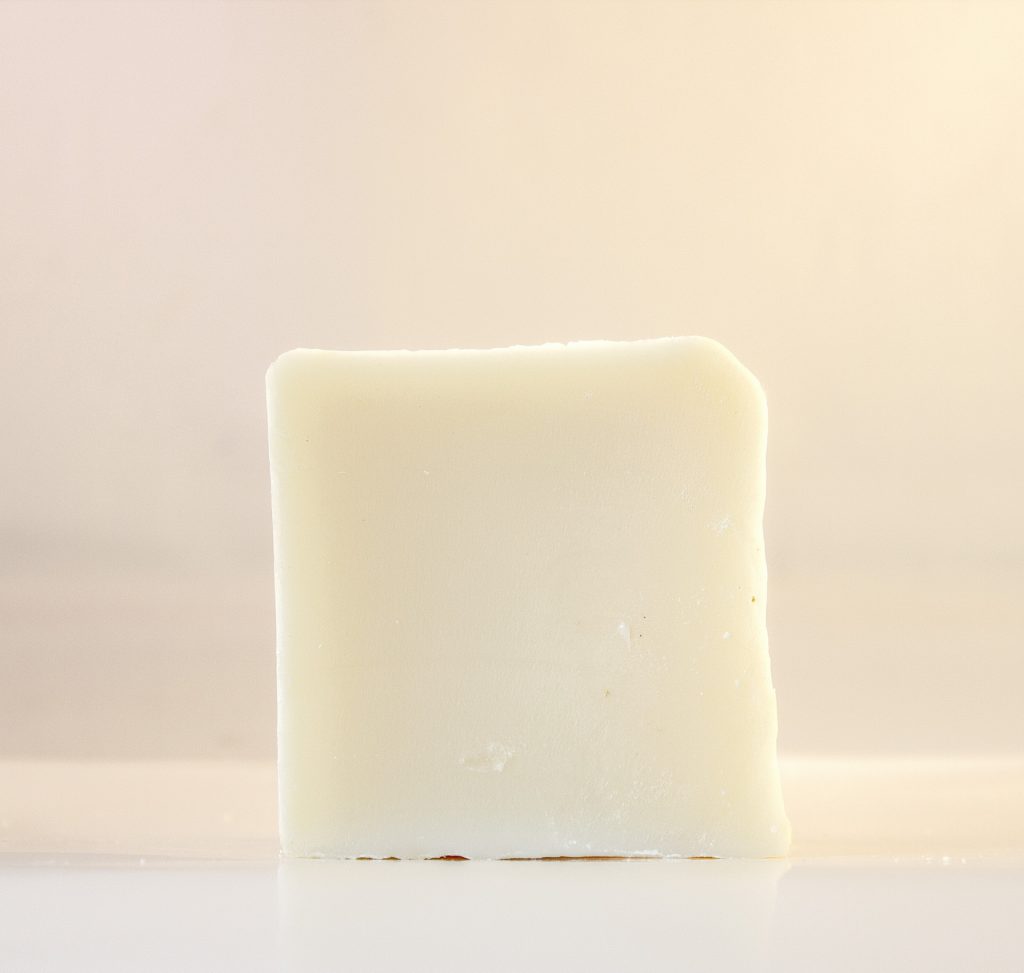
These soaps are neither lavender-blue nor green; they are white, without dyes or preservatives; their manufacturing process is non-polluting and they are entirely biodegradable.
We make them entirely by hand, set in wooden moulds that we have made and cut ourselves.
Then, we air-dry them on racks for at least 24 months to ensure a soap with a rich lather.
This is the origin of the Sain et Doux range, born from the plants and flowers of Domaine de Saint-Géry, Gascon pig lard prepared by us, and recipes from Pascale and myself.