


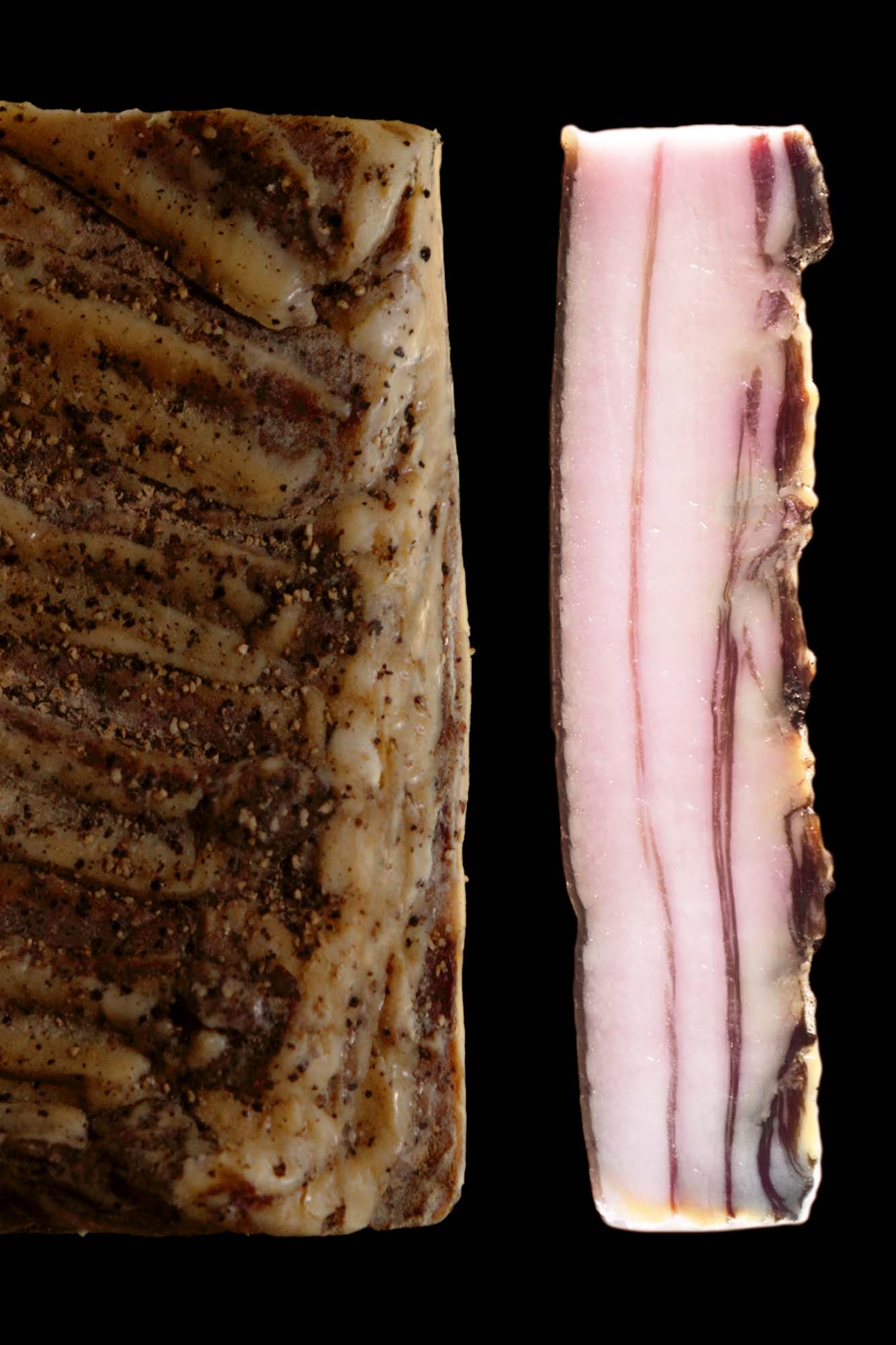
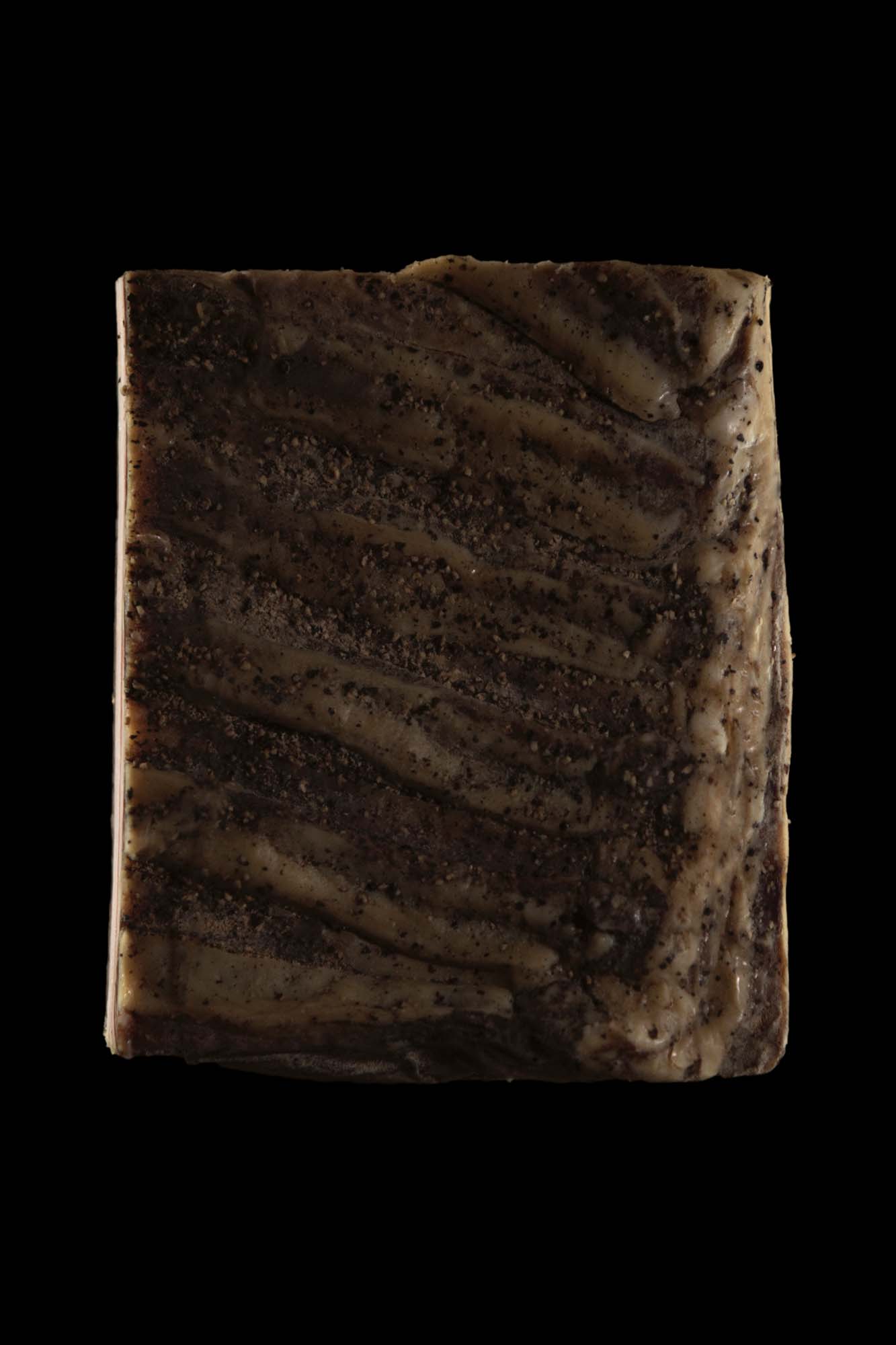
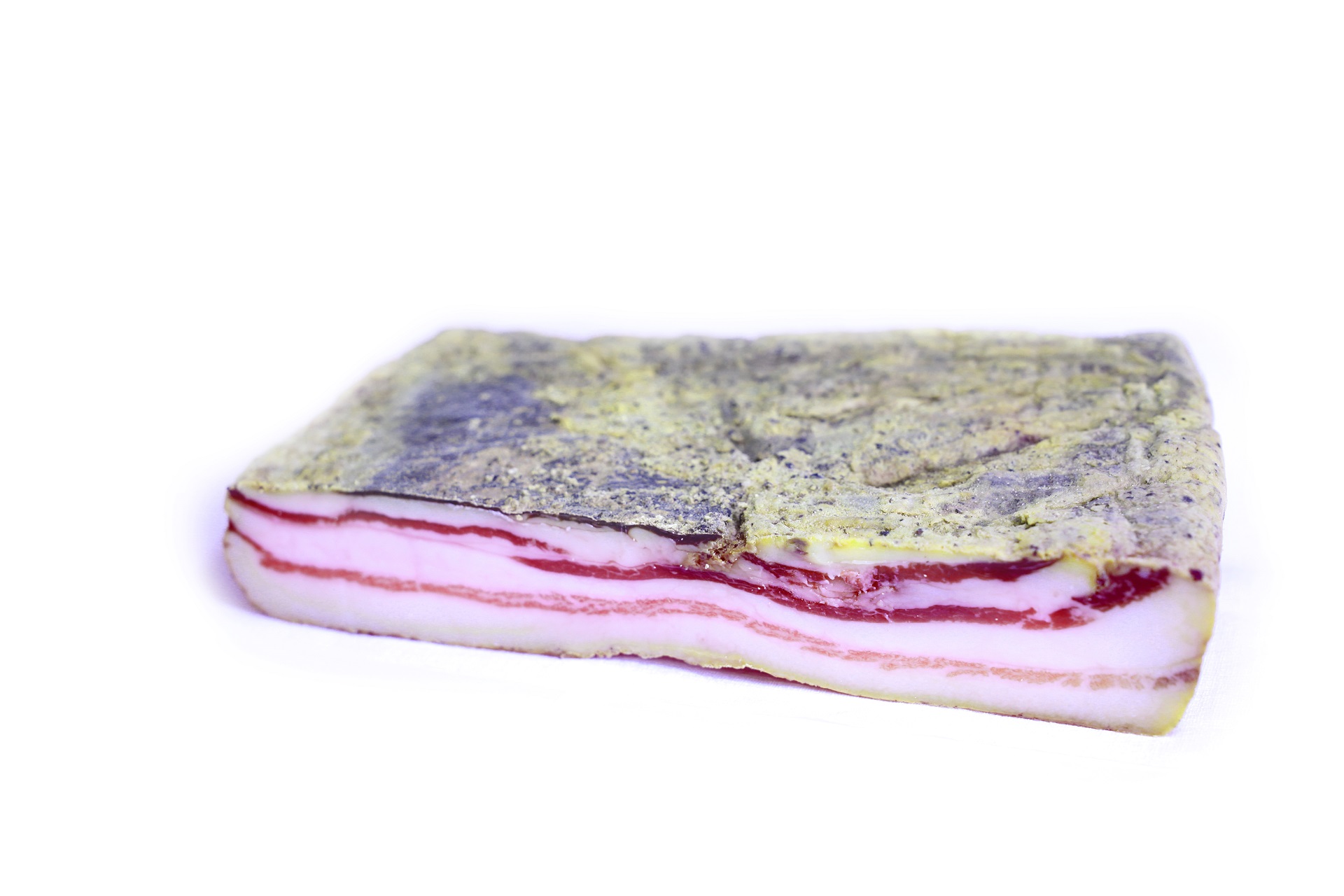
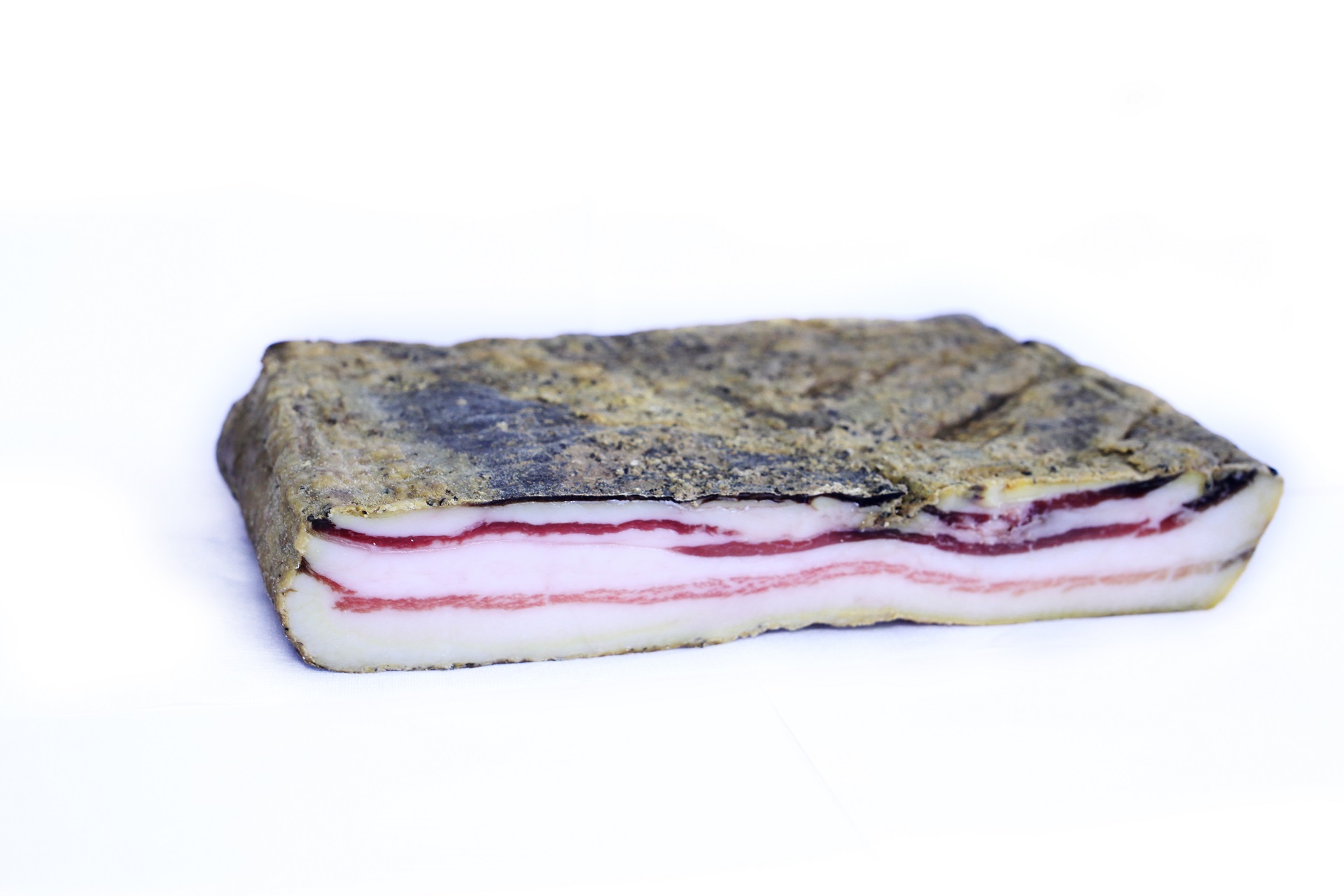
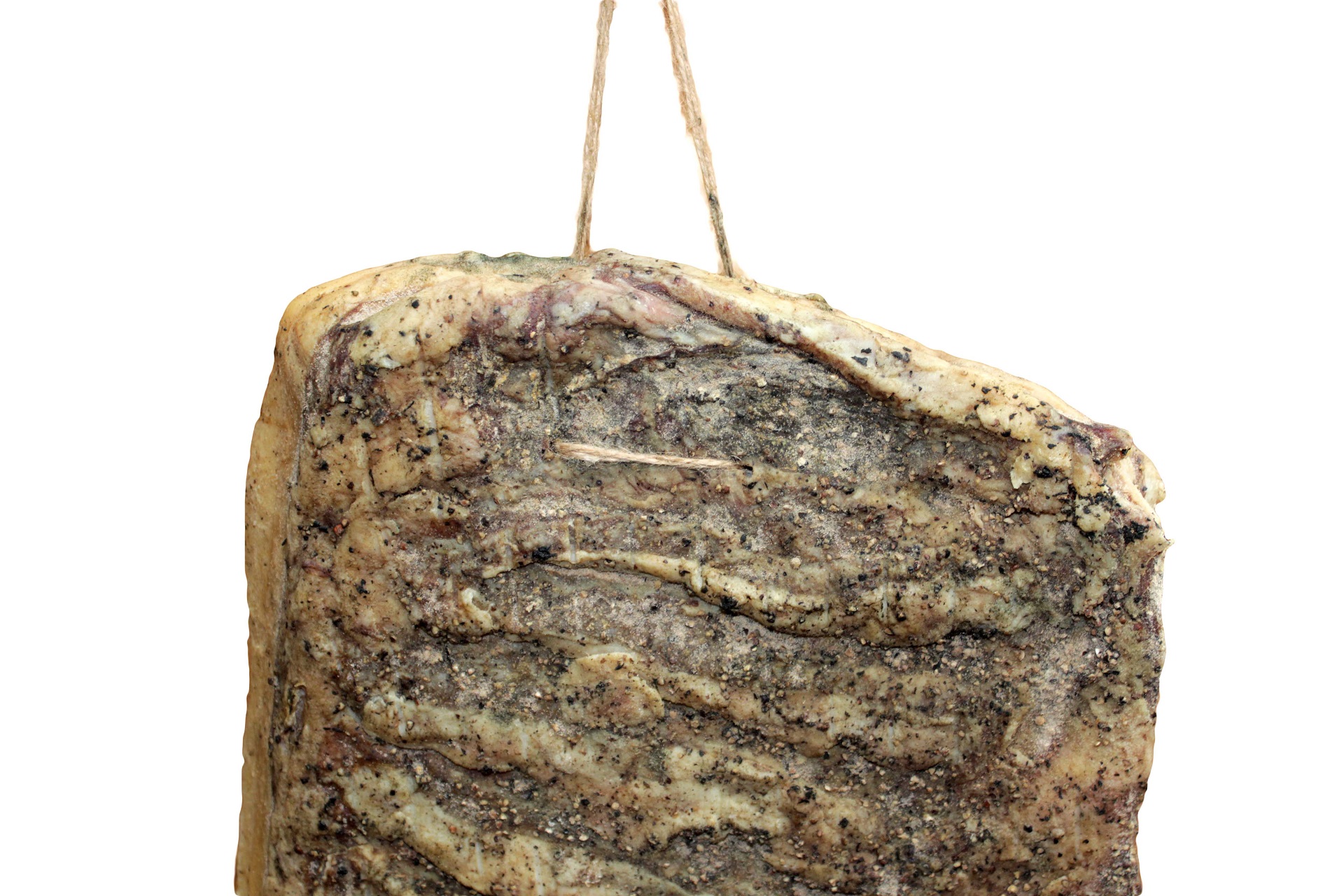
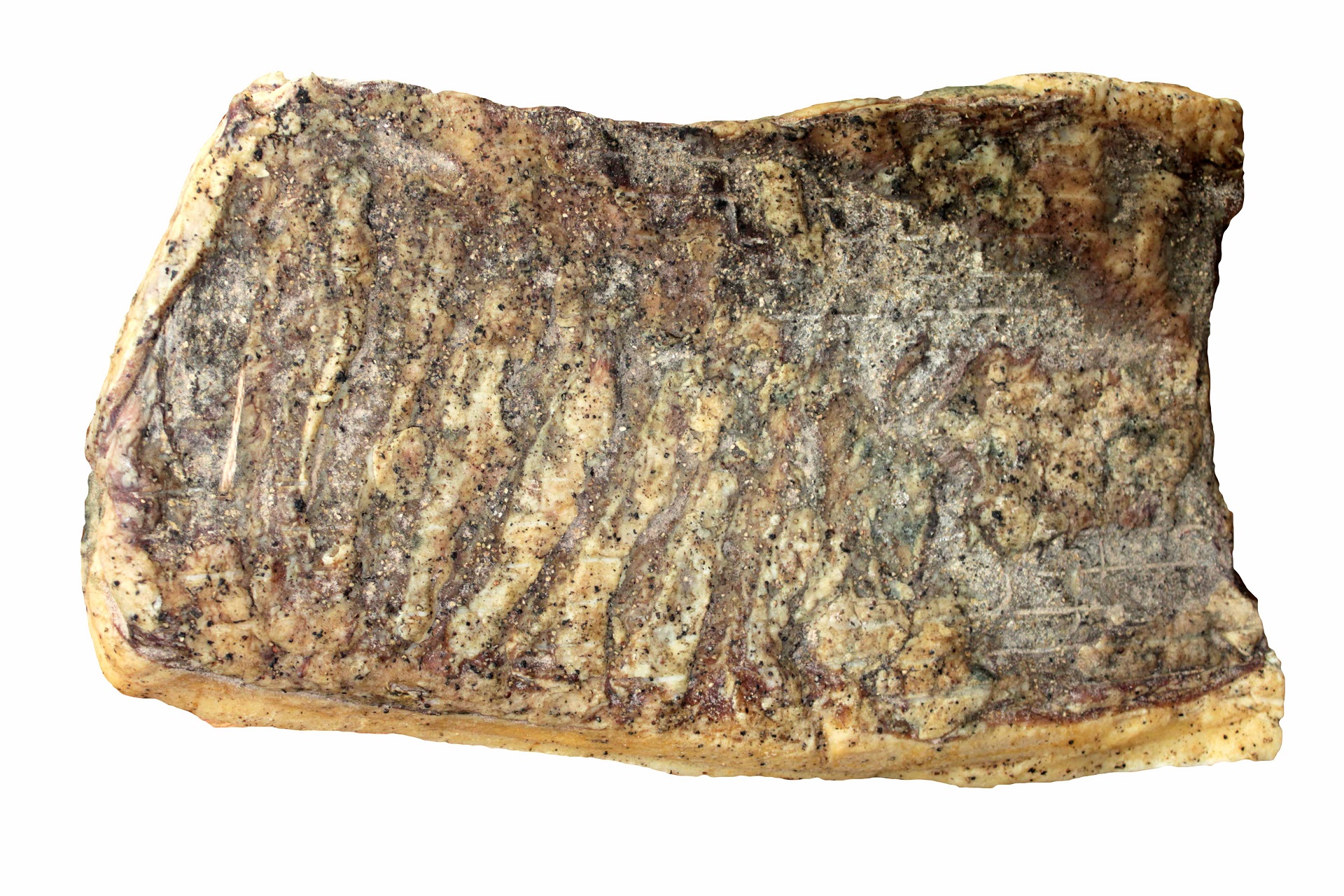
Cured Gascon Pork ventrèche
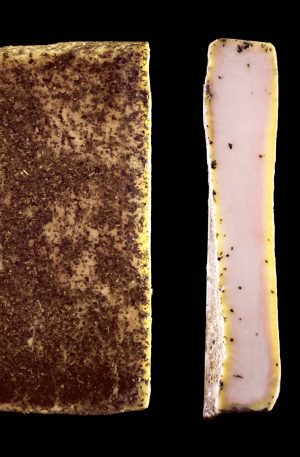
Ventrèche is the cut along the ribs of the pig. The quality of its fat makes it a choice cut for extremely wholesome cooking, recommended by nutritionists.
The intense flavours of this ventrèche come from long ageing in our cellars (between 8 and 12 months). A few grams are enough to flavour a dish and give it incomparable depth.
from: 27,00€
| Weight | N/A |
|---|---|
| Ageing | 8-12 months |
| Ingredients | Gascon Pork Belly, Salt, Pepper |
| Best before | 6 months |
| Packaging | Vacuum-packed |
| Tasting advice | Open the packs 48 hours in advance (at least 24 hours), and leave them hanging in a well-ventilated, temperate place. Remove the 70g thin slices from the pouch 15 minutes before serving at room temperature. |
| Nutritional values | Matières grasses g/100g : 46.40 |
| Weight | thin slices 70 g, 0.5 kg, 1 kg |
Cured Gascon Pork ventrèche
Here are a few simple recipes:
Mini Croque-Monsieur with ventrèche
Roasted Gascon pork ventrèche with apricots or prunes
-
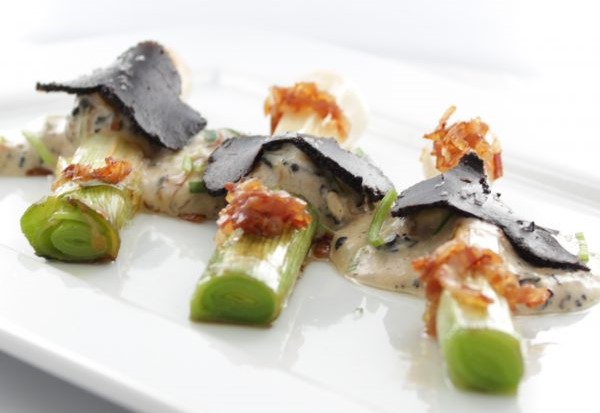
- Braised leeks, truffles and ventrèche
-

- Prunes with ventrèche
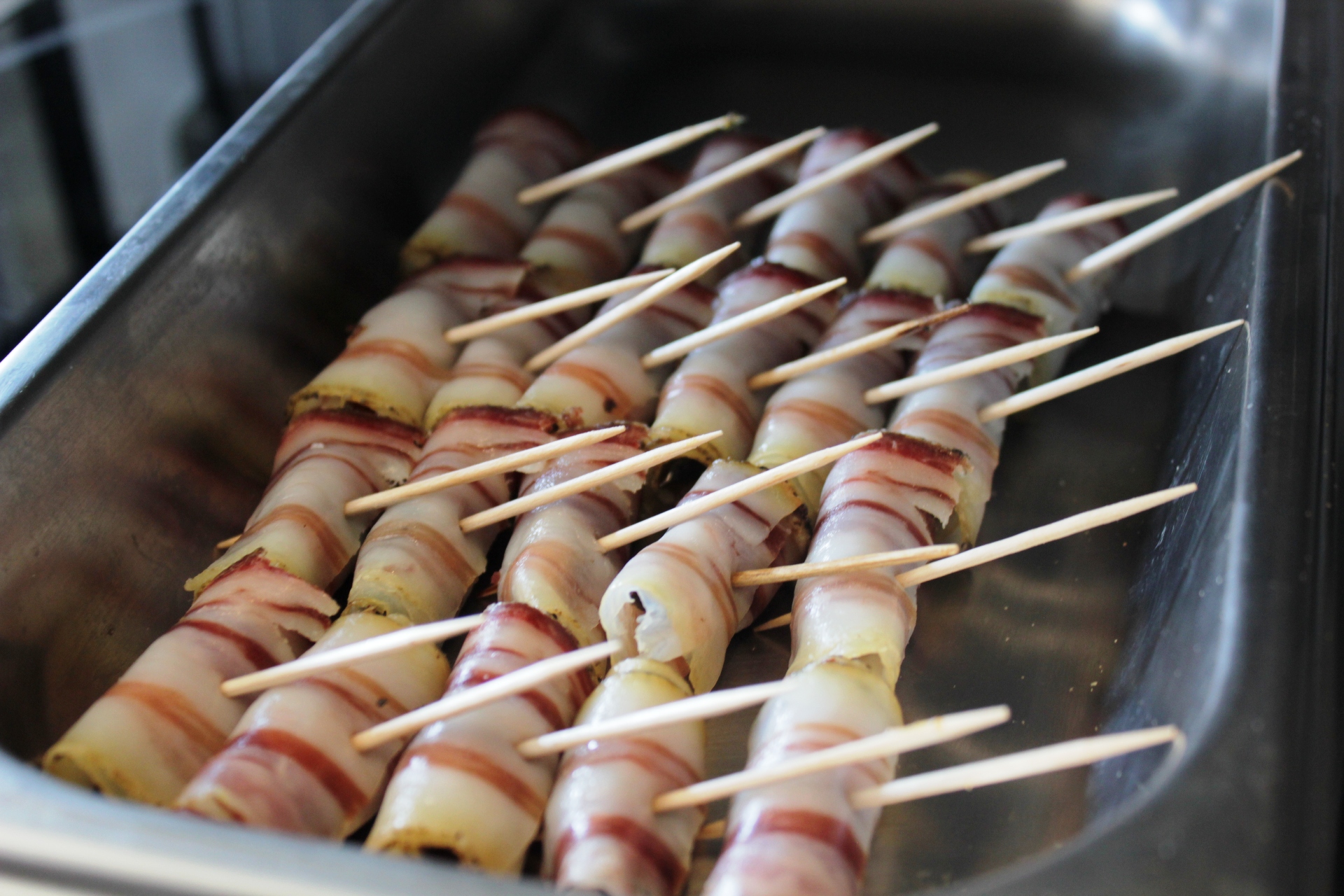
-
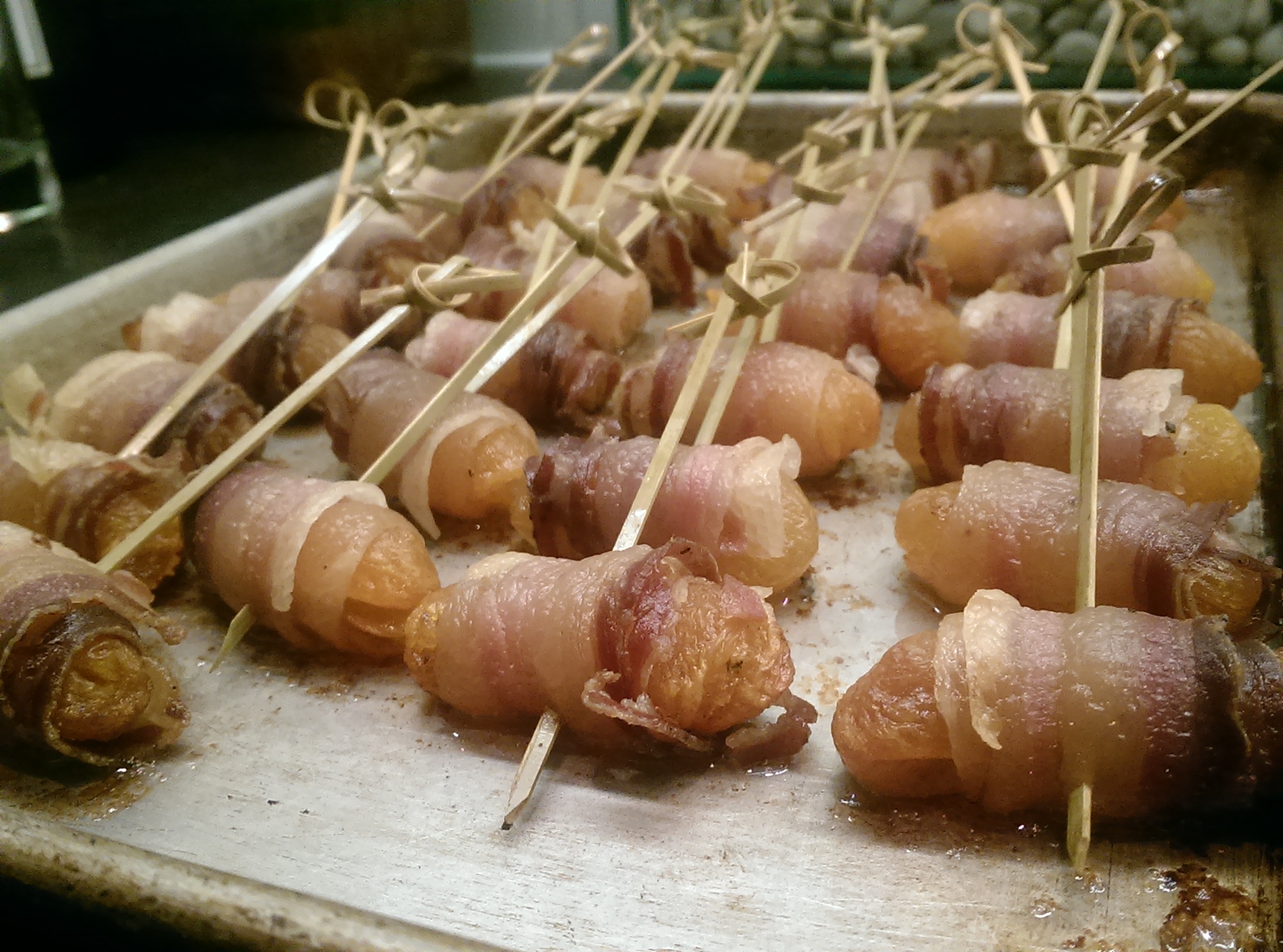
- Apricots wrapped in ventrèche
-
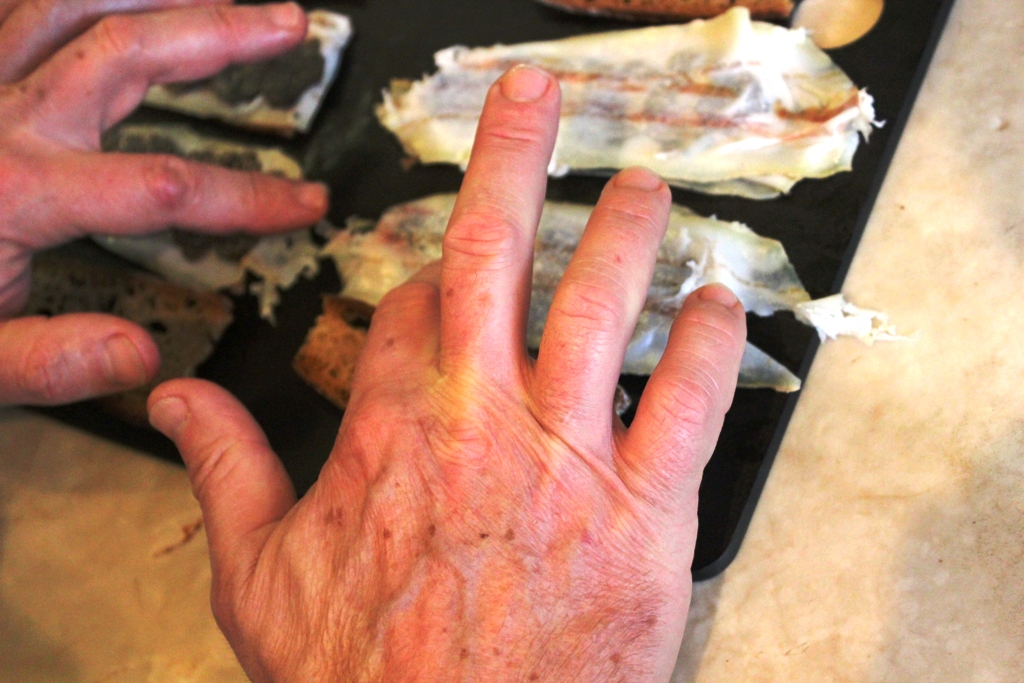
- Preparing Croque-Monsieur with ventrèche
-
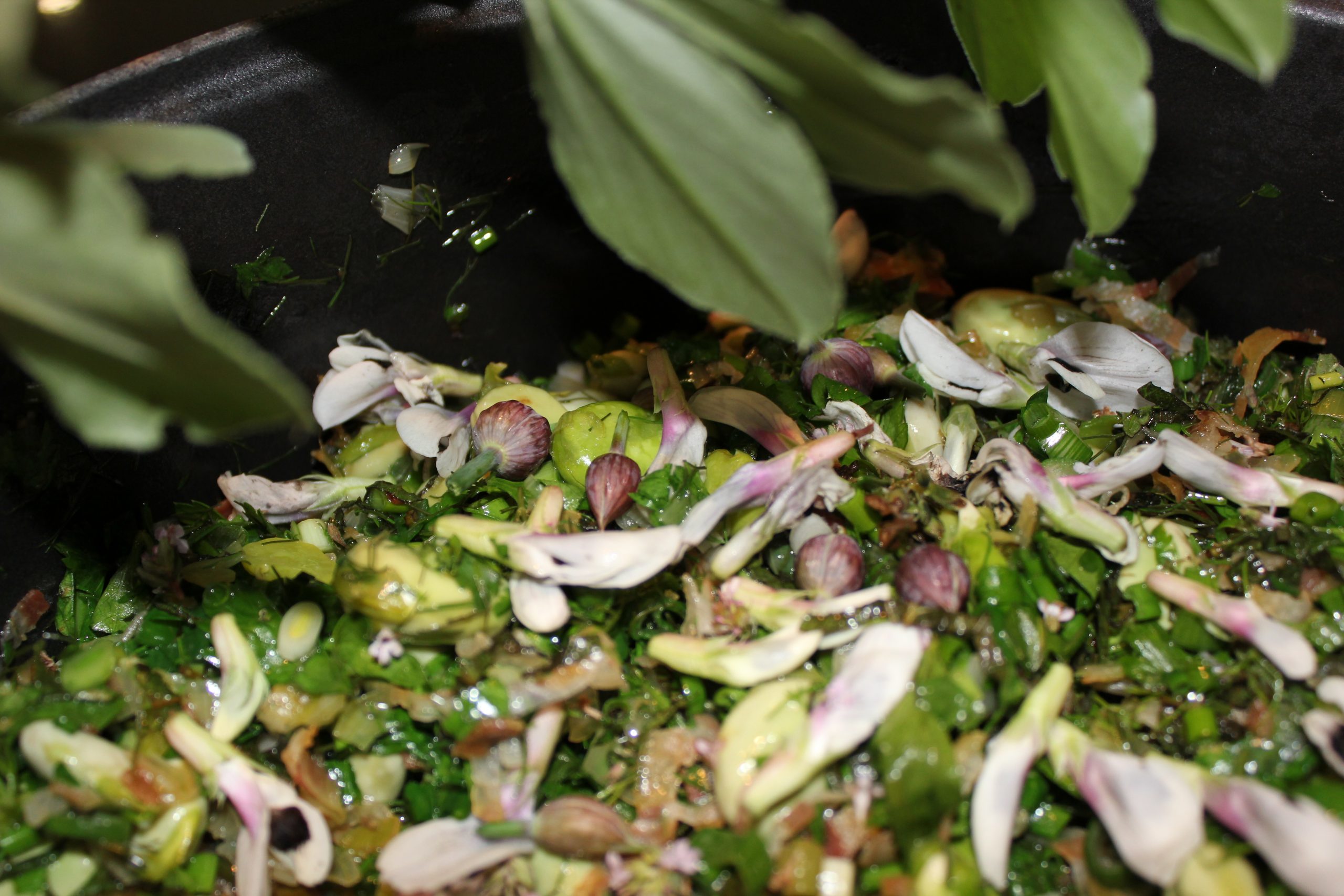
- Fresh broad bean stew with ventrèche and garden herbs
-
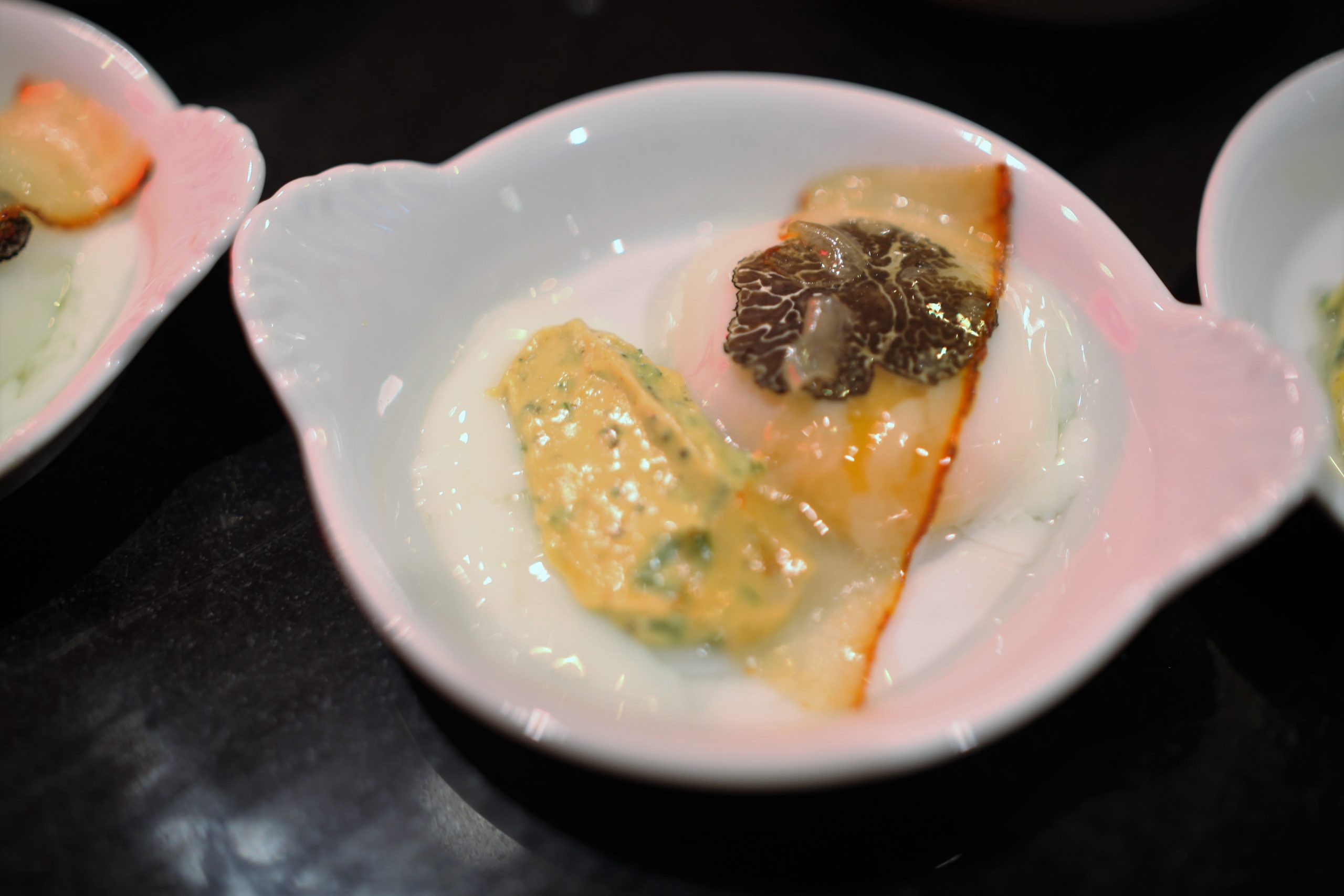
- Egg, aged ventrèche, and truffle
-
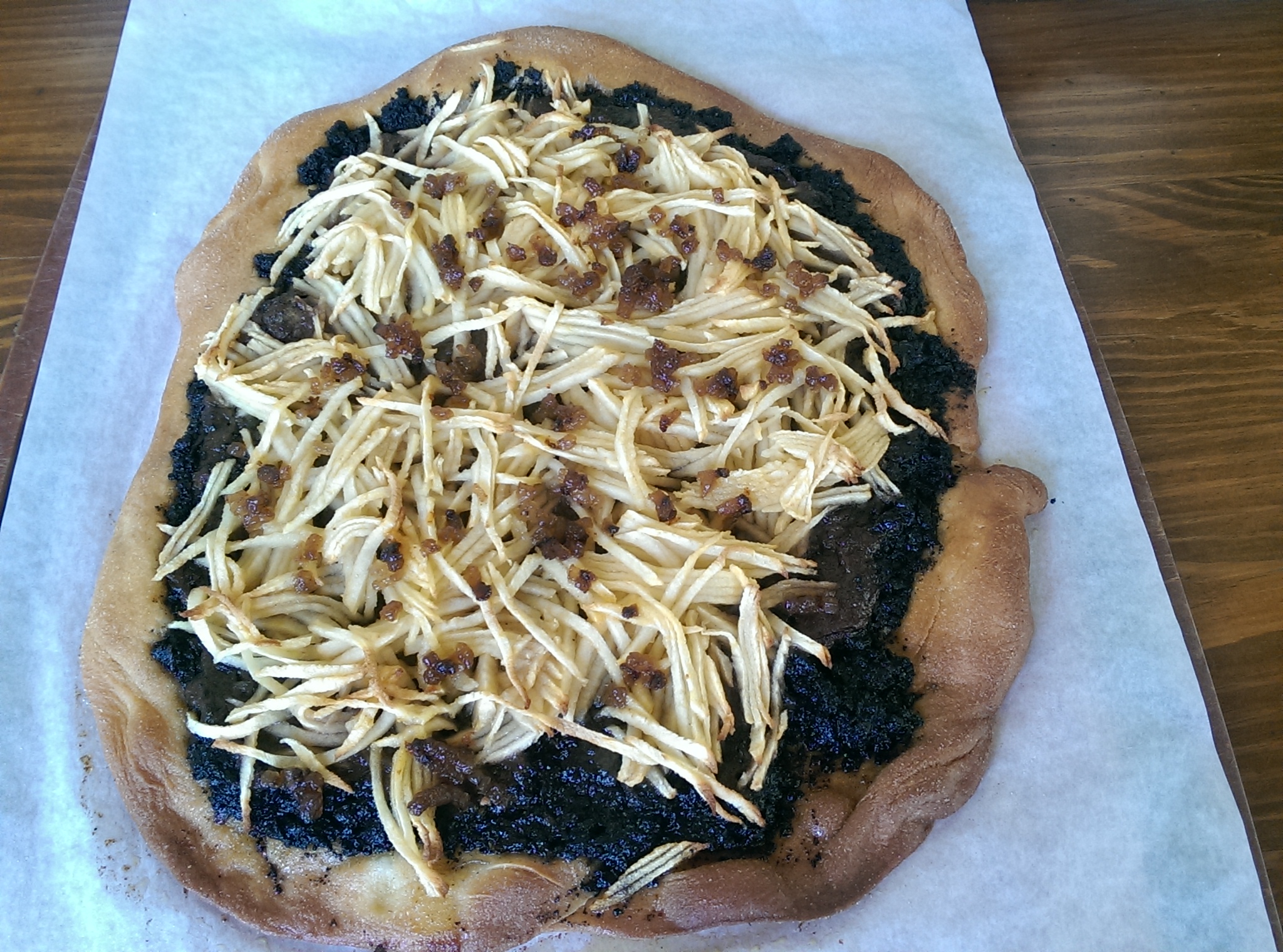
- Brioche pie with black pudding, apples and long-aged ventrèche
-

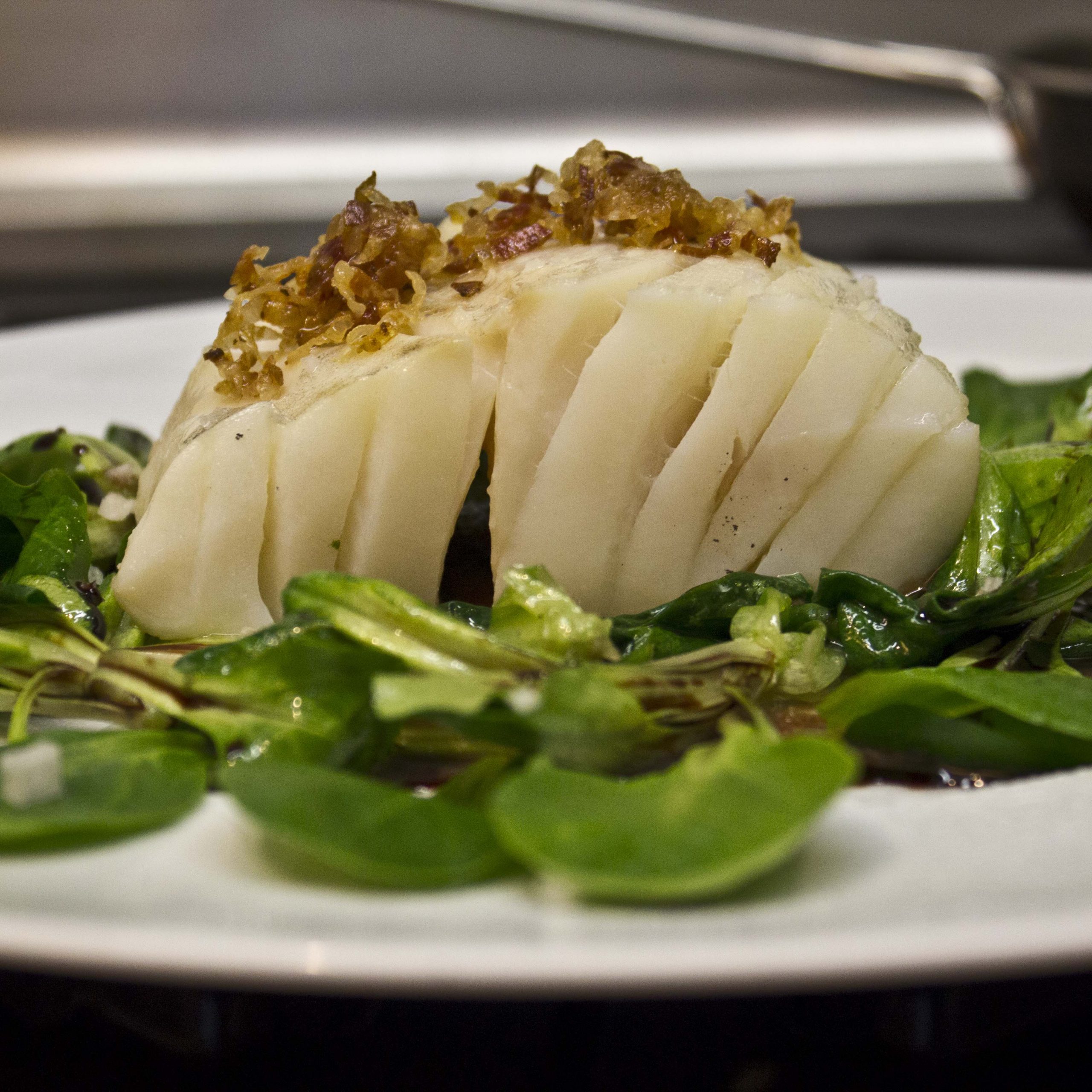
- Monkfish and ventrèche vermicelli
-
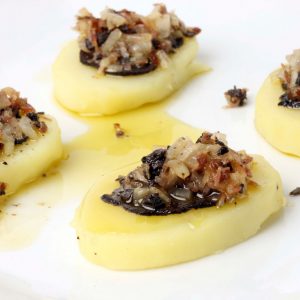
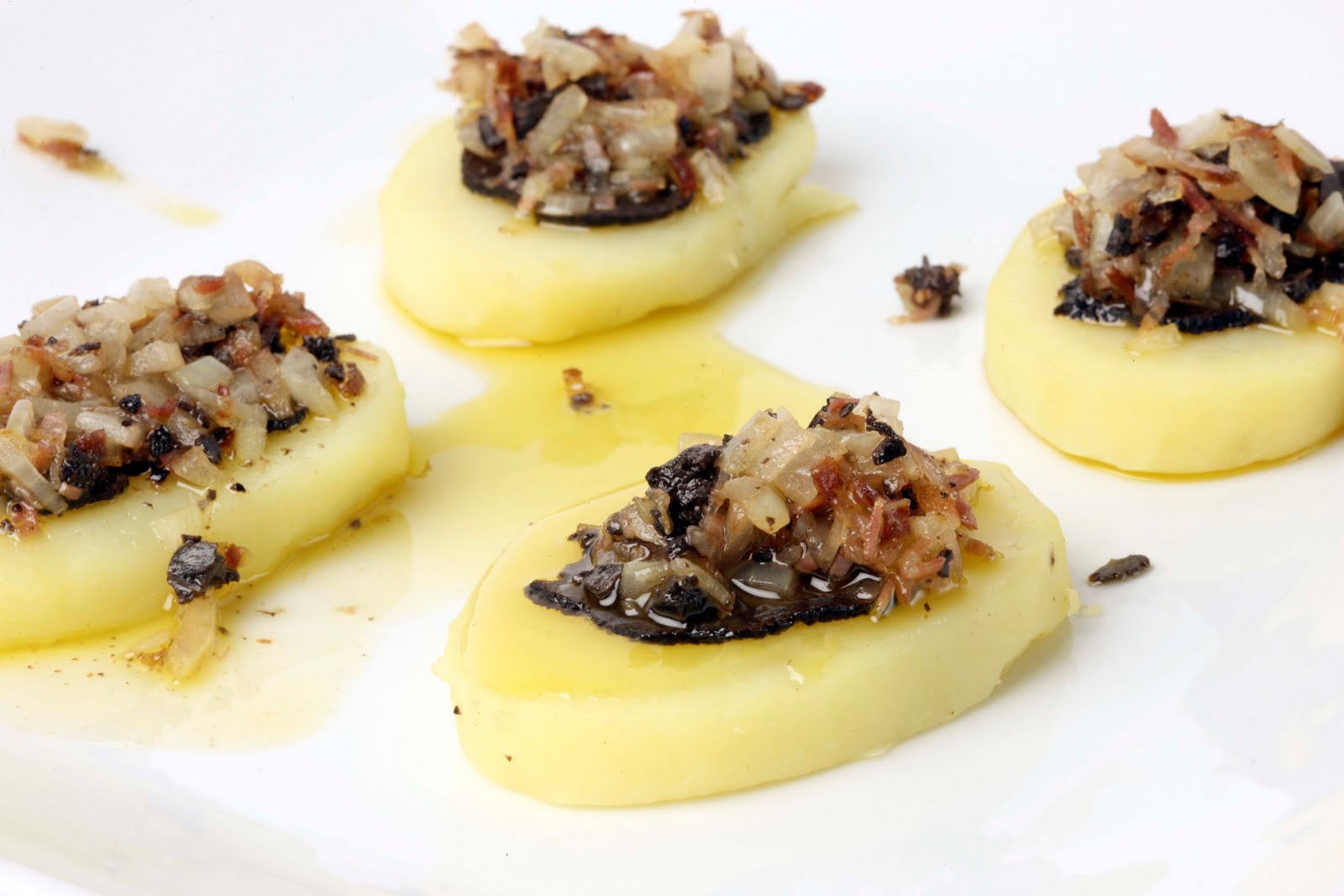
- Demi-deuil potato with truffle and long-aged ventrèche
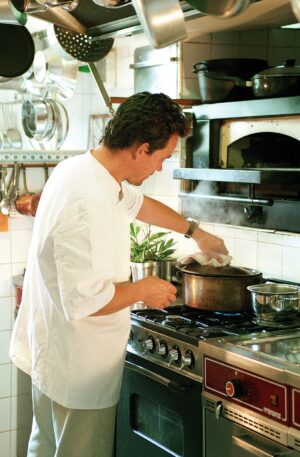
After two months of maturation in natural salt from the Pyrenees, the ventrèche is washed with water from our spring. It is then aged like the hams, for 6 to 24 months, in the estate’s cellars, allowing indigenous yeasts to develop a persistent and complex taste. With your eyes closed, you might think you were eating ham! This makes it a central ingredient in Patrick's kitchen, bringing depth to the dishes. A few grams are enough to flavour a dish, for a wholesome and flavorful cuisine.
Cut into thin julienne and sautéed, ventrèche is used to cook your meat, fish and vegetables. Placed raw on a warm base, it enhances the taste while providing seasoning. It is also used for barding small birds or game, and for making terrines or pâtés en croûte. Paired with truffle, it is the perfect match!
Our philosophy: genetic selection, farming methods with specific standards, and the transformation process.
We see our work not as pork butchers, but as masters of ageing, who allow natural processes to unfold over time.
Genetics
We exclusively use the Gascon pig, a slow-growing animal that produces the intramuscular fat we seek for our cured meats. A relative of the Iberian pig, it is a hardy breed whose origins date back to prehistoric times.
At present, (falsely) artisanal pork is often labeled 'black' to sound rustic, or given village or regional names to suggest tradition. Most of the time, these pigs are crossbred with white pigs and raised confined in buildings.
Gascon Pork is a pure breed, clearly identified by the IFIP and its purity is monitored by LIGERAL (the Collective Genealogical Record for Local Pig Breeds). It is a pig we know well, as we raised them for 15 years on the estate, at a time when the breed was endangered.
I discovered this breed in the late 80s; its culinary qualities literally captivated me, and I immediately began raising them to craft saucissons, hams, and more... we focused right away on the transformation.
In 1996, we played a modest part in founding the National Association for the Preservation of the Gascon Pig (ANSPG).
Highly advanced rearing methods
For millennia, pigs were raised outdoors. A productivity-driven industry confined them to produce faster but at the expense of quality, selecting breeds suited to this confinement; the Gascon pig does not adapt to it.
We have opted for a sophisticated farming method in the woods, always seeking to respect the animal's natural life cycle, both in its way of life and its duration: long rearing periods of 20 to 25 months (three to four times longer than industrial farming and twice as long as artisanal farming). Factory farming is excluded in favour of free-roaming in nature, making use of woodland areas neglected by industrial agriculture. The pigs live a true pig's life, rooting in the soil for their food (grass, leaves, roots, mushrooms, berries, earthworms, field mice, chestnuts, and acorns in season). It is thanks to this diverse diet that we obtain meat with the distinct intramuscular fat that defines the quality of our cured meats.
The transformation process
In 1995, we developed the first certified organic sausage, without saltpetre or nitrite salt, in partnership with the CRITT agro-food centre and ANVAR.
A fermented product
Our cured meats are the culmination of slow ageing in the cellar. They are the result of indigenous yeasts working on our meats, in contrast to the chemical yeasts used by the food industry.
Indigenous yeasts are those naturally present in the surrounding air.
The cellars – one on the ground floor and three for ageing – all have different atmospheres. As a result, the cured meats that move from one cellar to another during their maturation will develop different aromas in each. This creates the aromatic complexity and length on the palate of our products.
Bespoke ingredients
Each ingredient is selected to contribute to the aromatic development.
Without saltpeter, without nitrites
Tasting advice
Open the packs 48 hours in advance (at least 24 hours), and leave them hanging in a well-ventilated, temperate place.
Ventrèche can be enjoyed in various ways. Here, we eat it as it is for an aperitif, like a ham. With prunes or apricots wrapped in ventrèche and oven-baked. Melted raw over a warm base (fish, purée, vegetables, cheese...), or grilled with eggs or mushrooms...
Cured Gascon Pork ventrèche
Access our "Cuisine, Agriculture, and Health" conference for free
Similar products
-
The Chef’s Trilogy
161,00€ the setAdd to cartNatural ingredients to replace butter
-
Gascon Pork lard with herbs
from: 27,00€Select options This product has several variations. Options may be chosen on the product pageCooking with Gascon pork lard, a cuisine
-

The connoisseur of fine food
2 564,00€Assortment of 17 pieces of natural cured meats and charcuterie andAdd to cart -

Gascon Pork chorizo sausage
139,00€ Price per kilo. Approximately 4 pieces of +/- 250 g.Because chorizo requires several months of curing andAdd to cart