

La Poularde farcie
Louis-Dominique, notre deuxième fils, a eu l'idée merveilleuse de préparer et farcir quelques poulardes pour vous.
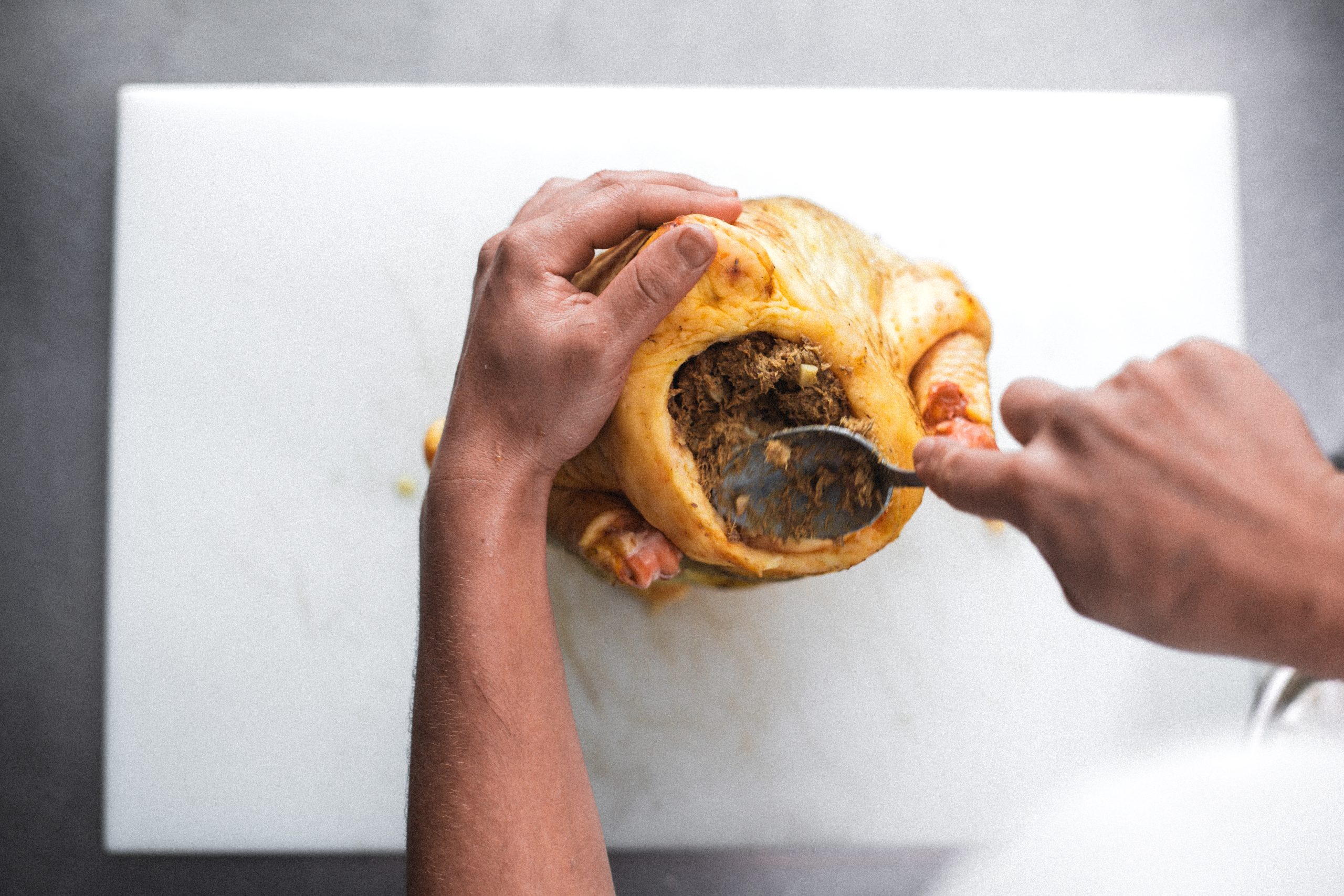
C'est une farce nouvelle sur laquelle nous avons travaillé ensemble . Nous avons été inspiré par le la farce à pâté en croute au canard que nous avons fait pour les fêtes. Nous l'avons enrichi du foie des poulardes et de marrons.
Nos poulardes sont élevées en agroforesterie pendant 7 mois et sont fin prêtes à réjouir vos papilles pour les fêtes de fin d'année.
Tendres, juteuses à souhait, à la chair nacrée pour une expérience culinaire unique
Nous n'avons farci que quelques volailles, commandez dès maintenant !
dès : 97,00€ le kg
| Poids | ND |
|---|---|
| DLC | 5 jours au réfrigérateur |
| Emballage | sous-vide |
| Cuisson | Posez la poularde sur une grille au-dessus de votre lèchefrite dans laquelle vous aurez mis un verre d’eau. |
La Poularde farcie
Une préparation aux "petits oignons"
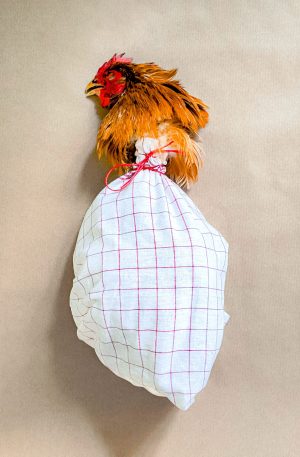
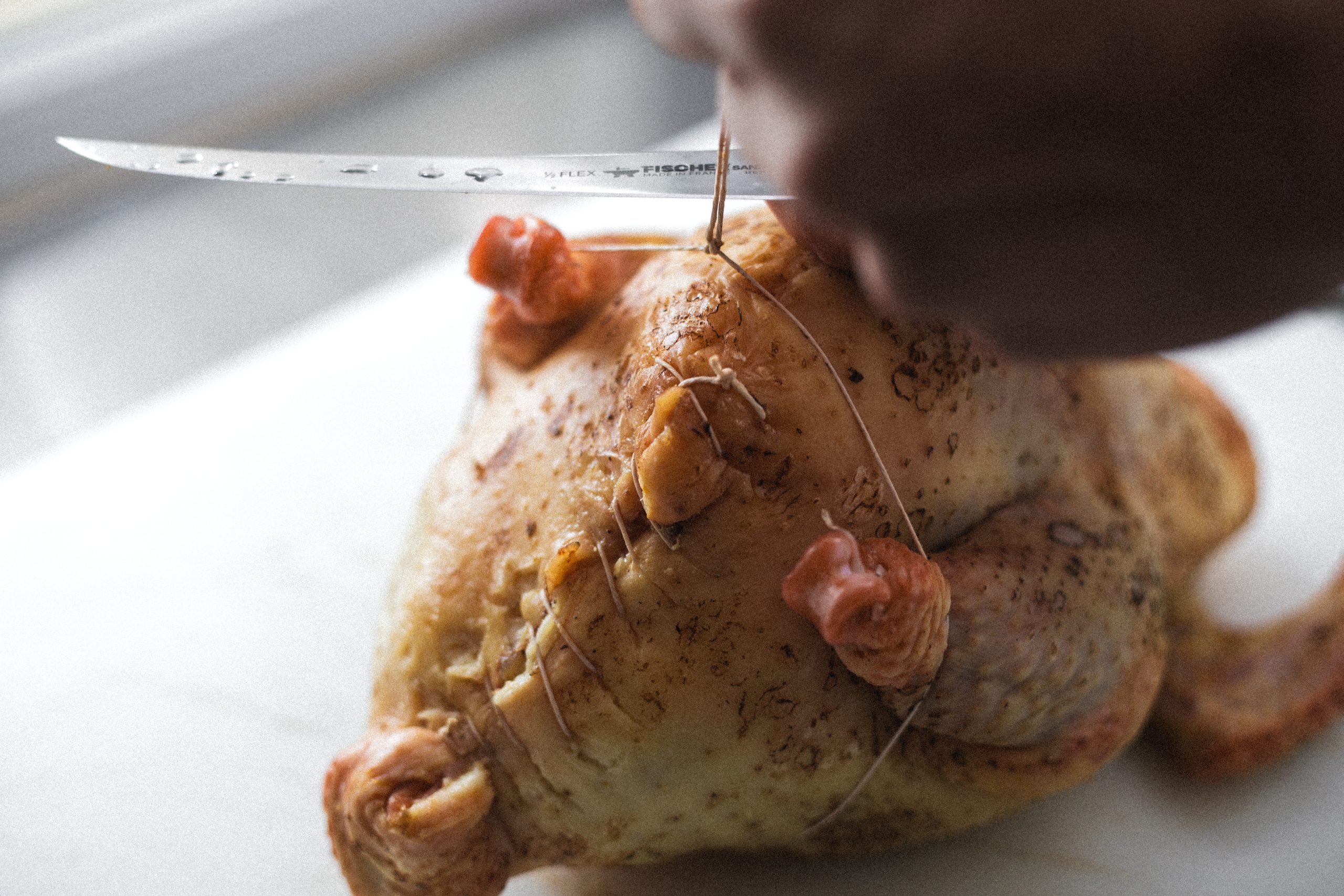
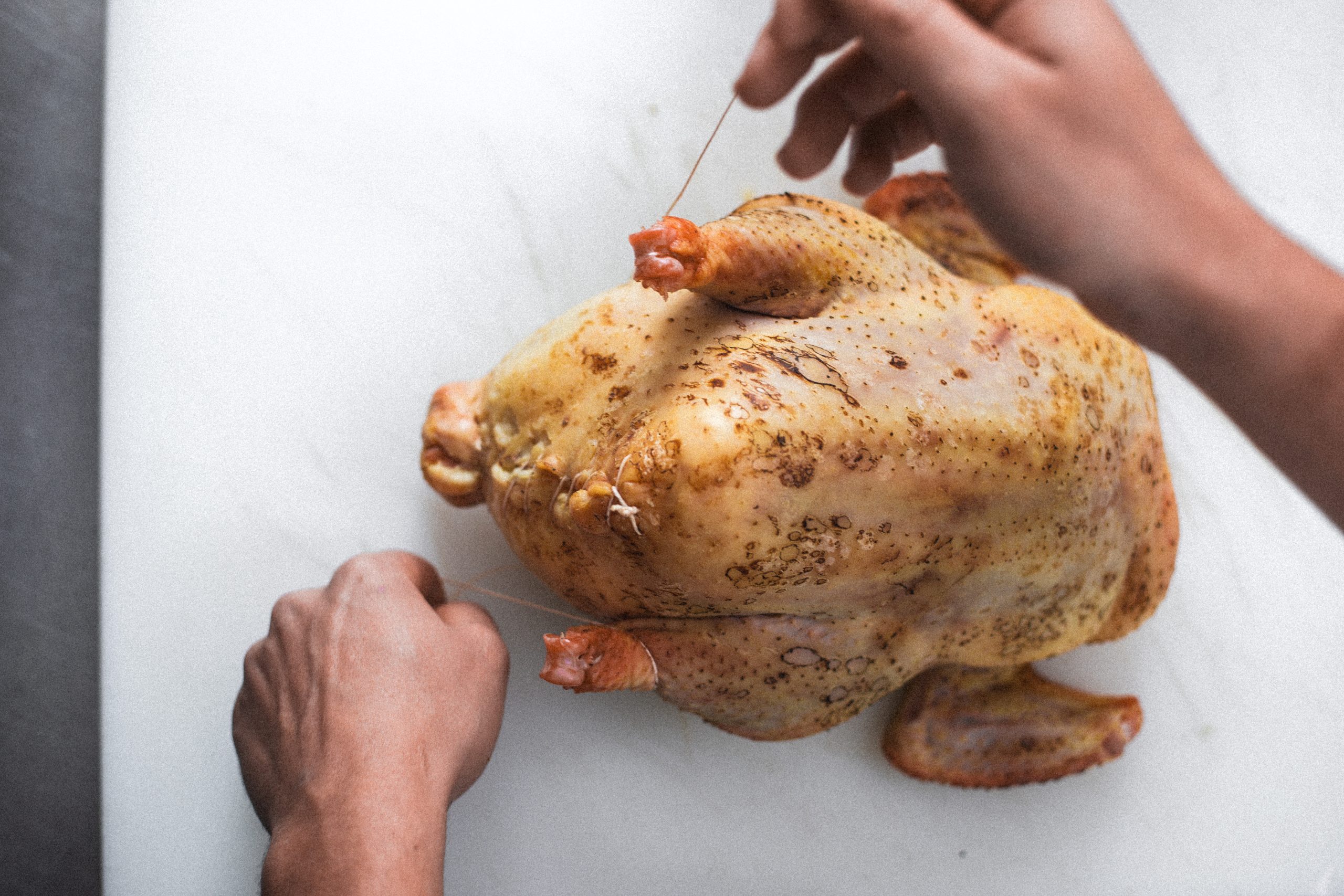
Ce matin, nous avons préparé nos poulardes et composé notre farce aux marrons et abattis pour le repas du Réveillon de la Saint-Sylvestre.
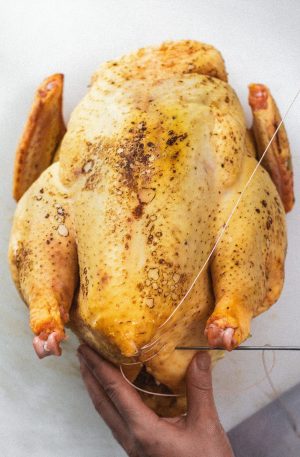
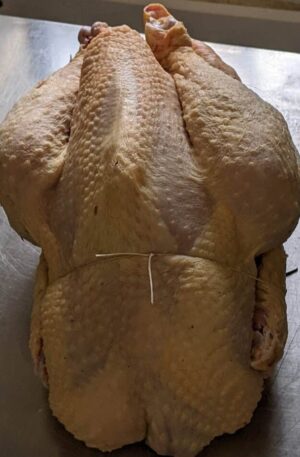
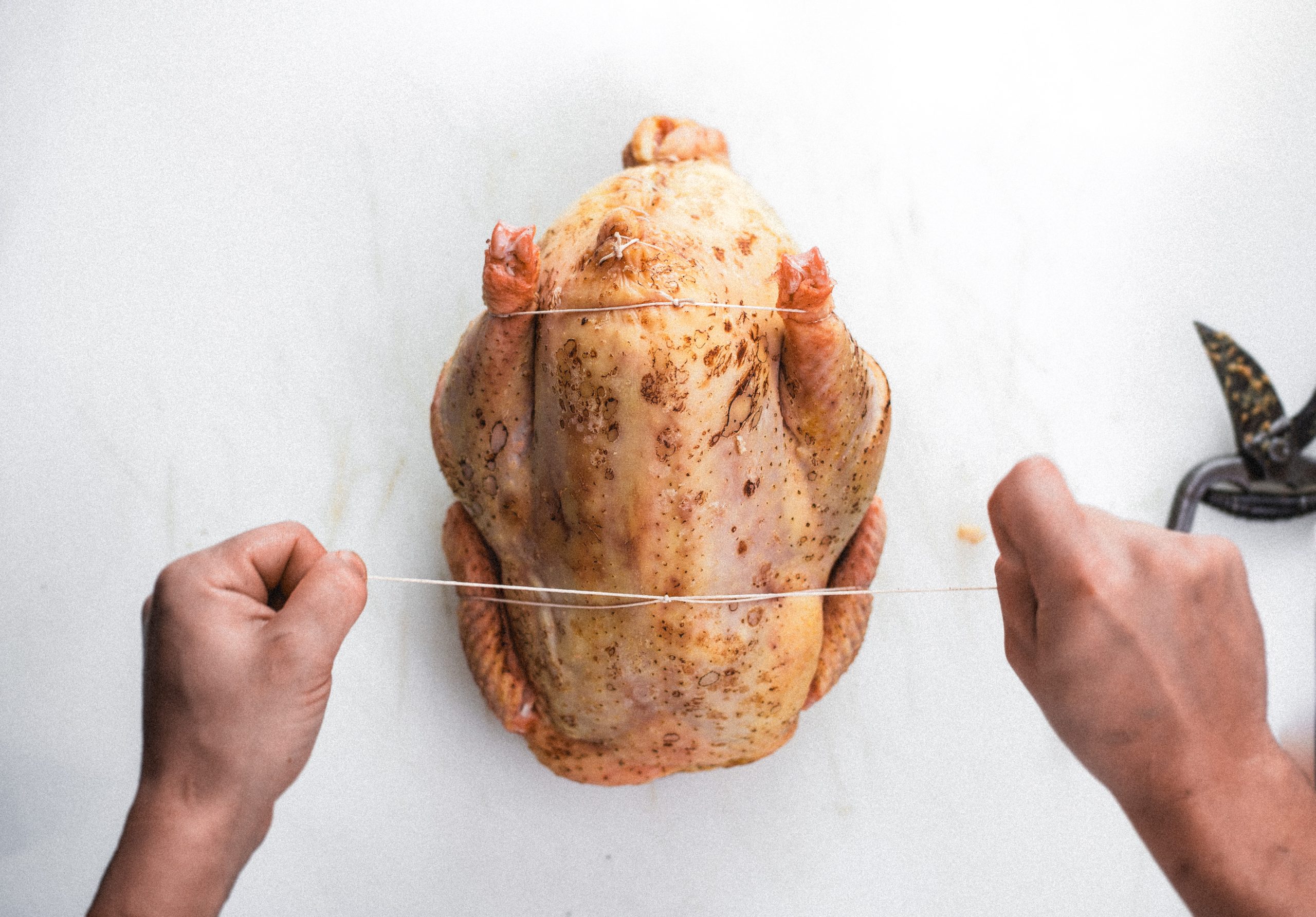
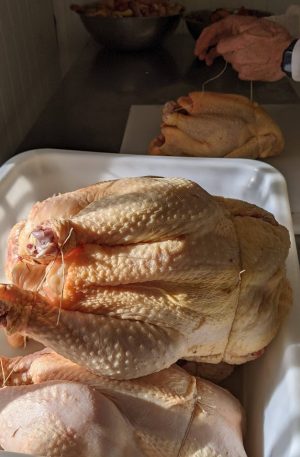
C'est une farce nouvelle sur laquelle nous avons travaillé avec Louis Dominique (notre deuxième fils). Nous avons été inspiré par le la farce à pâté en croute au canard que nous avons fait pour les fêtes. Nous l'avons enrichi du foie des poulardes et de marrons. La volaille est parée, vidée, flambée, farcie aux marrons, bridée et prête à mettre au four.
Des "Poules de Luxe"
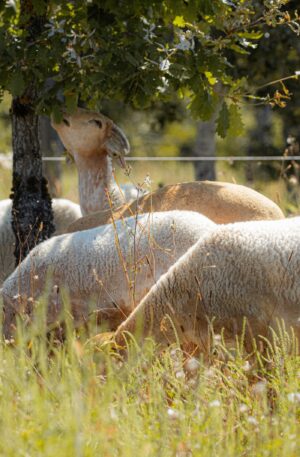
Nos poulardes sont élevées en agroforesterie sur des parcours où Nicolas a planté plus de 10 000 arbres afin de pourvoir à leurs besoins : frênes, merisiers, noyers, chênes, érables…
Il a développé un concept performant d’élevage en plein air où les volailles sont logées dans des grandes cabanes mobiles se déplaçant sur une vingtaine de parcours au beau milieu de la nature.
Cela leur permet de picorer dans le sol ce dont elles ont besoin : vers, insectes, fruits, baies… sans vivre sur de l’herbe surpâturée.
7 mois d'élevage sous les arbres pour une chair extraordinaire.
Nicolas a augmenté les durées d’élevage à notre demande, afin d’obtenir des oiseaux plus charnus, plus gras avec une viande encore plus savoureuse.
Cette bassecour turbulente gambade, se chamaille, vit sa vie de volaille pendant 210 jours.
L’effet brise-vent des arbustes et l’ombre qu’ils prodiguent offre un environnement sécurisant et paisible, et une alimentation variée. Les volailles sont élevées sur ces parcours en totale liberté pendant 7 mois.
Elles sont nourries les 5 premiers mois au blé et à la féverole et les 8 dernières semaines principalement au maïs pour parfaire le moelleux de leur viande.
Leur engraissement commence fin mai et nous les recevons 7 mois plus tard, en décembre.
Certifiées Agriculture Biologique et nourries au grain
Nos poulardes ont un poids moyen de 3 et 4 kilos, soit bien plus que celles qu’on trouve ordinairement dans le commerce. Cela permet de rassasier 6 à 8 gourmets.
Grâce à la préparation soignée de Nicolas, poulardes et chapons effilés peuvent maturer 28 jours au froid pour une chair encore plus tendre et goûteuse.
Facile à cuisiner
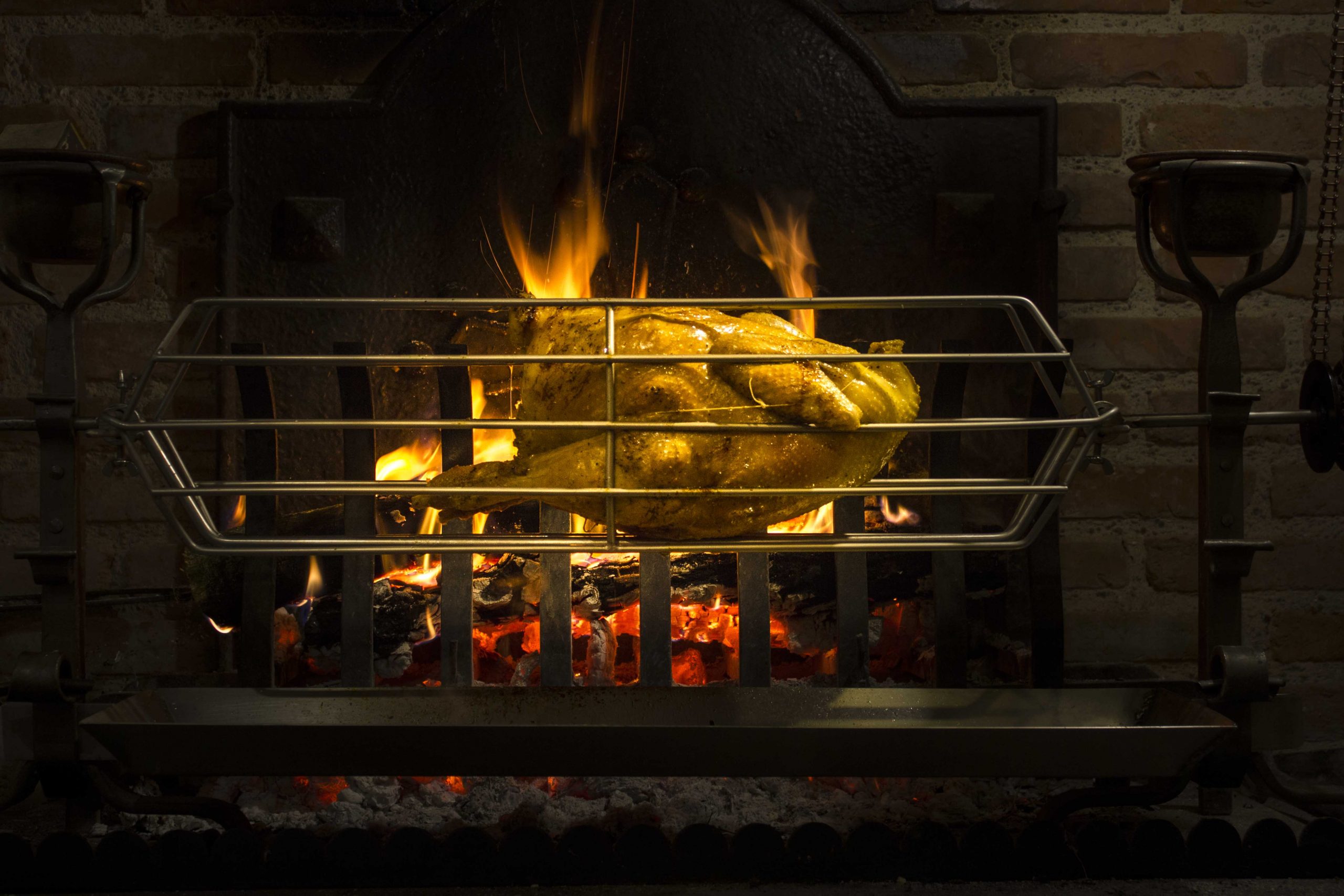
Vous le savez, je préfère la cuisson à la broche devant les flammes d’un feu de bois. Mais si vous n’avez pas cette possibilité, utilisez tout simplement votre four.
Posez la poularde sur une grille au-dessus de votre lèchefrite dans laquelle vous aurez mis un verre d’eau, et cuisez au four à 180°C à raison de trente minutes par kilo (une heure et demie pour une poularde de 3 kilos). Rajoutez dix minutes si la volaille est farcie.
À mi-cuisson, vous pouvez rajouter quelques pommes de terre grossièrement coupées dans la lèchefrite, une ou deux branches de romarin dessus et hop retour au four.
Les pommes de terre vont cuire dans le bon gras et le jus de la poularde et se parfumer au romarin.
Important : conservez le gras abdominal que vous avez retiré avant cuisson. Coupez-le en petits cubes et faites fondre doucement dans une casserole. Dès que les petits fritons sont colorés, filtrez le gras et conservez-le au frais. Cette graisse remplacera avantageusement le beurre ou l’huile d’olive pour toutes vos cuissons de viandes, poissons ou légumes.
Cette volaille est aussi bonne froide que chaude.
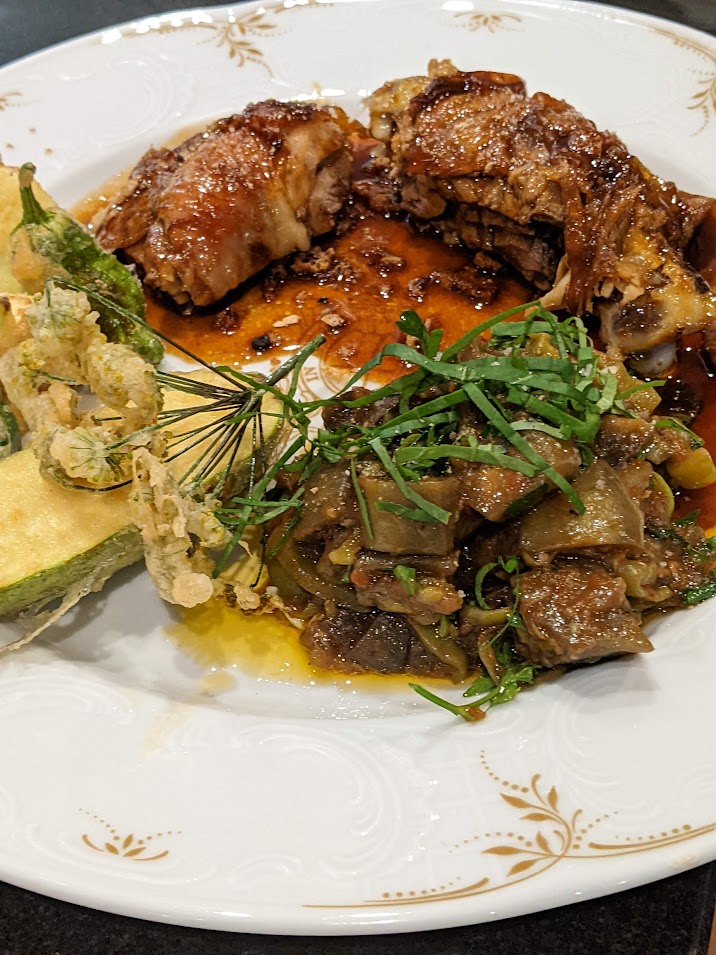
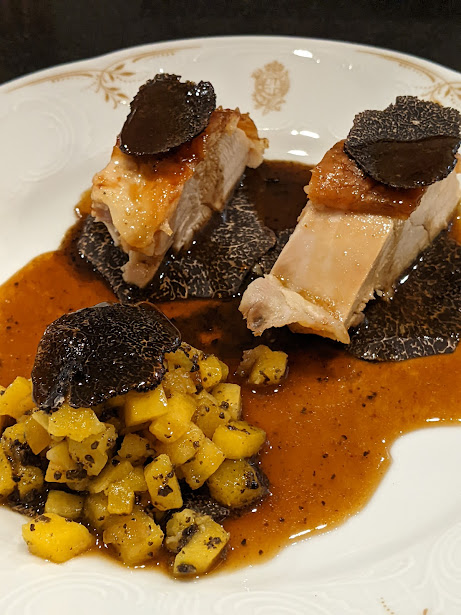
Si vous la faites cuire le dimanche, vous pouvez manger le reste dans la semaine avec une bonne mayonnaise, une salade, un peu de pain au levain à la farine de blé truffier.
Garanties
Si pour une raison ou une autre, vous n’êtes pas enchanté par ce produit,
contactez Pascale au 05 65 31 82 51.
Nous trouverons une solution pour vous satisfaire.
Plusieurs milliers de personnes ont déjà goûté nos produits, ou sont venus au Domaine de Saint-Géry
Ce qu’ils en disent :
BAPTISTE, CHRISTÈLE ET ARNAUD |
GUY ET MONIQUE |
JUAN-CARLOS ET MARIE-ANNE |
SÉBASTIEN D. |
Questions/Réponses :
- Où sont élevées vos poulardes ?
Elles sont élevées en agroforesterie par Nicolas au cœur du Sud-Ouest, dans le Gers. Elles sont élevées en plein air dans un environnement naturel. - Comment sont élevées ces poulardes ?
Ces poulardes sont élevées en totale liberté sous les arbres, dans de grandes cabanes mobiles qui se déplacent sur une vingtaine de parcours. Elles ont accès à une alimentation variée, notamment des vers, des insectes, des fruits et des baies. - Combien de temps sont-elles élevées ?
Les poulardes sont élevées pendant 7 mois sous les arbres, ce qui contribue à développer une chair extraordinaire. - Quelle est leur alimentation ?
Pendant les 5 premiers mois, elles sont nourries au blé et à la féverole, puis au cours des 8 dernières semaines, elles reçoivent principalement du maïs pour améliorer le moelleux de leur viande. - Comment sont-elles préparées pour la livraison ?
La volaille est parée, vidée, flambée, farcie aux marrons, bridée et prête à mettre au four. - Quelle est la différence entre une poularde et un chapon ?
La poularde, c’est la femelle, elle a une chair fine au goût délicat. Le chapon est le mâle castré, il offre une viande juteuse, savoureuse et bien parfumée. Le choix dépend du nombre de convives et de vos préférences 6 à 8 pour une poularde, 8 à 12 pour un chapon. - Comment cuisiner ces poulardes ?
Une suggestion de cuisson est de les cuire au four à 180°C à raison de trente minutes par kilo, avec la possibilité d'ajouter des pommes de terre et des herbes à mi-cuisson. Il est également recommandé de conserver le gras abdominal pour une utilisation future en cuisine. - Combien de temps peut-on conserver les poulardes farcies ?
Ces poulardes peuvent être conservées au froid pendant 5 jours après la livraison, ou bien être congelées dans leur emballage sous vide. - Comment puis-je commander ces poulardes ?
Vous pouvez commander ces poulardes en contactant Pascale au 05 65 31 82 51. Les quantités sont limitées, alors il est recommandé de commander dès que possible. - Où puis-je trouver plus d'informations ?
Vous pouvez trouver plus d'informations sur le site web du Domaine de Saint-Géry à l'adresse www.saint-gery.com ou en vous inscrivant à notre Lettre au Bon Goût d’un cuisinier-paysan.
Une question, n’hésitez pas à appeler Pascale au 05 65 31 82 51
La Poularde farcie
Accédez gratuitement à notre conférence "cuisine, agriculture et santé"
Vous aimerez peut-être aussi…
-

L'Agneau des Truffières livré prêt à cuisiner
dès : 371,00€ 53€/kgChoix des options Ce produit a plusieurs variations. Les options peuvent être choisies sur la page du produitL’Agneau des Truffières, introuvable ailleurs
-
Le poulet de Nicolas
dès : 41,00€ le kgChoix des options Ce produit a plusieurs variations. Les options peuvent être choisies sur la page du produitQuand j'ai goûté les volailles bio et agroforestiè
-
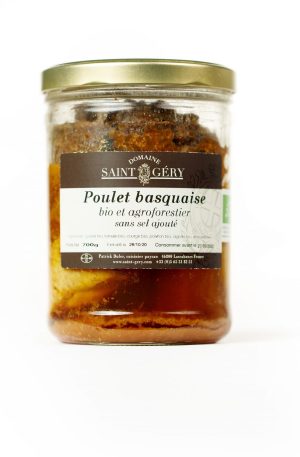
Poulet basquaise bio et agroforestier sans sel ajouté
63,00€Mes origines basques m'ont conduit tout naturellement à vous proposer ceAjouter au panier
Produits similaires
-
La Poularde de Nicolas
dès : 57,00€ le kgChoix des options Ce produit a plusieurs variations. Les options peuvent être choisies sur la page du produitChaque année, mi-décembre, Nicolas me réserve
-
Le Chapon de Noël
dès : 57,00€ le kgChoix des options Ce produit a plusieurs variations. Les options peuvent être choisies sur la page du produitTendres, juteux à souhait, ils trôneront sur vos tables
-
Le Chapon farci
dès : 97,00€ le kgUn chapon d'anthologie, élevé 7 mois sous les arbres, farci commeChoix des options Ce produit a plusieurs variations. Les options peuvent être choisies sur la page du produit -
Le chapon loupé de Nicolas
dès : 57,00€ le kgChoix des options Ce produit a plusieurs variations. Les options peuvent être choisies sur la page du produitChaque année, fin octobre, Nicolas me réserve