

The Luxury of Ham
The luxury of ham begins with an exceptional pig, the Porc Gascon, raised at length among woods and meadows, nourished naturally on grass, acorns, fruit, leaves, and cereals.
This pig yields meat rich in nutritious and wholesome elements, notably due to its very high-quality fat, which has cholesterol-lowering properties.
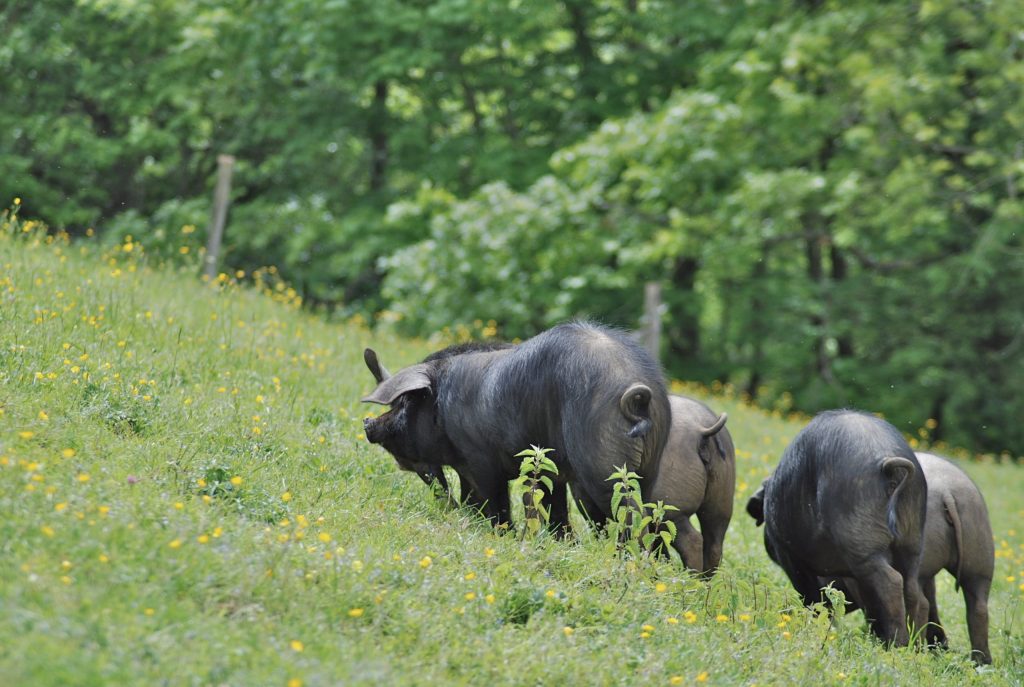
In the 80s and 90s, Patrick Duler was among those few daring breeders committed to preserving this endangered breed, a cousin of the Pata Negra from the other side of the Pyrenees, and then unknown to the public.
In the woods, meadows, and on agroforestry ranges, the Porc Gascon lives in total harmony with its true nature.
It is one of those ancient and hardy breeds, much like the Iberian pig.
Free to roam, it is raised with care by our selected producers for 15 to 24 months.
The relationship between man and animal is unparalleled.
It embodies the steadfast trust that provides the Porc Gascon with an ideal environment to thrive.
The luxury of simplicity is found first and foremost in this respect for the animal and this intimacy with it, passed down from father to son.
The diet of the Porc Gascon is decisive for the quality of its meat.
Grass, roots, acorns, berries, fruit, chestnuts, leaves, and earthworms: this natural, balanced diet, which it so enjoys, is supplemented by cereals and legumes.
This is why the Porc Gascon is an exceptional pig for the crafting of our ham.
Beyond the gustatory emotions it promises, its meat is rich in nutritious and wholesome elements.
Its very high-quality fat notably contributes to the prevention of bad cholesterol (lipoprotein).
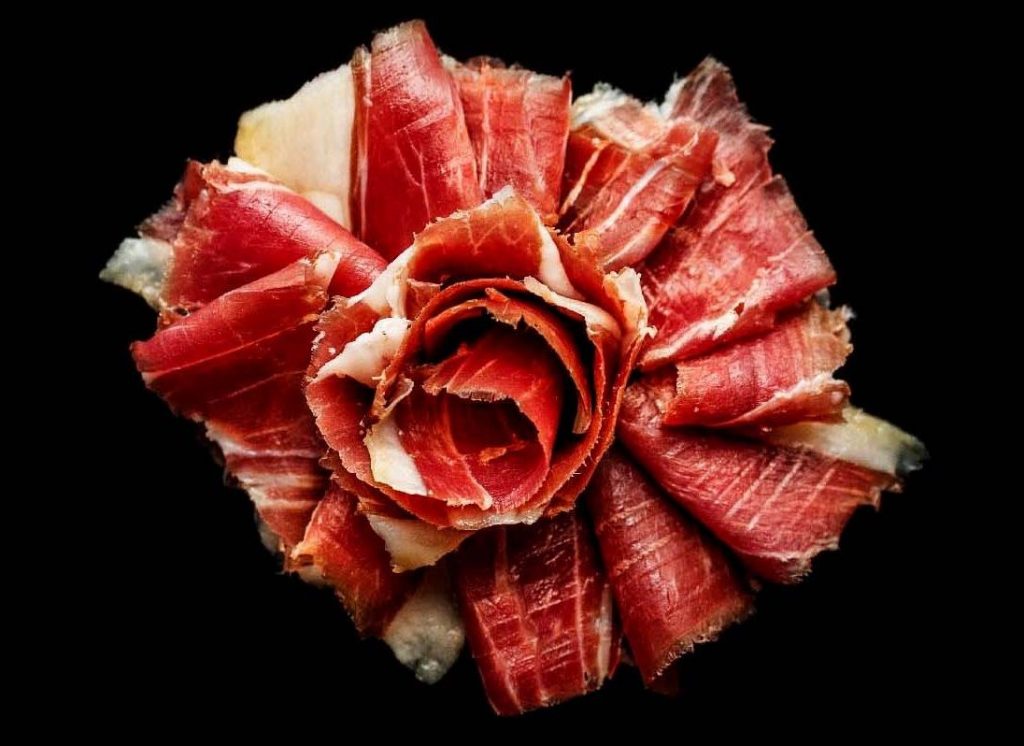
Our savoir-faire for producing our ham follows an original process of salting/maturation with Pyrenean spring salt.
We are proud to have invented it. This process lasts two months and excludes any potentially carcinogenic preservatives,
unlike nitrite salt (sodium nitrite E250) or saltpetre (potassium nitrate E252).
Better still, this ham contains no additives. Just a leg of pork, salt, and then time.
Each ham is individually washed with spring water.
Located in the countryside in the heart of Quercy Blanc in Southwest France, far from any pollution, our organic estate enjoys a climate ideal for ageing our hams.
Each of our hams is unique.
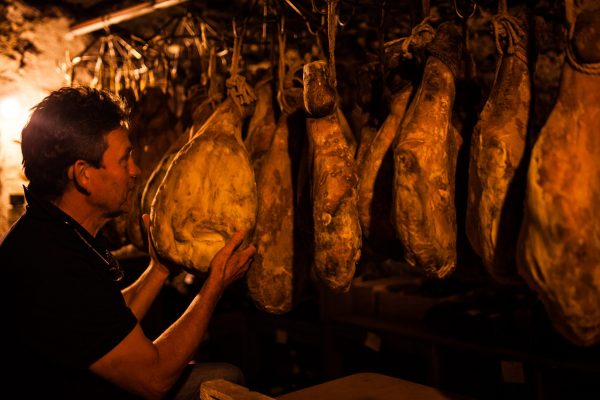
Patrick Duler ham is handled nearly forty times during its ageing cycle. This lasts from 20 to 80 months in successive cellars, and we use only the indigenous yeasts present on-site, even though this technique requires daily attention.
In parallel, we regularly rub our hams with Armagnac. The longer they age, the more intense, complex, and persistent the aromas become.

Production
Contrary to popular belief, ham is not simply dried meat... or at least, not only.
The production of a ham must follow three main stages:
- Salting or maturation in salt, which is the foundation of aromatic complexity and aids preservation
- Drying, which reduces the water content in the meat,
- Ageing, which develops the aromas.
Stages of production and ageing
- Maturation of the leg for 2 months in Pyrenean spring salt
- Washed with spring water
- 8 to 14 months of drying
- Rubbed with Armagnac then coated with lard on the lean side
- Open-air ageing for 4 to 6 months
- Ageing in natural drying rooms and cellars: 30 to 110 months
Without any chemical additions (not even those authorized by organic standards, such as saltpetre and nitrite salt).
Salting or maturation in salt
Salting/maturation with natural salt at Maison Duler is an original process developed by Patrick Duler.
This process lasts two months and excludes any potentially harmful preservatives.
Each ham is then individually washed with spring water. Natural salt is salt that has not undergone any chemical treatment.
While the choice of salt is essential, the salting method is equally so.
Today, ham is a gastronomic product to be savoured; we no longer wish to eat very salty hams as was done in the days when ham was primarily used to flavour soup.
The traditional method for salting hams consists of rubbing the ham with coarse salt and then leaving it in the salt for a certain number of days per kilo (approximately 1.5 days per kilo, or about fifteen days for a 10-kilo leg).
This empirical method does not allow for consistent salting for two reasons:
The first is that it is difficult to manage each ham individually; therefore, we adjust according to the largest.
On a batch of 10 hams weighing between 9 and 11 kilos each, they are left for the full time required for the 11-kilo ham to ensure the largest piece is sufficiently salted and does not risk spoiling.
The second is that depending on the quality of the meat, its pH, and the stress of the animal at slaughter, it will absorb the salt at different rates.
For these two main reasons, "home-made" hams are inconsistent and often too salty.
Industrial producers, meanwhile, use brine injection methods to accelerate salt absorption.


After years of experimentation, we have developed an original method of maturation in salt that allows us to master the salt dosage to the nearest gram.
We have thus reduced the salt content by 30% over 10 years while developing the ham's aromas.
At our estate, each ham is treated individually, receiving the appropriate amount of salt and maturing for 2 months in a cold room at 3°.
This maturation contributes greatly to its future aromatic development.
Ventrèches, fatbacks, necks, loins, rolled bellies, and more are treated in the same way (maturation, reduced salting, drying/ageing, etc.) for durations adapted to their size and meat structure.
Drying
Everyone speaks of cured ham; indeed, ham is dried meat in the same way that cheese is dried milk.
However, if cheese were simply dried milk, it would be powdered milk, and powdered milk has little flavour.
To develop aromas, the work of yeasts and bacteria is required; these develop over a few days for small cheeses (like Rocamadour cabécous) or over several years for an aged Comté or Parmesan.
For ham, the process is similar:
- First, salting,
- Then drying, so the meat loses a significant part of its water content, ensuring the ham is stable and can be preserved.
- Then ageing, so that yeasts and bacteria can develop and bring out aromas that no chemical additives can replicate.
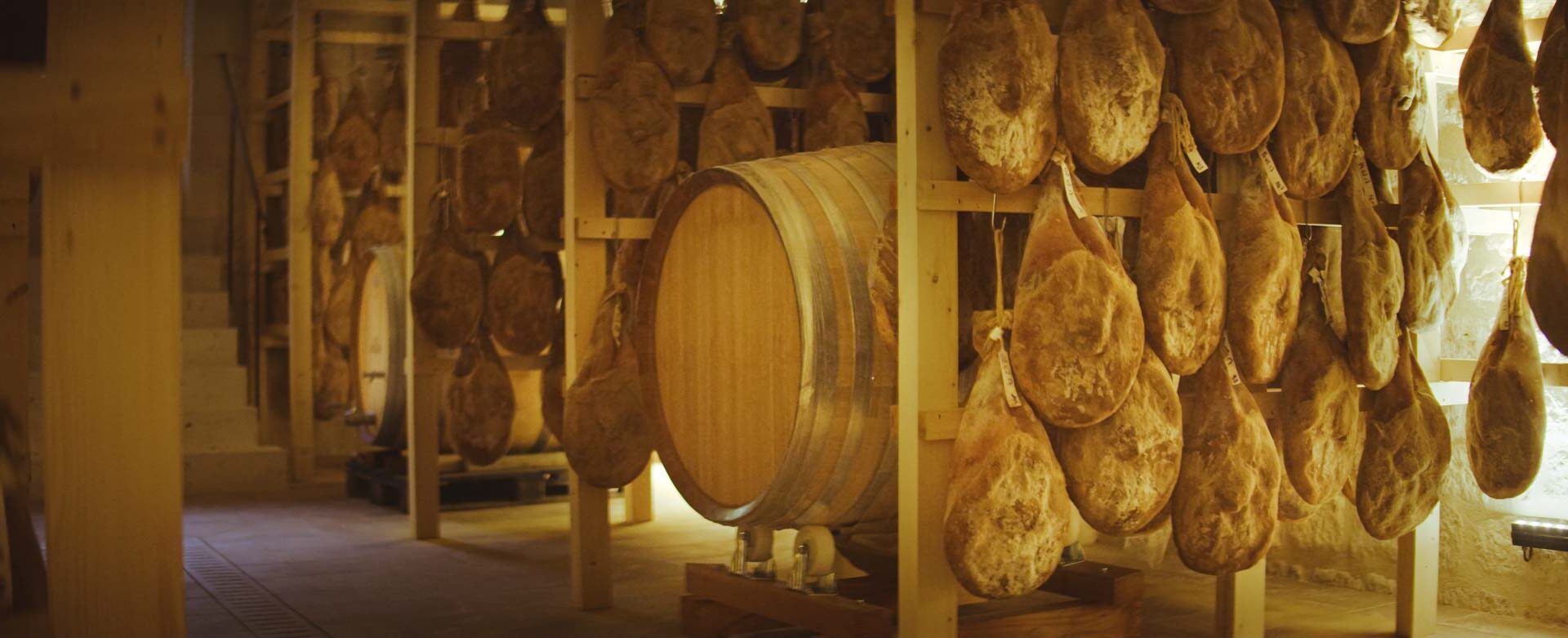
At Maison Duler, the drying phase lasts 8 to 10 months depending on the weight of the ham, in a controlled drying room that allows for continuous mastery of humidity and temperature.
This is an essential stage for the ham's subsequent preservation.
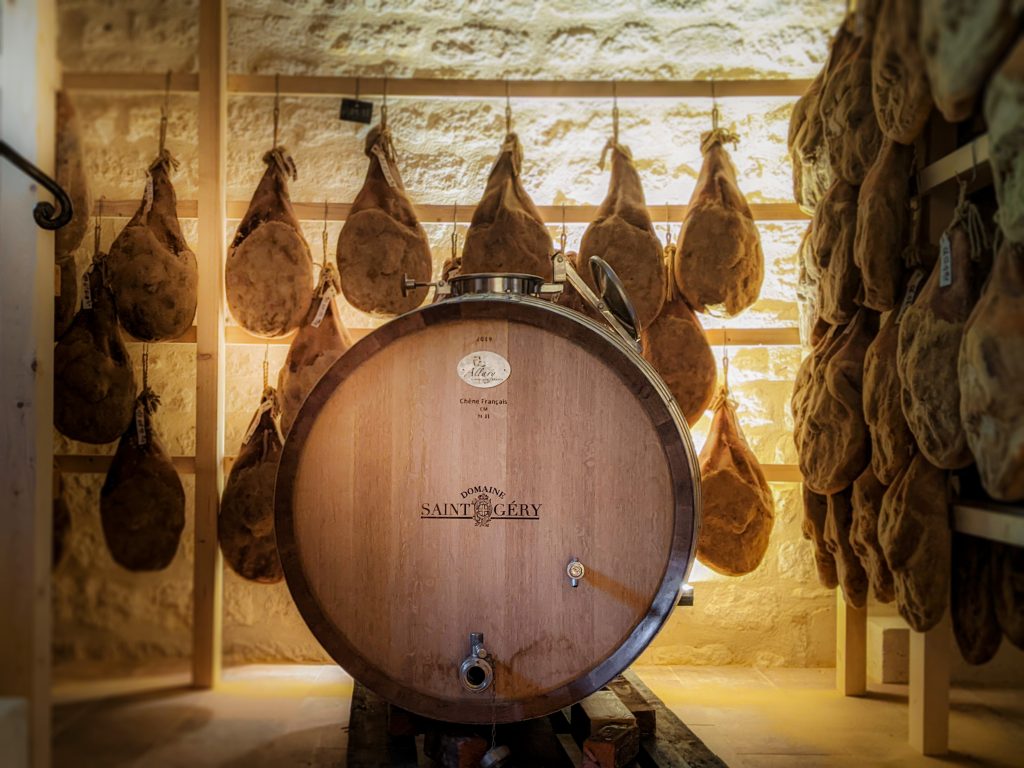
At the end of this period, the hams are stable; they can be kept at room temperature and will begin their ageing in the open air, in a cave, or in a cellar.
This environment will influence their aromatic structure and allow the development of the complex aromas that define them.
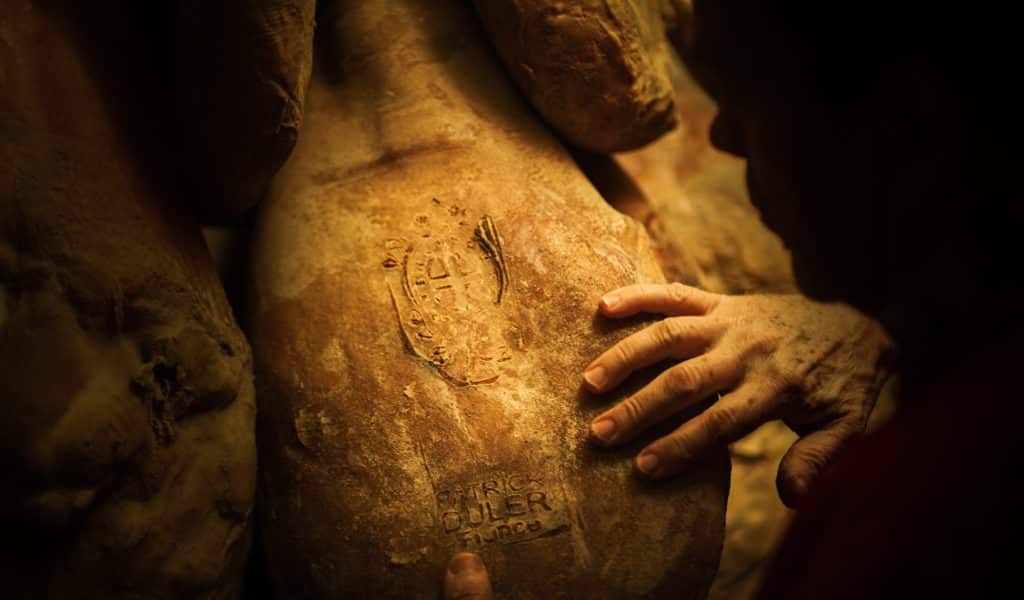
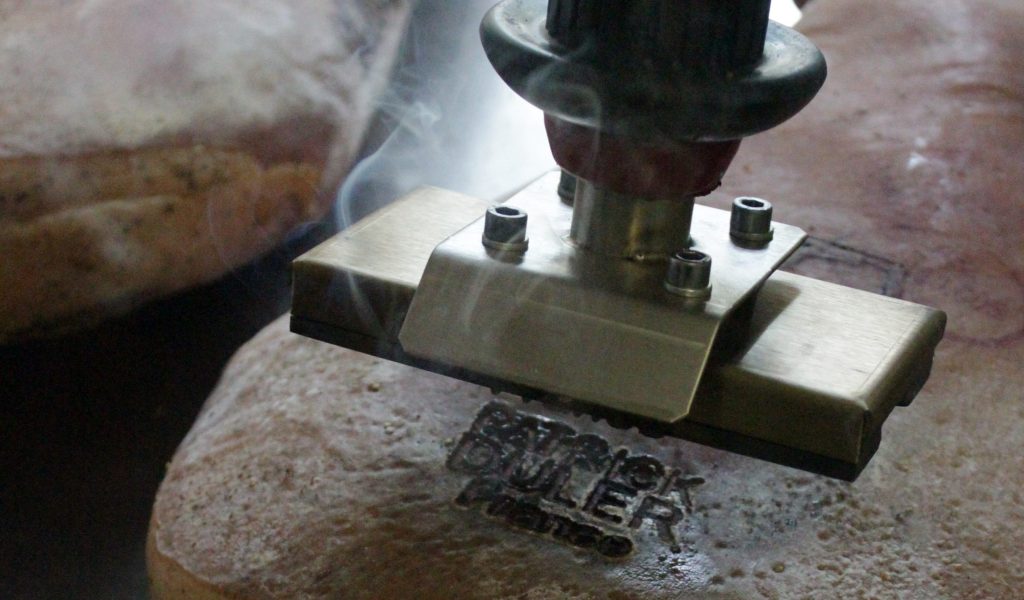
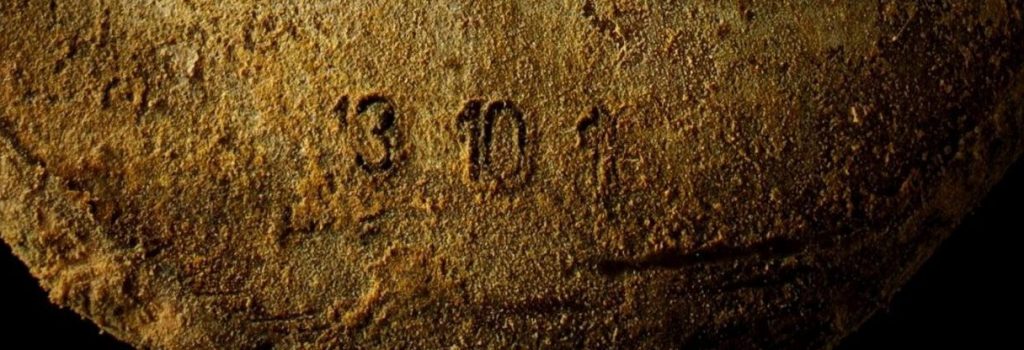
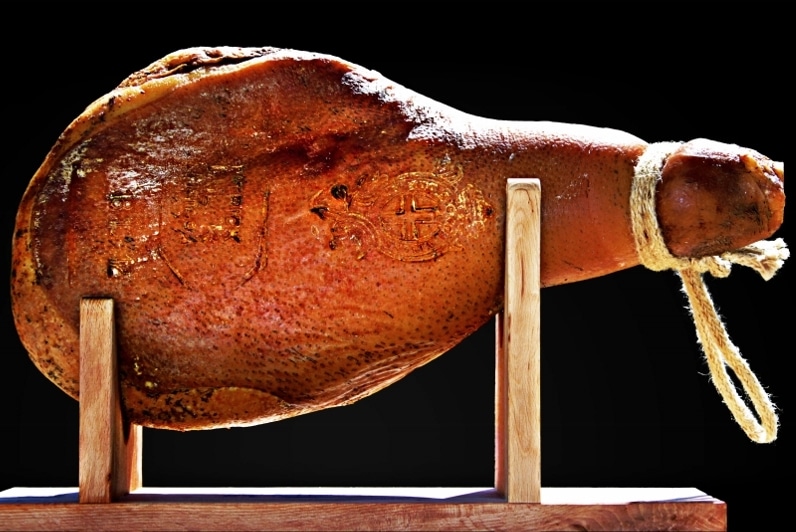
But before leaving the cellars, they will be branded with the estate's crest and the pig's slaughter date.
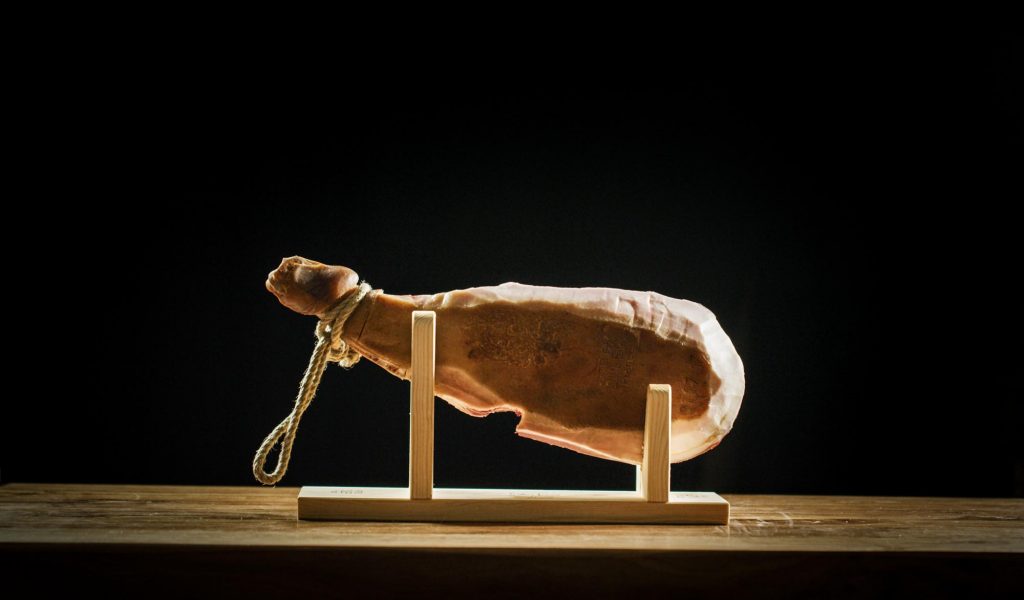
Patrick Duler ham is one of a kind; it was recognized as the "World's Best Ham" in Barcelona, during a blind tasting against the finest Iberian hams.
The Hors d’Âge Ham from Maison Duler is a top-tier ham dedicated to discerning palates and those who appreciate fine food. It is rare: only a few legs leave our ageing cellars each month. Its aromatic complexity is stunning.
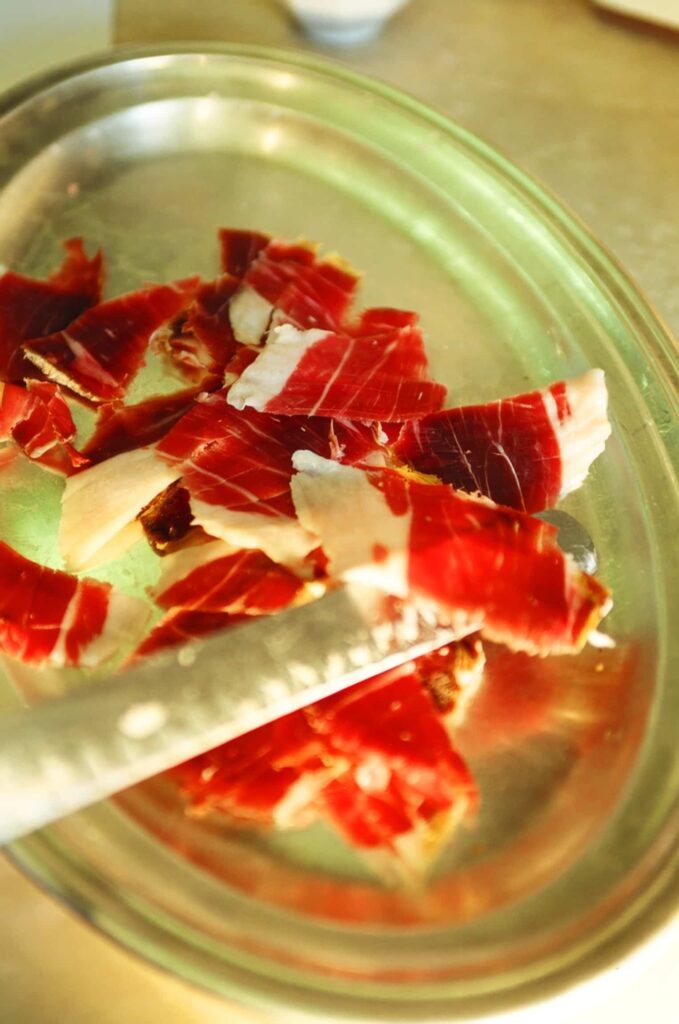
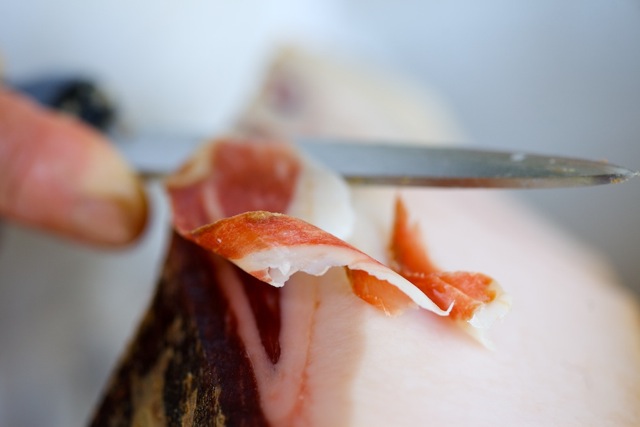
Furthermore, it stirs an extraordinary emotion. A piece aged for 30 months offers an inimitable, bold taste with a supple, melting, and buttery texture.
The fat is both crisp and smooth.
A ham aged for 40 months reveals, in turn, power, subtlety and refinement.
At the table, your Patrick Duler ham will pair harmoniously with a white Châteauneuf or Hermitage, an orange wine or even a vintage Champagne.
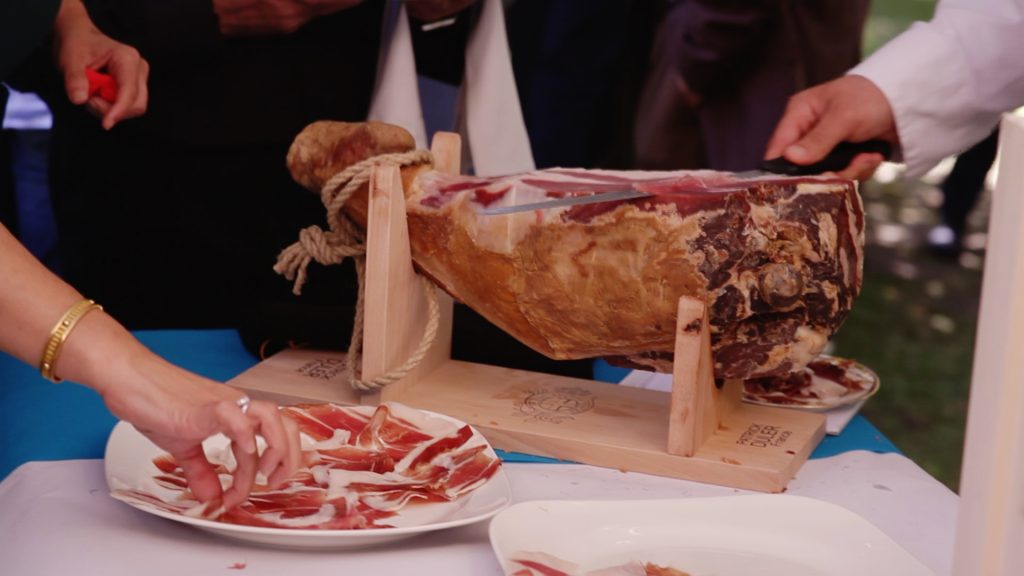
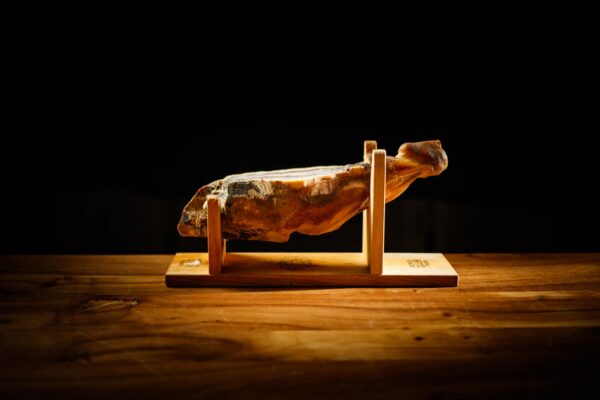
Each ham is delivered in its own wooden crate. This is not merely for transport.
In fact, it serves as a protective case, allowing it to be kept in the comfort of a temperate room, such as your kitchen.
We have specially designed an ingenious wooden stand, without fasteners or nuts. It allows the ham to be easily turned and used on all three sides.
Finally, Maison Duler is the only ham producer to provide its exact date of birth. It is included in the identification number marked on the ham.
Why is Patrick Duler ham more expensive than others?
The price of Patrick Duler ham reflects the exceptional quality and the meticulous attention paid to every stage of its production.
The ham comes from the Gascon pig, a hardy and robust breed raised in the open for a period of 15 to 30 months—significantly longer than industrial or even organic averages.
This prolonged period allows the pigs to develop rich, flavourful meat with the intramuscular fat essential for an exceptional ham.
Furthermore, the ham-making process is an art in itself, involving an original natural salt curing and maturation process lasting two months, followed by an ageing cycle of 20 to 80 months in a succession of cellars.
Each ham is handled nearly forty times during this process, and only a few hams emerge from the ageing cellars each month, making it a rare and sought-after product.
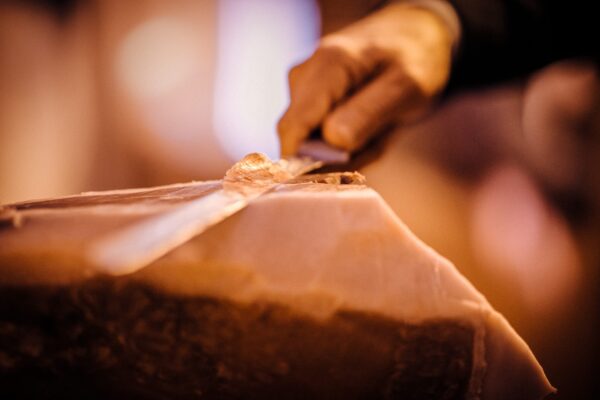
Carving
You dream of having a ham at home to share with your family and friends, but the carving seems daunting.
With this video, master the art of carving Patrick Duler ham.
At Maison Duler, ham is a family matter taken very seriously, and the skill of carving it is passed down from father to son.
Discover “the art” and the gesture with Louis-Dominique
Carving by Louis-Dominique Duler
- The small cushion
- The collar
- The kneecap
- The tip and the large cushion
- The aitchbone
How to choose your ham?
The choice of your ham depends on your budget, your tastes, your habits and how you plan to consume it.
If you choose to purchase a fine ham, it is important to understand what constitutes its quality.
The 4 essential questions to ask before buying a quality ham:
1. What is the breed of the pig?
- Choose ancient, hardy breeds that adapt well to pasture-based farming, such as the Gascon or Iberian pig.
2. How are the pigs raised?
- in industrial buildings on slatted floors, or in “on straw” buildings?
- outdoors around a building?
- on agroforestry pastures, meadows …
3. What is their diet?
- Wild (roots, herbs, acorns, berries, chestnuts, earthworms, leaves, …)
- Natural (cereals, pulses)
- Industrial (flours, pellets, …)
- The pig's diet is decisive for the quality of the meat.
4. Which additives are used in the production of the ham?
- Refined white salt
- Carcinogenic preservatives: nitrite salt (sodium nitrite E250), saltpetre (potassium nitrate E252),
- Antioxidants and stabilisers: sodium citrate E331, trisodium citrate E331iii (a mixture of soda and citric acid), sodium ascorbate E301, …
- Sugars: dextrose, …
Maison Duler guarantees:
Hams from purebred Gascon pigs, one of the oldest breeds in Europe,
Pigs raised on agroforestry pastures throughout the year
A varied diet consisting of herbs, acorns, berries, leaves, roots, cereals, pulses, …
Hams cured exclusively with unrefined natural salt, without saltpetre or nitrites.