

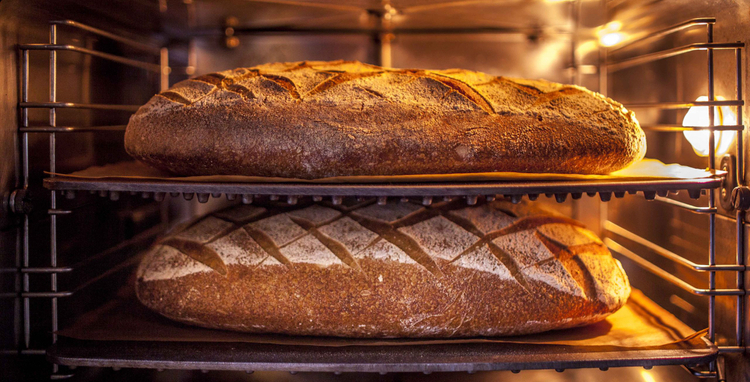
Organic Indigenous Sourdough Bread Making Stay
Dreaming of making your own bread? Gain full autonomy in just three mornings.
Over three 4-hour mornings, you will learn to maintain a living, indigenous sourdough starter, master fermentation, shaping and baking, and adapt your bread to your home kitchen and oven.
You will leave with your sourdough starter, 4 kg of our estate-grown truffier wheat flour, and our 5-minute daily protocol to bake your bread at home.
Only two or three sessions a year. We never take more than 6 to 8 participants.
With this method, making bread takes less time than a trip to the bakery.
The stay includes 3 nights, 3 lunches with the Duler family, and 3 dinners, including a Truffle Tasting Menu.
From €750 per person per day.
Our guests often travel from afar. If your stay does not meet your expectations and we are unable to resolve it on site, our guarantee protects you.
Discover our "Worth the Journey" Guarantee
from: 2 700,00€ for the full 3-night stay, masterclasses, and meals
Organic Indigenous Sourdough Bread Making Stay
The issue is not bread. It is what has been done to it.
You may love bread, yet find little satisfaction in what you buy today.
Too white, lacking flavour, heavy when organic, hollow and airy when it is not, good for a few hours and already stale by evening.
The baker, moreover, is not always where the problem begins.
To understand what happened, we must go back to the wheat.
For 32 years, I have grown our wheat, milled our flour, and baked our bread.
I once managed 200 kg batches of dough before choosing to return to small batches of just a few kilograms for our restaurant.
From grain to bread, these years have allowed me to observe precisely how flour, sourdough, dough, and baking interact and evolve.
Over three mornings, we will bake bread together.
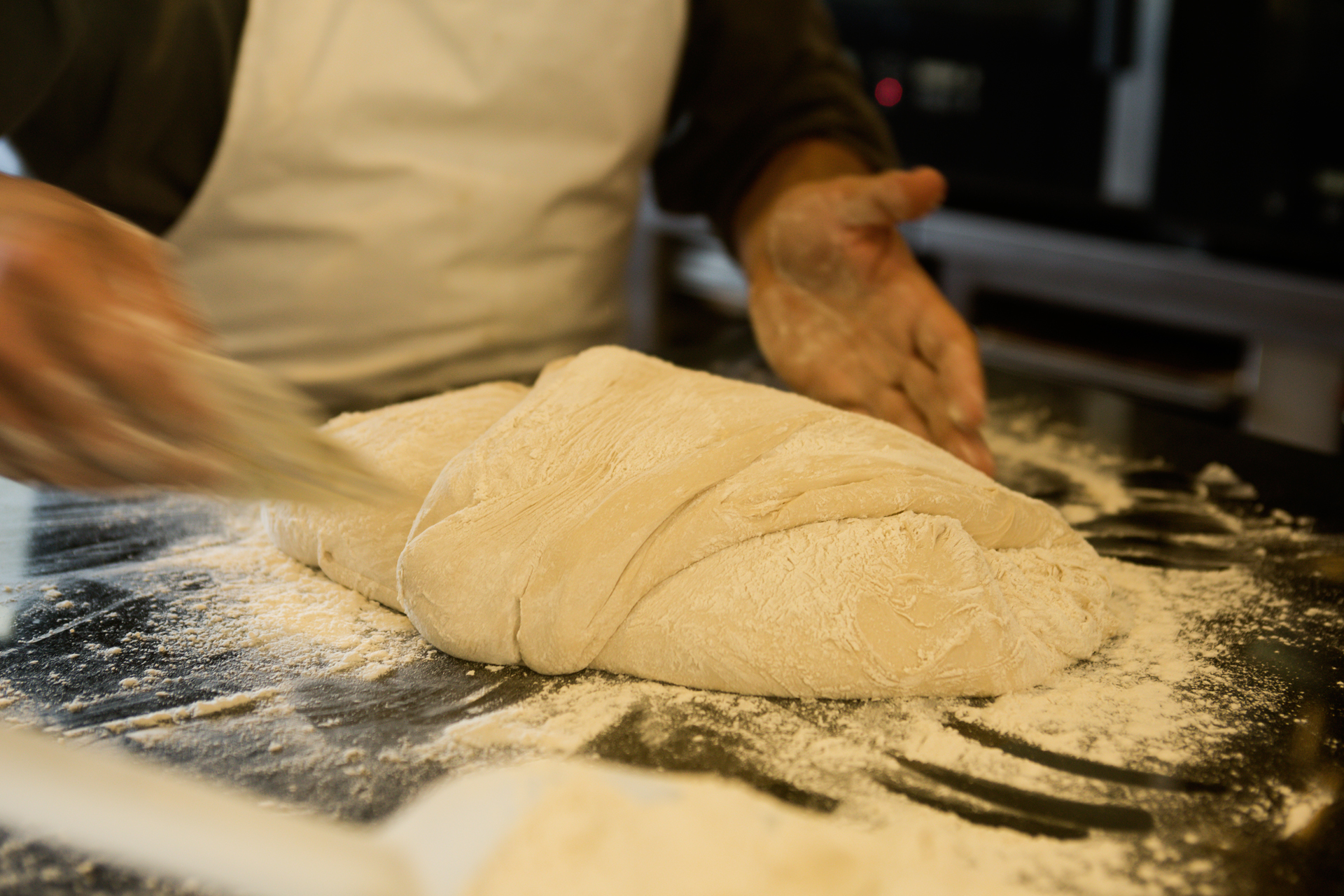
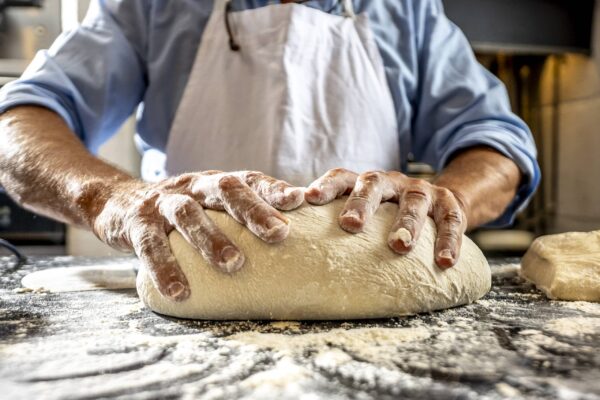
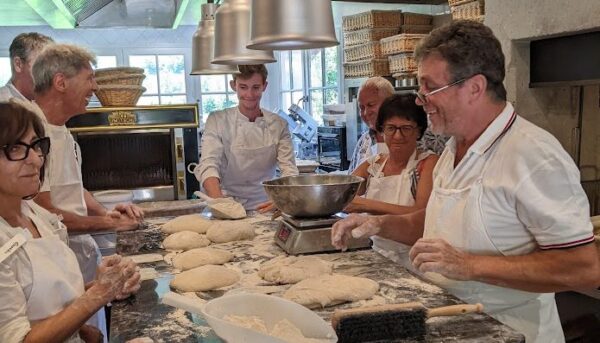
You will put your hands in the dough. Step by step, you will learn to understand why it behaves as it does and what needs to be done next.
And when you return home, you will know how to continue without me.
Our 5-minute daily protocol allows you to make your bread faster than going to the bakery.
It all begins in the field
To make standardized bread requires very uniform flour. And that uniformity begins with the wheat.
Soft wheat varieties for industrial milling are selected for yield and protein content. Nitrogen fertilization is managed late in the cycle to push this level higher.
Large-scale cereal farming can yield around 80 quintals per hectare. Our truffle-field wheat produces around 5.
Sixteen times less.
In the most degraded cereal soils, organic matter can fall to around 1%. Our soils today stand at around 3.5%.
We sow directly under cover crops when conditions allow, or use minimal tillage, occasionally adding compost.
Above all, we reseed our own population of truffle-field wheat.
After harvesting, the grain passes through two seed cleaners. With the indented cylinder separator, we keep the largest grains for the next sowing: these are the ones best adapted to our demanding conditions.
Year after year, our wheat naturally selects itself right here.
While the dough ferments in the kitchen, we visit these plots and the mill.
Then comes making the flour
With industrial roller milling, the grain is stripped apart. To obtain white flour, only the starchy endosperm is kept. The germ is discarded, along with the aleurone layer and the bran.
Yet it is within these parts of the grain that much of its richness lies: vitamins, minerals, fibre, fats and proteins.
The germ is particularly telling. Rich in natural fats, it makes flour less stable and more prone to rancidity. It is removed primarily to extend shelf life.
That same germ is then stabilized and sold separately in health food aisles for several times the price of flour.
With our Astrié stone mill, we take a different approach.
Between two Sidobre granite millstones, the grain is gently unfurled. The germ is incorporated into the flour, and the gentle rubbing of the bran preserves the aleurone layer.
The coarse bran is then sifted out by our 250-micron bolter. We maintain an extraction rate of 80%.
And then there is the speed.
An industrial mill measures its output in tonnes per hour. Some modern facilities exceed 20 tonnes of wheat per hour.
Our mill could run much faster as well.
I deliberately set it to 2 kg of flour per hour.
During your stay, we will follow the journey from grain to flour together.
And when you depart, this is the flour you will take with you to bake your bread at home.
Choosing and testing other flours
At the Domaine, you work with our wheat and our flour, and you leave with 4 kg of blé truffier flour to continue at home.
Yet you may also want to try flour from a local farmer-miller near you, another wheat, or simply a different flour.
I will therefore teach you how to evaluate flour before using it: the wheat variety, the milling method, its freshness, its origin, organic practices, and what the T55, T65, T80 and other classifications on the bag truly mean.
The type number alone cannot tell you how that flour will perform in your bread.
You will learn to test it, observe its reactions, and adjust your method to this new flour.
The 7 key principles to master
I have identified the 7 essential principles for baking organic sourdough bread in a domestic oven—whether electric or gas, fan-assisted or static.
If your loaf succeeds one day and fails the next without an obvious reason, this is precisely what we will address.
You will learn to read your sourdough and dough, understand what is happening, and know exactly how to adjust.
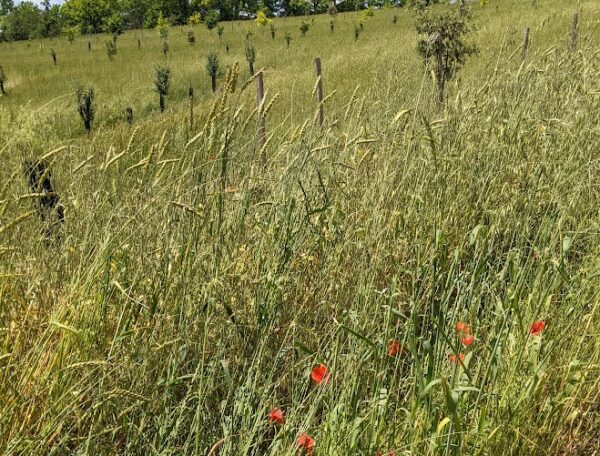
3 theoretical points to understand fermentation:
- Wheat: genetics, farming methods, and grain composition
- Milling: the different mills and types of flour (including a practical wheat-milling session on our granite stone mill).
- Sourdough and baker's yeast: what is the difference?
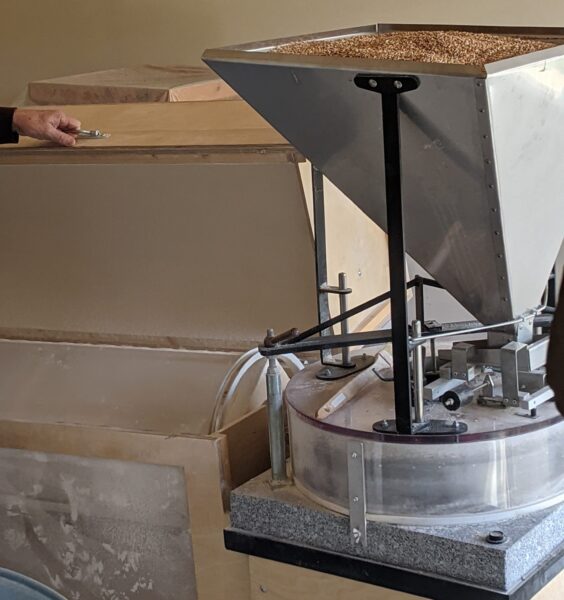
4 practical steps to master the craft:
- Starting and maintaining a sourdough starter
- Production organization: base temperature, kneading, slow fermentation
- Folds and shaping: why, when, and how
- Baking: moisture, falling heat, and crust control
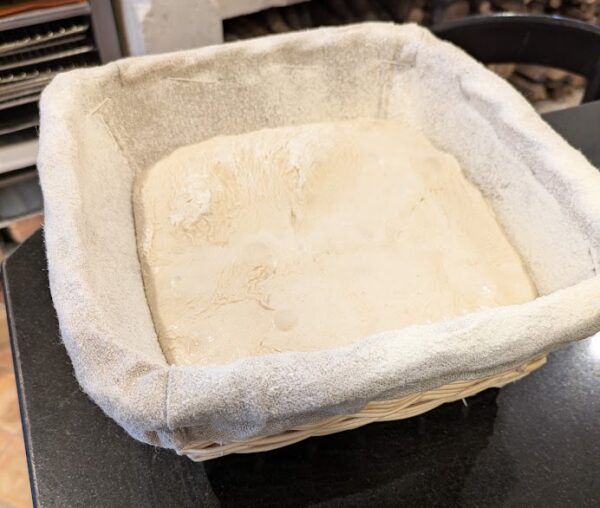
Throughout the three mornings, we balance practice and theory to progressively master these 7 essential principles.
Groups are limited to 6 to 8 guests. Everyone bakes their own bread, allowing me to guide each person closely.
And everyone experiences the same brief moments of hesitation.
During shaping, for example, the dough might begin sticking to someone’s hands. Everyone laughs.
Until their turn comes.
And that is usually when everyone laughs even more.
We observe what happened, adjust the technique, and try again. Each person's mistakes benefit the whole group.
We will also review essential tools, how to manage without them, and how to adapt breadmaking to your own kitchen.
We will work with our truffier wheat and our indigenous sourdough—the very ones I use every day to make the restaurant's bread.
Indigenous sourdough
Our sourdough starter was created at the Domaine with just two elements: flour from our wheat and water from the Source aux Loups.
We add neither commercial baker's yeast nor external starter cultures.
The yeasts and bacteria driving fermentation come entirely from this flour and its natural environment.
This is the sourdough starter you will feed and work with over the three mornings. And you will take 100 g of it home with you.
Sourdough fermentation transforms the dough over several days, developing the bread’s aromas, texture, and structure.
Time and temperature
One loaf may ferment for 12 hours. Another for 72 hours.
Here, I ferment dough between 2 and 15°C, depending on the day's schedule, the state of fermentation, and the desired aromas.
Three days provide the perfect window to watch several doughs evolve, compare them, and understand what a few hours or a few degrees truly change.
In the end, 12, 48, or 72 hours will no longer be mere numbers in a recipe.
And then, we taste
During these three mornings, we bake several loaves, varying our gestures, hydration levels, shapes, and sizes.
Then we taste them together to understand how each adjustment shaped the bread.
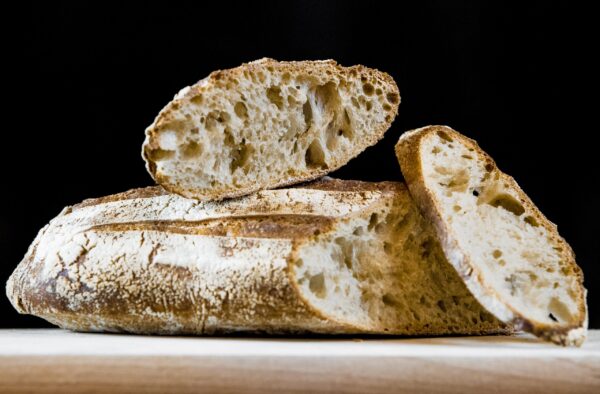
The difference shows in the crumb structure, the crust, the texture, the acidity and the aromas.
Certain explanations become far simpler when you can taste the result.
Bread made by your own hands
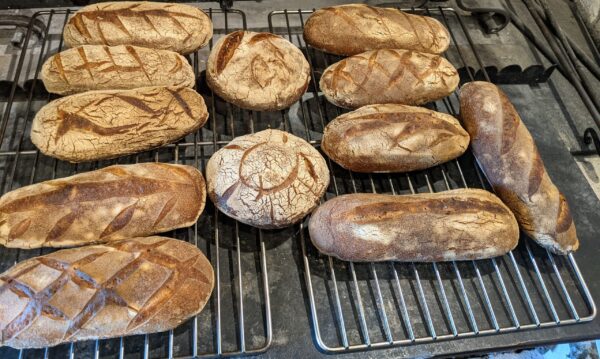
And then there are the loaves everyone made.
We taste them, comparing crumb, crusts and shapes. The best ones are photographed and sent immediately to children or loved ones.
And those that did not turn out quite as planned?
We compare those too. Usually, they bring even more laughter, and they are often the most valuable for understanding what happened.
Everyone leaves with their own loaf. Enough for a few days, and above all, enough to share at home what you have just learned to make yourself.
You will leave with…
- 100 g of sourdough starter ready to feed
- 4 kg of truffle-wheat flour
- The 7 fundamentals of breadmaking
- Your 5-minute daily protocol to make bread at home without complex equipment
- The bread you will have baked
And the Maison Duler baking calculator, an Excel tool that automatically adjusts quantities, hydration, temperature and fermentation times to the number and weight of the loaves you wish to bake.
As soon as you return home, you can feed your sourdough starter and bake your first loaf in your own kitchen.
Your oven, ambient room temperature, and flour may behave slightly differently than at the Domaine. You will have learned how to observe your starter and dough to adjust your method.
The very first loaf made by our guests, after three mornings of hands-on learning at the Domaine:
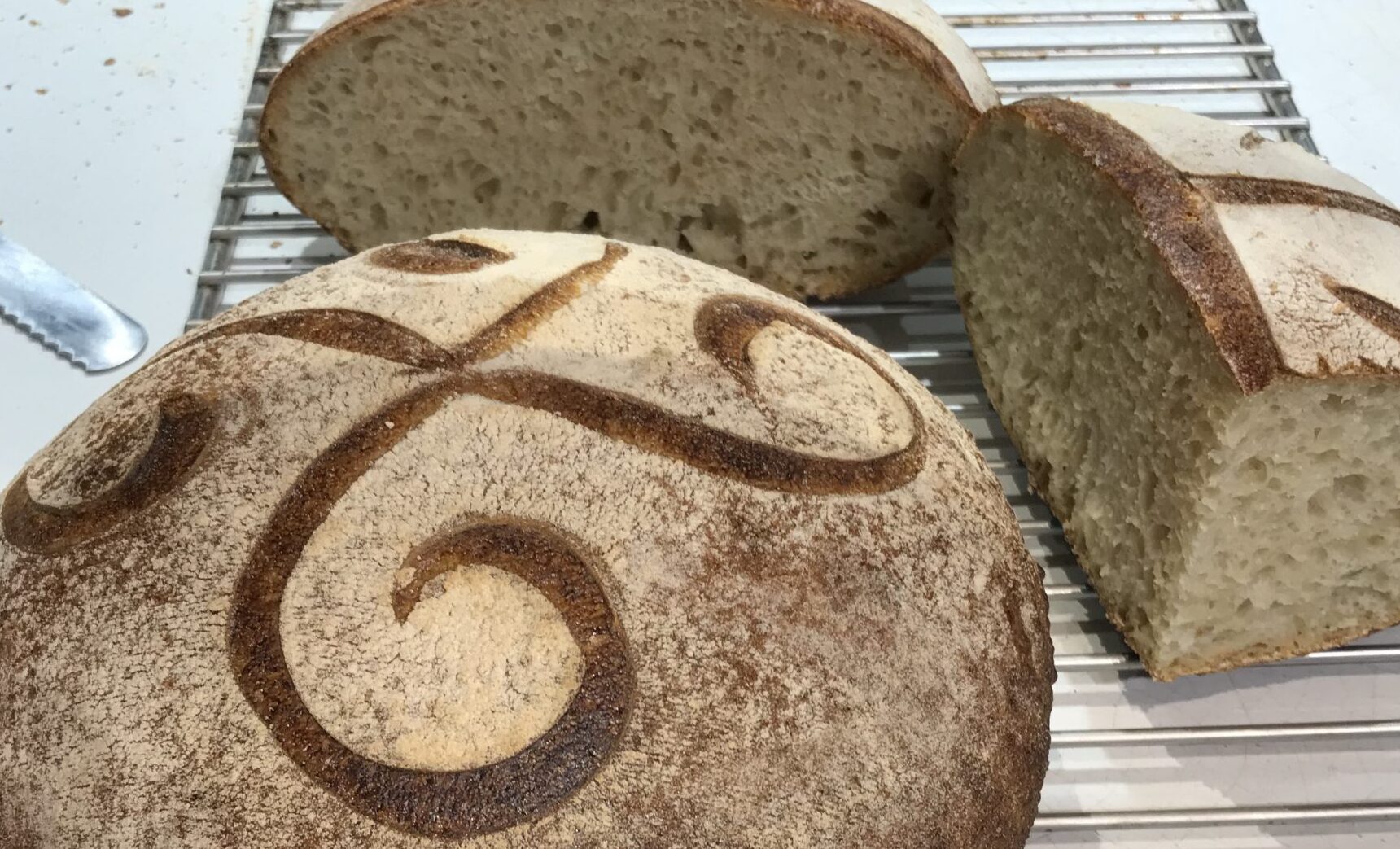
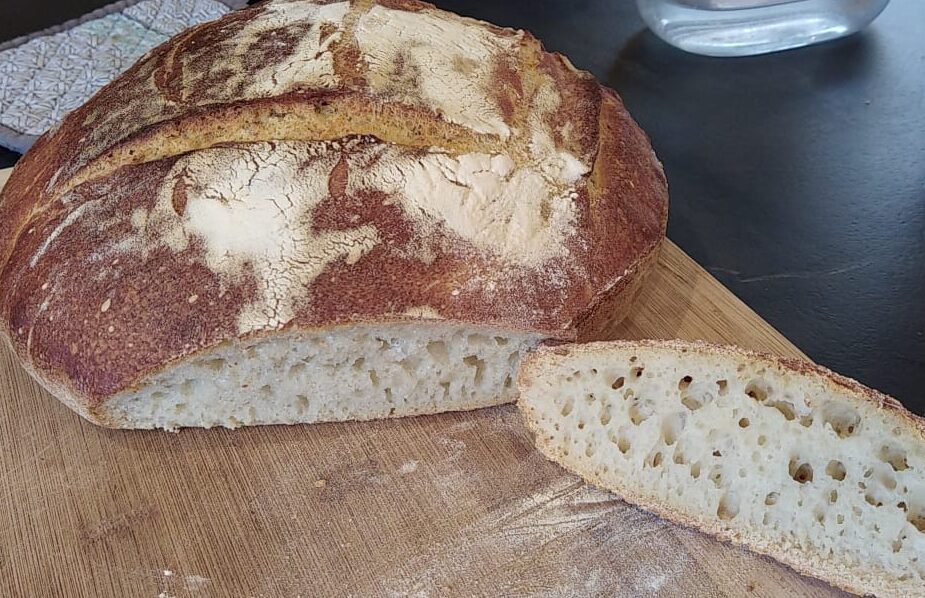
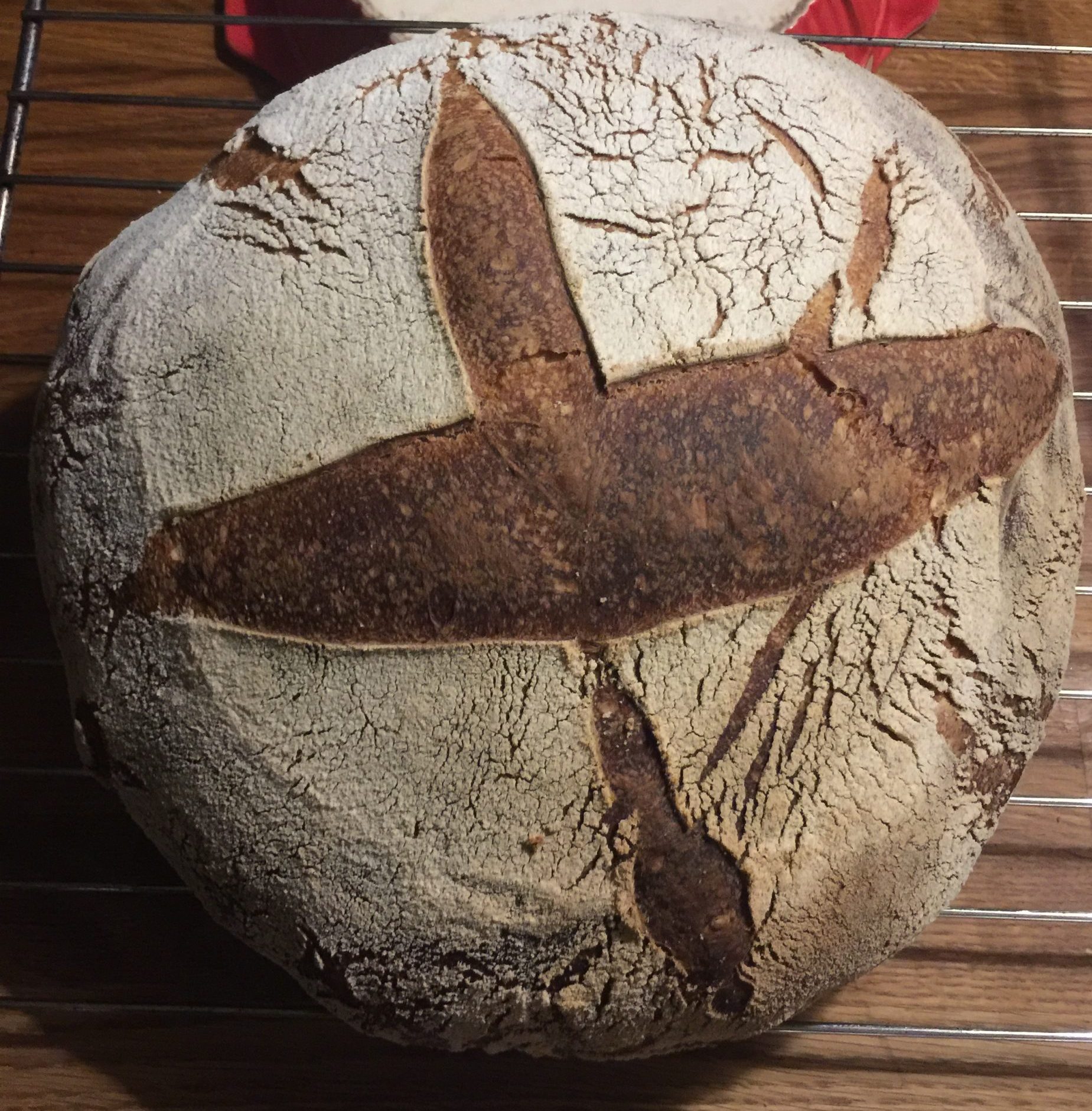
“A great bread workshop. Pure joy!”
Marien
“ I knew you had the 'World's Best Flour';
these 3 days proved to me that, in addition to this EXCEPTIONAL flour, you are a truly dedicated family.
Thank you for sharing these beautiful moments with the five of you”
Jean-Paul Veziano, baker
32 years of breadmaking in three mornings
I have known open-air markets, batches of 200 kg of dough, a baker, and three sales staff.
I was also trained at Lenôtre by Jean-Louis Clément, Meilleur Ouvrier de France.
Then I stopped the markets and gradually scaled down our bakes to the few kilos we make today for the restaurant.
And curiously, making far less bread compelled me to rethink many things.
A home oven does not behave like our wood-fired oven. Working two loaves is entirely different from managing 200 kg of dough. The temperatures, volumes, and workflow are completely different.
It is this experience of both extremes that allows me to teach you how to bake your bread at home.
With your oven, your kitchen and the quantities you need.
Baking bread when your days are already full
A baker can organize his day around bread. For me, it had to be the other way around.
I had the restaurant and guests, the livestock, the vineyard, the kitchen garden, the truffle orchards, the work on the Domaine, travels, and external events. And through it all, I wanted to keep baking our bread.
So I gradually eliminated complex or unnecessary steps to intervene only when it truly matters.
The rest of the time, I let the sourdough starter and dough do their work. The wild yeasts and bacteria continue while I am in the kitchen garden, with guests, or in the kitchen. In fact, a significant part of the slow fermentations takes place in the refrigerator.
Bread then becomes a simple routine. Much like brushing your teeth in the morning.
That is how I developed a rhythm that allows you to knead just once to have bread for the week, let a dough develop while preparing a meal, keep your starter alive while away on holiday — or bring it along to keep making bread, pizza and other recipes.
The dough prepared for bread can also be used for several simple dishes throughout the week.
Over three mornings, I will share this workflow, refined over twenty-five years, so you can continue baking bread within an already demanding schedule.
These three mornings are part of a three-night stay at the Domaine, including breakfast, lunch with our family, and three dinners at the restaurant, including a Truffle Menu.
What the stay includes
For each guest:
- 3 nights at the Domaine;
- 3 breakfasts;
- 3 morning masterclasses;
- 3 lunches with the Duler family;
- 3 dinners at the restaurant, including a Truffle Menu.
From €750 per person per day, based on double occupancy.
Beverages not included. Wines can be selected from our Wine List.
Arrivée au Domaine : à partir de 18 heures.
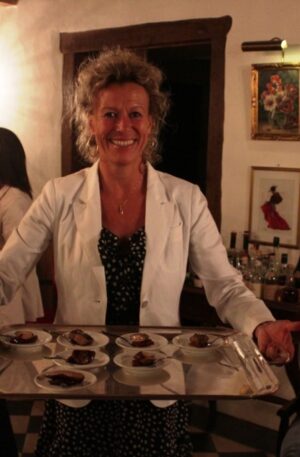
Pascale vous accueille et vous installe dans votre chambre avant le début du séjour.
Départ : après le déjeuner du dernier jour.
Si vos horaires de train ou de route vous imposent une arrivée particulière, appelez-nous avant de venir : nous vous dirons simplement ce qui est possible.
Reservations
Once your booking is made, you will arrange your dates directly with Pascale.
Would you like to check upcoming availability before booking?
Contact Pascale at +33 (0)5 65 31 82 51.
View booking and cancellation terms
After the bread
At noon, we sit down to lunch.
We have lunch together. The conversations started around the dough often continue over the meal: what worked, what stuck to fingers, why one loaf behaved differently from the next.
And we talk of other things.
The afternoon is yours: 70 hectares, 12 km of walking paths, the kitchen garden and orchard, the seasonal pool, hot tub and natural spring lake.
In the evening, the atmosphere shifts.
After flour on your hands and discussions around the dough, you sit down for a gastronomic dinner at the restaurant. On one of the three evenings, we serve our Truffle Menu.
And overnight, the bread continues its course.
The dough ferments while you dine and sleep. The next morning, we return to it and observe how it has evolved.
Then a new morning begins: we return to the doughs, continue the trials, taste and refine.
For three days, bread sets the rhythm of your stay.
Questions and Answers
What is the Organic Wild Sourdough Breadmaking Stay?
It is a 3-night stay at Domaine de Saint-Géry centered around three morning masterclasses with Patrick Duler.
You will learn how to maintain a wild sourdough starter, master fermentation, shape dough, and bake your bread in a domestic oven.
The rest of your stay includes meals at the Domaine and free time to enjoy the surroundings.
Is this suitable if I have never baked bread before?
Yes.
The stay is designed just as much for complete beginners as for those who have already tried baking at home, but whose results vary without fully understanding why.
The goal is for you to leave fully confident and self-sufficient in baking your own bread at home.
What are the 7 essential elements covered?
The 7 elements are:
- Wheat: genetics, farming methods, and grain composition;
- Milling and understanding different flour types;
- The difference between sourdough starter and commercial baker's yeast;
- Starting and maintaining a sourdough starter;
- Organising the bake: base temperature, kneading, and fermentation;
- Folding and shaping the dough;
- Baking: moisture, heat control, and crust development.
We cover each aspect through alternating theory and hands-on practice across the three mornings.
What is the difference between wild sourdough and baker's yeast?
In our sourdough starter, wild yeasts work in symbiosis with lactic acid bacteria. During long fermentation, this acidification enhances the activity of the flour's natural enzymes, particularly proteases, which gently break down gluten proteins.
It is a form of pre-digestion: this transformation begins well before the bread is baked.
At the estate, this fermentation lasts between 12 and 72 hours, at temperatures from 2 to 15 °C. This is also one of the reasons why long-fermented sourdough bread is often easier to digest.
During your stay, you learn to read the stages of fermentation and adjust time and temperature accordingly.
What is blé truffier?
Blé truffier is the wheat we grow at Domaine de Saint-Géry, among our truffle oaks and native flora.
It is grown with direct seeding under cover crops, without tilling, then stone-milled at the Domaine on our granite millstone.
During your stay, we trace bread back to the grain itself: wheat genetics, cultivation, milling, and how the flour behaves.
Our blé truffier flour was notably used by Alain Ducasse at Le Louis XV in Monaco for 10 years.
Can I bake this bread in my own kitchen?
Yes. That is precisely the purpose of your stay.
You will learn how to adapt every step to your own kitchen: electric or gas oven, fan-assisted or conventional, using minimal specialised equipment.
You will leave with your own sourdough starter, 4 kg of blé truffier flour, and our five-minute daily method.
What do I take home at the end of the masterclass?
You will leave with:
- 100 g of wild blé truffier sourdough starter, ready to feed;
- the loaf of bread you have baked;
- 4 kg of blé truffier flour;
- the 7 Principles of Breadmaking;
- our 5-minute-a-day method to make your bread at home as soon as you return;
- the Maison Duler batch calculator, designed to automatically adjust quantities, hydration, temperature, and fermentation schedules to your bread.
How do I book my stay?
Select the number of guests and your room, then confirm your reservation.
Once your booking is made, you will arrange your dates directly with Pascale.
Would you like to check upcoming dates before booking? Contact Pascale on +33 (0)5 65 31 82 51.
Organic Indigenous Sourdough Bread Making Stay
Access our "Cuisine, Agriculture, and Health" conference for free
You may also like…
-

Truffle Discovery Stay
from: 584,00€ per day, per person, double occupancySelect options This product has several variations. Options may be chosen on the product pageFrom December 30th until early
-
Wholesome Pork Cookery Stay: through the seasons
from: 750,00€ per person, double occupancyLearn to prepare pork for wholesome and flavorful cuisine,Select options This product has several variations. Options may be chosen on the product page
Similar products
-
Ham Platter & Champagne
from: 89,00€Tasting of a great ham in the serene setting ofSelect options This product has several variations. Options may be chosen on the product page -
Les Nuits de Saint-Géry
170,00€Select options This product has several variations. Options may be chosen on the product pageProchaine Nuit de Saint-Géry : samedi 24 octobre 2026
avec < -
Saint-Géry table knives
from: 158,00€Select options This product has several variations. Options may be chosen on the product pageWe have chosen a winemaker’s knife
-
Nature Stay Gift Set
from: 735,00€Select options This product has several variations. Options may be chosen on the product pageIf you are weary of conventional luxury hotels